
Abstract
Harmful ideological systems, including anti-vaccination activism, sovereign citizen (SovCit) pseudo-law, conspiracy theories, cultic groups, and “conspirituality” (the fusion of spirituality and conspiracy), present escalating risks to individuals and communities in Australia and globally. These movements thrive on social vulnerability, inequality, mistrust of institutions, and fractured belonging, while often escalating into anti-democratic, violent, and culturally harmful behaviours.
High-profile cases such as the 2022 Wieambilla shootings and the 2025 Dezi Freeman incident illustrate the lethal potential of these ideologies when combined with structural disadvantage, personal grievance, and digital amplification. This paper synthesises historical, psychological, sociological, and cultural research on anti-vaccination movements and harmful ideologies, situating Australian developments within broader global contexts. We advance a multi-level, evidence-based framework for intervention, incorporating trauma-informed care, community belonging, digital literacy, counter-narratives, and structured exit pathways. Central to this analysis is the role of social work, guided by the Australian Association of Social Workers (AASW) Code of Ethics (2020), alongside institutional reform and Indigenous-led governance grounded in the United Nations Declaration on the Rights of Indigenous Peoples (UNDRIP, 2007). The central argument is that prevention and resilience require not only factual correction but also systemic reform that addresses structural inequality, amplifies Indigenous sovereignty, and rebuilds democratic trust.
1. Introduction
The past decade has seen a marked intensification of harmful ideological movements, ranging from anti-vaccination activism and sovereign citizen (SovCit) networks to hybridised conspiracy–spirituality forms known as conspirituality. These belief systems, while historically rooted, have been dramatically accelerated by global crises, particularly the COVID-19 pandemic, which served as a catalyst for their visibility, recruitment capacity, and societal impact (Douglas et al., 2019; Ward & Voas, 2011).
Anti-vaccination activism, once perceived as a marginal current, re-emerged during the pandemic as a significant public health challenge. Digital misinformation campaigns undermined vaccine uptake, eroded trust in health authorities, and deepened polarisation (Baker, 2022; Goldberg, 2020). At the same time, SovCit rhetoric spread widely in Australia, reframing legal obligations such as lockdown restrictions and fines as illegitimate “tyranny,” while embedding pseudo-legal frameworks within anti-government mobilisation (Day & Carlson, 2023).
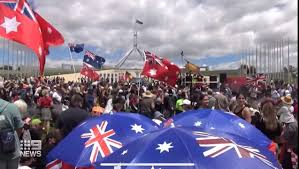
These movements cannot be dismissed as fringe curiosities. They pose direct threats to social cohesion, democratic integrity, and public health. During lockdowns in Melbourne and Sydney, conspiratorial protests mobilised thousands, uniting disparate groups including wellness influencers, climate denialists, and far-right agitators (Bergem, 2022; Walker et al., 2023). The resulting coalition demonstrated the porous boundaries between conspiracism, spirituality, and extremism.
More alarming still, these ideologies have produced fatal outcomes. In December 2022, Gareth, Nathaniel, and Stacey Train murdered two police officers and a neighbour in Wieambilla, Queensland, in an ambush motivated by SovCit ideology, Christian apocalypticism, and survivalist prepping (C. Clarke, 2022). In August 2025, Dezi Freeman, a self-described sovereign citizen in Porepunkah, Victoria, allegedly killed two police officers during a warrant execution and fled into bushland, triggering one of the largest manhunts in Victorian history (ABC News, 2025; Guardian, 2025). Both incidents demonstrate how ideological conviction can translate into lethal violence when fused with grievance, isolation, and weaponisation.
These harmful ideologies also intersect with distinctively Australian challenges, including the misappropriation of Indigenous sovereignty. Pseudo-sovereignty groups and fraudulent identity claims mimic Aboriginal authority to legitimise anti-government resistance, simultaneously undermining Indigenous rights and perpetuating epistemic violence (Cooke, 2025). This practice illustrates how harmful ideologies can not only destabilise democratic safety but also inflict cultural harm by erasing genuine Aboriginal voices.
This paper provides a comprehensive synthesis of harmful ideological movements, situating Australian developments within broader global scholarship on conspiracy psychology, digital cultures, and extremism. It argues that effective response requires a multi-level framework: one that addresses psychological vulnerabilities, fosters belonging, strengthens digital resilience, amplifies Indigenous sovereignty, and reforms institutional practices. The structure of the paper is as follows: Section 2 traces the historical roots of anti-vaccination and conspiracist ideologies; Section 3 examines the rise of conspirituality; Section 4 explores the psychological and social drivers of conspiracist belief; Section 5 analyses the role of digital cultures and algorithmic amplification; Section 6 considers intersections with political extremism and far-right appropriation; Section 7 evaluates the public health and social consequences; Section 8 outlines evidence-based interventions; Section 9 examines the role of social work and institutions; Section 10 identifies key policy implications; and Section 11 concludes with reflections on resilience, trust, and democratic integrity.
2. Historical Roots of Anti-Vaccination and Harmful Ideologies
The origins of anti-vaccination activism, conspiracy theories, and related harmful ideologies can be traced to the nineteenth century, when modern public health interventions began to collide with political liberalism, religious belief, and mistrust of government authority. These early conflicts established patterns of resistance that continue to shape contemporary movements, linking vaccine opposition, conspiracy belief, and anti-democratic ideologies in enduring ways.
2.1 Nineteenth-Century Anti-Vaccination Activism
The first organised anti-vaccination campaigns arose in Britain in response to compulsory smallpox vaccination laws of the mid-1800s. Critics portrayed vaccination as both a medical danger and an infringement on individual liberty, framing the state as an intrusive actor that violated bodily autonomy and parental rights (Durbach, 2004; Russell, 2022). These objections were not confined to questions of safety. They also reflected wider anxieties about modernity, scientific authority, and state surveillance. Resistance was embedded in broader currents of religious dissent and political radicalism, particularly in working-class communities where distrust of elites was already strong.
The ideological frames developed in this period, appeals to freedom, natural health, and suspicion of government science, became templates for subsequent anti-vaccination movements. They also reveal the long-standing entanglement of medical opposition with democratic anxieties. Early activists frequently invoked conspiracy language, suggesting that vaccination was part of a plot by elites to harm or control ordinary people. This rhetorical lineage persists in modern anti-vaccination movements, which similarly characterise vaccines as instruments of coercion or population control (Baker, 2022; Goldberg, 2020).
2.2 Twentieth-Century Science, Politics, and Resistance
In the twentieth century, vaccination programs expanded globally, supported by the consolidation of biomedicine and international public health institutions. Yet opposition never disappeared. During the polio vaccination campaigns of the 1950s and 1960s, conspiracy theories flourished in the United States and parts of Europe, often framed around mistrust of government or pharmaceutical companies (Colgrove, 2006). By the 1970s, controversies over the diphtheria, pertussis, and tetanus (DPT) vaccine reignited public resistance, with activists claiming that adverse reactions were being covered up by authorities (Hobson-West, 2007).
This period coincided with the growth of countercultural movements that valorised natural health, alternative medicine, and holistic worldviews. In many Western societies, particularly in Anglophone contexts, these movements provided fertile ground for anti-vaccination sentiment to take root. They reframed vaccine refusal not only as a political stance but as a lifestyle choice aligned with spiritual purity, natural living, and ecological balance (Ward & Voas, 2011). This set the stage for the twenty-first century emergence of conspirituality, where wellness culture intersects with conspiracy narratives in digitally mediated spaces.
2.3 The Persistence of Conspiracism
Conspiracy theories themselves also have deep historical roots. From medieval blood libels to early modern fears of Masonic or Jesuit plots, conspiratorial thinking has long offered “hidden enemy” explanations for social upheaval (Butter, 2020). In the twentieth century, conspiracy theories became especially potent in times of crisis, including the Great Depression, the Cold War, and the aftermath of major terrorist attacks such as 9/11. These moments reinforced a cultural grammar of suspicion, in which global events were understood as orchestrated by secretive elites.
Research demonstrates that conspiracy theories often resurface in waves, spurred by political instability, technological change, or public health crises (Douglas et al., 2019; Ward & Voas, 2011). In Australia, conspiracy movements gained visibility during the late twentieth century in relation to climate denialism, fluoride opposition, and anti-government protests. These provided a cultural infrastructure that could be rapidly reactivated during the COVID-19 pandemic, when global uncertainty and digital communication systems created ideal conditions for conspiracism to flourish (Walker et al., 2023).
2.4 The Rise of Sovereign Citizens and Pseudolaw
The sovereign citizen (SovCit) movement represents another critical historical strand. Emerging in the United States during the 1970s and 1980s, SovCit ideology combined tax protest, white supremacist ideology, and pseudo-legal theories about “natural law” and illegitimate government (Day & Carlson, 2023). Adherents claimed that legal systems were fraudulent constructs, rejecting taxation, policing, and courts while advancing pseudo-legal documents as forms of resistance.
By the 2000s, SovCit ideology had spread to Australia, where it was adapted to local contexts. Adherents increasingly targeted fines, property disputes, and interactions with police, advancing pseudo-law arguments in both rural and urban settings. While much activity was confined to nuisance litigation, violent incidents began to emerge. As the Wieambilla shootings and the Freeman incident demonstrate, the SovCit worldview can escalate into lethal violence when combined with grievance, isolation, and access to weapons (C. Clarke, 2022; ABC News, 2025).
2.5 Indigenous Identity Fraud and Settler Simulation
A uniquely Australian manifestation of harmful ideologies has been the appropriation of Indigenous sovereignty by non-Indigenous actors. From the late twentieth century onwards, pseudo-tribal groups and individuals have fabricated Aboriginal identities to legitimise land claims, evade taxation, or resist government authority. This practice, described as Indigenous identity fraud or settler simulation, undermines genuine Aboriginal sovereignty by inserting fraudulent voices into cultural and political arenas (Cooke, 2025; E. S. Jones, 2023).
Such practices often intersect with SovCit and conspiracist networks. Some groups have claimed immunity from state law on the basis of fabricated Indigenous sovereignty, deploying pseudo-legal rhetoric alongside identity fraud. Others have appropriated cultural motifs to bolster conspiracist claims about resistance to government “tyranny.” Indigenous leaders have consistently condemned these practices as epistemic violence, warning that they erase Aboriginal voices and distort cultural frameworks for political gain (Cooke, 2025).
2.6 Continuities into the Present
The persistence of anti-vaccination, conspiracist, and pseudo-legal ideologies reflects their adaptability across contexts. Each new crisis provides fresh opportunities for reactivation, whether through pandemics, economic downturns, or environmental change. The COVID-19 pandemic illustrated this dynamic powerfully, demonstrating how nineteenth-century frames of “natural health,” twentieth-century countercultural spirituality, and twenty-first century digital networks could combine into new hybrid forms of resistance.
Understanding these historical roots is essential, as they reveal that harmful ideologies are neither novel nor random. They are the cumulative result of cultural traditions of mistrust, grievance, and alternative authority, continually reshaped by technological, political, and social change. These continuities provide the foundation for the next section, which examines conspirituality as the contemporary fusion of spirituality and conspiracy, particularly in the wellness and alternative health sectors.
3. Conspirituality – The Fusion of Spirituality and Conspiracy
The term conspirituality was coined by Ward and Voas (2011) to describe the fusion of New Age spirituality with conspiracy narratives. This hybrid belief system draws its strength from combining two powerful epistemologies: the spiritual conviction that hidden truths can be intuited beyond mainstream knowledge, and the conspiratorial conviction that governments and institutions deliberately conceal the “real” story. Together, these frameworks generate resilient worldviews that are highly resistant to counter-evidence. In the twenty-first century, conspirituality has flourished in digital spaces, particularly within wellness and alternative health communities.
3.1 Origins in the New Age and Alternative Health Movements
Conspirituality did not emerge ex nihilo during the COVID-19 pandemic. Its roots lie in twentieth-century countercultural and New Age movements that valorised personal experience, natural health, and holistic living while rejecting biomedicine and state authority (Hanegraaff, 1996; Sandlin, 2023). Alternative health communities often cultivated suspicion toward pharmaceutical companies, framing vaccines and medical interventions as threats to bodily purity. Parallel to this, New Age spirituality encouraged intuitive knowing, sacred awakening, and a cosmological struggle between forces of light and dark.
These traditions provided fertile ground for conspiratorial motifs. Narratives of secret cabals and suppressed cures aligned naturally with pre-existing beliefs in hidden truths, cosmic battles, and spiritual liberation. Thus, even before the pandemic, communities such as yoga networks, naturopathic circles, and eco-spiritual movements contained latent conspiratorial logics that could be activated in moments of crisis (Baker, 2022).
3.2 Pandemic Acceleration and Wellness Culture
The COVID-19 pandemic catalysed the rapid expansion of conspirituality. Wellness influencers on Instagram and TikTok used spiritualised rhetoric to frame vaccine refusal as an act of “freedom” or “awakening,” presenting alternative medicine and “natural immunity” as the enlightened path (Kanthawala et al., 2023; Walker et al., 2023). Social media algorithms amplified this content, rewarding emotional intensity, spiritual aesthetics, and simplified narratives of liberation from tyranny.
Sandlin (2023) describes how conspirituality consumption during the pandemic was not limited to passive media use. It became pedagogical, shaping everyday practices of eating, parenting, and healing. Mothers’ groups on Facebook shared affirmations about “protecting children from toxins” alongside pseudo-legal templates for resisting vaccine mandates (Green et al., 2022). Yoga instructors reframed lockdown resistance as a collective awakening against “authoritarianism.” The blending of wellness culture, consumerism, and political disobedience produced an accessible entry point into conspiracist worldviews, particularly for middle-class women.
3.3 Gendered Dimensions of Conspirituality
Recent scholarship emphasises that conspirituality is deeply gendered. Women are often positioned as guardians of bodily integrity and children’s wellbeing, roles that can be mobilised into resistance against vaccination (Salmenniemi & Vorona, 2022). In online anti-vaccination networks, maternal identity becomes a site of authority, with mothers claiming that intuition and embodied knowledge outweigh scientific expertise (Dirusso & Stansberry, 2021).
At the same time, men often engage in conspirituality through survivalist prepping, sovereign citizen ideology, and anti-government militancy. The Trains at Wieambilla exemplify how conspirituality can intersect with patriarchal family structures, framing armed resistance as both spiritual duty and masculine protection (C. Clarke, 2022). Gender thus shapes the forms that conspirituality takes, with maternal, paternal, and communal roles providing distinct avenues for recruitment and reinforcement.
3.4 Algorithmic Amplification and Digital Pedagogies
Kanthawala et al. (2023) argue that conspirituality thrives in algorithmic cultures, where platforms reward content that is emotive, sensational, and easily shareable. The circulation of memes, short videos, and wellness-branded graphics allows complex conspiracies to be reduced to aesthetically pleasing slogans: “My body, my choice,” “Awaken, don’t comply,” or “Trust your intuition, not the system.” These messages often carry both spiritual and conspiratorial resonance, blurring boundaries between lifestyle branding and political radicalisation.
Algorithmic amplification also fosters echo chambers. Once a user engages with wellness or conspiracy content, recommendation systems push them deeper into similar material. This dynamic explains how yoga practitioners or parenting influencers could be rapidly radicalised into QAnon-adjacent networks during the pandemic (Walker et al., 2023).
3.5 Evangelical and Religious Crossovers
While conspirituality is often associated with New Age and wellness contexts, research also identifies convergences with evangelical Christianity. For example, Ingersoll and McKnight (2022) demonstrate how evangelical leaders reframed critiques of feminism and #ChurchToo as part of a larger spiritual battle against conspiratorial enemies. Similarly, pandemic-era churches in Australia and the United States propagated anti-vaccination messages by framing government health orders as satanic attacks on religious freedom (Cottrell-Boyce, 2023).
This illustrates that conspirituality is not confined to countercultural movements. It also infiltrates mainstream religious institutions, where conspiracy frames resonate with pre-existing narratives of spiritual warfare and persecution.
3.6 Conspirituality in the Australian Context
In Australia, conspirituality manifested visibly during anti-lockdown protests, which drew together alternative health practitioners, yoga teachers, evangelical Christians, and far-right activists. Movements such as the “Freedom” rallies showcased how diverse communities could be unified by spiritualised conspiracy rhetoric (Day & Carlson, 2023). Wellness influencers with large social media followings promoted events framed as both healing festivals and resistance gatherings, blurring lines between cultural expression and political mobilisation.
The adoption of Indigenous sovereignty rhetoric by some conspiritual groups further complicates the Australian context. Non-Indigenous wellness influencers have invoked “connection to Country” or “tribal law” to legitimise their rejection of state mandates, appropriating Aboriginal concepts for conspiracist ends (Cooke, 2025). This practice not only distorts Indigenous epistemologies but also contributes to identity fraud and cultural harm.
3.7 Summary
Conspirituality represents a powerful hybrid ideology, combining spiritual, conspiratorial, and digital elements into resilient worldviews. It appeals to psychological needs for belonging, control, and identity while embedding these within culturally resonant practices of wellness, parenting, and spirituality. Its spread in Australia illustrates how alternative health communities, evangelical groups, and far-right actors converge in hybrid spaces where conspiracies are reframed as spiritual awakenings.
The next section examines the psychological drivers of conspiratorial and anti-vaccination beliefs in greater detail, demonstrating how cognitive, emotional, and motivational processes underpin vulnerability to these hybrid worldviews.
4. Psychological Drivers of Conspiratorial and Anti-Vaccination Beliefs
Conspiratorial and anti-vaccination beliefs are not solely the product of misinformation or ignorance. They are sustained by complex psychological dynamics that meet fundamental human needs for certainty, control, belonging, and identity. This section examines key psychological drivers, drawing on contemporary research to explain why individuals are drawn to these worldviews and why they are so resistant to correction.
4.1 Cognitive Styles: Intuitive Reasoning and Distrust of Expertise
Research consistently finds that individuals who rely more heavily on intuitive reasoning are more likely to reject vaccines and endorse conspiracy theories (Pennycook & Rand, 2019; Scherer et al., 2021). Anti-vaccination attitudes correlate with less analytical processing, favouring gut feelings over deliberative thought (Garrett & Strahan, 2022). This reliance on intuition fosters distrust of scientific expertise, since official knowledge is perceived as cold, abstract, and detached from lived experience.
In Black communities in the United States, Russell (2022) shows that vaccine hesitancy often reflects distrust of scientists rather than rejection of science itself. This distinction highlights that conspiratorial belief is not always irrational but is mediated by historical, cultural, and relational contexts that shape the credibility of experts.
4.2 Motivational Needs: Certainty, Control, and Uniqueness
Conspiracy theories offer psychologically appealing explanations during times of uncertainty. They reduce anxiety by attributing complex events to intentional actors rather than randomness (Douglas et al., 2019). Belief in hidden plots satisfies the need for control, as it frames adherents as knowledgeable agents resisting manipulation.
The need for uniqueness also drives conspiratorial belief. Lazić and Žeželj’s (2021) systematic review shows that narratives emphasising hidden truths allow adherents to feel special and enlightened. This dynamic was evident during the COVID-19 pandemic, when anti-vaccine adherents claimed privileged knowledge of “plandemics” or microchipping schemes, framing themselves as awakened in contrast to the “sheep” of mainstream society.
4.3 Emotional Dynamics: Fear, Anger, and Disgust
Emotions play a central role in conspiratorial belief. Fear amplifies susceptibility, anger fuels mobilisation, and disgust motivates opposition to perceived contamination. Barrett (2022) notes that anti-vaccination campaigns often exploit disgust sensitivity by highlighting supposed toxins in vaccines or unnatural interventions in the body. Such appeals resonate with deep-seated emotional intuitions that are difficult to dislodge with factual rebuttals.
TikTok analyses reveal how anti-vaccination influencers use affective polarisation to strengthen commitment. Videos often portray government figures as villains and anti-vaccine parents as heroes, using humour, parody, or melodrama to evoke strong emotional identification (Greenberg et al., 2022).
4.4 Identity, Belonging, and Group Dynamics
Conspiratorial and anti-vaccine movements provide powerful identity frameworks. They offer adherents a sense of belonging to an enlightened minority while constructing outsiders as deceived or malicious (Jolley & Paterson, 2020). This us-versus-them framing strengthens in-group solidarity, making disengagement socially costly.
Celebrity admiration can also reinforce these dynamics. Martinez-Berman et al. (2021) found that strong identification with admired figures correlates with anti-vaccination attitudes, as celebrities lend cultural legitimacy to conspiratorial positions. Similarly, nurses and midwives who provide anti-vaccine advice blur boundaries between professional authority and personal belief, reinforcing in-group validation within healthcare communities (Green et al., 2022).
4.5 Cognitive Dissonance and Resistance to Debunking
Once entrenched, conspiratorial belief becomes self-sealing. Cognitive dissonance theory explains why individuals double down when confronted with contradictory evidence: rejecting disconfirming information reduces psychological discomfort (Festinger, 1957; Swami et al., 2014).
Lewandowsky et al. (2020) demonstrate that attempts to debunk conspiracy theories often backfire, as adherents reinterpret corrections as further evidence of cover-up. This is particularly true when beliefs are tied to identity. For example, anti-vaccine parents who see themselves as protectors of their children may experience challenges to their views as attacks on their moral worth.
4.6 Trauma, Stress, and Mental Health Intersections
While conspiratorial belief is not reducible to mental illness, research shows that trauma and psychological distress increase vulnerability. Taylor and Donald (2021) emphasise that trauma amplifies the appeal of worldviews offering certainty, purity, or cosmic justice. Freeman’s radicalisation in Porepunkah illustrates how crisis and stress can coalesce with conspiratorial ideologies, transforming personal grievance into militant hostility (ABC News, 2025).
The pandemic intensified stress across populations, producing fertile ground for such dynamics. Bereavement, economic insecurity, and isolation magnified the appeal of explanations that located suffering in intentional plots.
4.7 Narrative Persuasion and Storytelling
Narrative-based communication exerts strong persuasive effects. Lazić and Žeželj (2021) show that narrative interventions can effectively counter misinformation when they provide compelling alternative stories. Conversely, anti-vaccine movements deploy emotionally powerful narratives of children harmed by vaccines, often amplified through first-person testimony and visual media. These stories carry more persuasive weight than abstract data, especially in online environments saturated with video content.
4.8 Summary
The psychological drivers of conspiratorial and anti-vaccination belief are multifaceted. Cognitive styles favour intuition over analysis; motivational needs for certainty, control, and uniqueness are met through hidden-knowledge narratives; emotional appeals exploit fear, anger, and disgust; identity and belonging anchor individuals in conspiracist communities; cognitive dissonance reinforces entrenchment; and trauma deepens susceptibility.
Understanding these drivers reveals why conspiratorial beliefs resist simple correction and why interventions must be trauma-informed, identity-sensitive, and emotionally resonant. The next section explores how digital platforms and algorithmic amplification intensify these dynamics, creating environments in which harmful ideologies thrive.
5. Digital Cultures and Algorithmic Amplification
Digital technologies have profoundly reshaped how conspiratorial and anti-vaccination ideologies spread. Rather than existing only in marginal print newsletters or small in-person meetings, conspiracy theories now thrive in networked ecosystems where algorithms, influencers, and affective media cultures reinforce and amplify harmful content.
5.1 Platforms as Conspiracy Incubators
Social media platforms such as Facebook, YouTube, Instagram, and TikTok serve as primary vectors for anti-vaccination and conspiratorial messaging. Their architectures privilege engagement over accuracy, meaning that sensational and emotionally charged content circulates more widely than measured, evidence-based information (Lewandowsky et al., 2020).
The pandemic demonstrated this vividly. Analyses of Dutch Facebook groups revealed that anti-vaccination posting behaviour intensified in cycles, often triggered by mainstream news coverage of vaccine rollouts (Schlette et al., 2022). On TikTok, anti-vaccine content leveraged humour, parody, and affective polarisation to reach audiences beyond traditional activist circles (Greenberg et al., 2022).
5.2 Algorithmic Conspirituality
Kanthawala et al. (2023) describe the emergence of algorithmic conspirituality, where platform recommendation systems encourage users to move from benign wellness content toward increasingly conspiratorial material. For example, engagement with yoga or “clean living” videos could lead to anti-vaccine conspiracy clips framed in spiritualised language. This algorithmic funnel explains how mainstream wellness communities became gateways into radical conspiracist networks during COVID-19 (Walker et al., 2023).
The pedagogical function of these platforms is crucial. Users are not simply consuming content but are being schooled in alternative epistemologies that challenge science and governance. Sandlin (2023) emphasises that conspirituality consumption operates as an informal education system, teaching followers how to interpret events through spiritualised conspiracy frames.
5.3 Memes, Virality, and Visual Persuasion
Digital cultures thrive on visual persuasion. Memes and short-form videos reduce complex conspiracies into shareable images or slogans that evoke humour, anger, or disgust. QAnon, anti-vaccine groups, and far-right actors all exploit meme culture to bypass rational critique and embed ideas in emotionally resonant formats (Baker, 2022).
For example, the “Plandemic” video released in 2020 packaged pseudo-science in a slick documentary style, gaining millions of views before removal. Even when debunked, fragments of the video persisted across platforms, illustrating how visual virality sustains conspiratorial belief beyond factual correction (Brennen et al., 2020).
5.4 Influencers and the Commodification of Conspiracism
Wellness influencers have played a central role in spreading conspiratorial ideologies. Baker (2022) shows how alt-health influencers weaponised wellness culture to build trust with followers, blending lifestyle branding with conspiratorial narratives about freedom and bodily autonomy.
On Instagram, influencers monetised anti-vaccine messaging by selling supplements, coaching programs, and alternative healing practices. This commercialisation both incentivised the spread of misinformation and entrenched conspiracism within consumerist frameworks. Followers were not only persuaded by arguments but invested in communities where conspiratorial content was linked to aspirational lifestyles.
5.5 Digital Churches and Religious Masking
Digital platforms also facilitated the rise of anti-vaccination “churches.” Swiatkiewicz-Mosny et al. (2022) describe how digital anti-vaccination churches employed religious masking, reframing resistance to vaccines as a spiritual struggle. Online sermons, prayer circles, and livestreamed rituals reinforced conspiracist belief within sacred frames, making interventions particularly challenging.
This phenomenon illustrates how online platforms allow for hybrid identities—simultaneously religious, conspiratorial, and activist—that are reinforced through ritual and community in digital spaces.
5.6 The Infodemic and Global Interconnectivity
The World Health Organization described the COVID-19 pandemic as accompanied by an “infodemic,” a flood of information that included significant amounts of misinformation and disinformation (WHO, 2020). Global digital interconnectivity ensured that conspiratorial narratives spread transnationally at unprecedented speeds.
Studies show that conspiracies originating in U.S. anti-vaccine groups rapidly circulated into Australia, Europe, and beyond, adapted into local cultural and political contexts (Bergem, 2022). This global circulation explains why narratives of microchipping, depopulation, and bioterrorism appeared almost simultaneously across countries.
5.7 Counter-Strategies in Digital Spaces
Scholars highlight the importance of inoculation strategies that build digital resilience. Roozenbeek and van der Linden (2019) demonstrate that prebunking—exposing users to weakened forms of misinformation and manipulation tactics—can protect against later susceptibility. Narrative-based counter-content, particularly when delivered by trusted messengers, has also been effective (Lazić & Žeželj, 2021).
However, counter-strategies face structural limitations. As long as algorithms reward engagement above truth, misinformation will continue to thrive. Policy and governance reforms, such as requiring transparency in recommendation systems and supporting community-based media literacy programs, are essential complements to individual interventions.
5.8 Summary
Digital cultures and algorithmic amplification have transformed conspiratorial and anti-vaccination ideologies into networked, global, and highly resilient movements. Platforms incentivise virality, influencers commodify mistrust, memes embed narratives emotionally, and algorithmic funnels guide users into deeper conspiracist engagement. Digital churches and global infodemics further entrench these dynamics.
These developments highlight that harmful ideologies are not only psychological or cultural phenomena but also technological and economic ones. Addressing them requires interventions that combine digital literacy, platform accountability, and alternative narrative production.
The next section turns to the political dimensions of these movements, examining how far-right and extremist actors appropriate conspiratorial and anti-vaccination ideologies to advance anti-democratic agendas.
6. Political Extremism and Far-Right Appropriations
While anti-vaccination and conspirituality movements often present themselves as grassroots or apolitical, they have increasingly intersected with political extremism, particularly far-right and anti-democratic agendas. This convergence is neither incidental nor superficial. Conspiratorial frameworks that delegitimise science and government institutions provide fertile ground for extremist mobilisation, while far-right actors strategically appropriate anti-vaccine and spiritualist narratives to expand their reach.
6.1 Anti-Politics and Populist Rhetoric
Anti-vaccination activism frequently expresses anti-political sentiment. Bergem (2022) argues that in contexts such as the French Yellow Vests movement, vaccine opposition functioned less as a health issue than as a broader rejection of political elites and technocratic governance. Similarly, in Australia, anti-lockdown protests during the pandemic channeled grievances about government restrictions into populist denunciations of “tyranny” and “corruption” (Day & Carlson, 2023).
This anti-political frame aligns closely with far-right rhetoric, which portrays mainstream institutions as irredeemably corrupt and seeks to replace them with nationalist, authoritarian, or conspiratorial alternatives. Vaccine mandates became symbols of state overreach, easily integrated into broader narratives of cultural decline, betrayal by elites, and the need for radical resistance.
6.2 Far-Right Appropriations of Health and Freedom
Far-right actors have appropriated wellness and anti-vaccine discourses to broaden their appeal. White nationalist forums during the COVID-19 pandemic promoted “natural health” as part of a racial purity agenda, casting vaccines as tools of globalist control or ethnic replacement (Jones, 2023). Analysis of white nationalist responses to the Paris terror attacks shows that conspiracy theories and apocalyptic framings are regularly deployed to legitimise xenophobic and anti-democratic positions (Gardell, 2020).
In Australia, far-right groups capitalised on anti-lockdown protests, using slogans like “freedom” and “choice” to recruit beyond their usual base. This tactic blurred distinctions between conspiracist parents, wellness influencers, and neo-Nazi agitators, all of whom could march under a common banner of resisting tyranny. Such coalitions demonstrate how conspiratorial frames serve as bridges between otherwise disparate ideological communities.
6.3 The Role of Sovereign Citizens
Sovereign citizen (SovCit) movements represent a crucial intersection between conspiratorial belief and political extremism. Originally rooted in U.S. tax protest movements, SovCit ideology rejects the legitimacy of governments, courts, and law enforcement, advancing pseudo-legal claims about “common law rights” or “natural sovereignty” (Day & Carlson, 2023).
In Australia, SovCit ideology has proven deadly. The 2022 Wieambilla shootings and the 2025 Porepunkah incident involving Dezi Freeman exemplify how pseudo-legal rhetoric, combined with survivalist preparation and conspiratorial belief, can escalate into lethal violence (C. Clarke, 2022; ABC News, 2025). These incidents reveal how SovCit ideology provides both justification and operational logic for armed confrontation with state authorities.
6.4 Conspirituality and Extremist Symbiosis
Conspirituality and far-right extremism share epistemological foundations, including a deep mistrust of elites, a tendency toward apocalyptic framings, and the valorisation of “awakening” against deception. This symbiosis was visible during the pandemic, where QAnon conspiracy theories circulated alongside yoga classes and meditation livestreams.
Baker (2022) and Kanthawala et al. (2023) demonstrate that wellness influencers often unwittingly functioned as pipelines into more explicitly political conspiracies. Spiritual rhetoric about “awakening” was easily re-coded into QAnon’s language of “The Great Awakening,” facilitating crossover between soft wellness conspiracies and hard far-right mobilisation.
6.5 Extremism in the Australian Context
Australian case studies confirm the fusion of conspiratorial and extremist currents. The Wieambilla and Porepunkah cases illustrate lethal outcomes when SovCit ideology intersects with isolation, grievance, and weapon access. Anti-lockdown protests in Melbourne and Sydney revealed the capacity of conspiratorial worldviews to mobilise thousands into confrontations with police, often alongside far-right agitators (Morris & Barbour, 2025).
The appropriation of Indigenous sovereignty by pseudo-tribal SovCit groups adds a uniquely Australian dimension. As Cooke (2025) argues, identity fraud and settler simulation weaponise Aboriginal sovereignty rhetoric to legitimise anti-state resistance. This practice erodes Indigenous authority while embedding extremist hostility within appropriated cultural frameworks.
6.6 Global Circulations and Transnational Networks
Far-right appropriations of anti-vaccination and conspirituality are not confined to national contexts. Digital platforms facilitate transnational flows of ideology, allowing Australian movements to draw from U.S. SovCit rhetoric, European Yellow Vest protest framings, and global QAnon discourses (Bergem, 2022; Walker et al., 2023).
The international circulation of conspiracy content also explains why narratives of “plandemics,” microchipping, and depopulation appeared nearly simultaneously across continents (WHO, 2020). These flows reinforce a sense of global struggle, strengthening extremist solidarity while eroding national boundaries of accountability.
6.7 Summary
Political extremism and far-right appropriations amplify the risks of conspiratorial and anti-vaccination movements. Anti-political sentiment, wellness appropriation, SovCit pseudo-law, and conspiritual rhetoric converge in hybrid forms of extremism that can destabilise democratic institutions and inspire violence. Australian case studies underscore the urgency of addressing these intersections, particularly where pseudo-sovereignty fraud threatens Indigenous governance.

The next section turns to the tangible consequences of these movements for public health, examining how misinformation and conspiratorial belief undermine vaccination uptake, trust in health systems, and collective safety.
7. Public Health Consequences
The entanglement of conspiracy theories, anti-vaccination activism, and far-right appropriations has profound implications for public health. These consequences extend beyond individual refusals of vaccination to systemic challenges that undermine trust in institutions, distort risk perception, and exacerbate social inequality.
7.1 Vaccine Hesitancy and Uptake
One of the most immediate consequences of anti-vaccination movements is reduced vaccine uptake. Studies show that individuals influenced by conspiratorial narratives are significantly less likely to vaccinate themselves or their children (Jolley & Douglas, 2014; Betsch et al., 2013). During the COVID-19 pandemic, this hesitancy translated into measurable delays in vaccine rollout, particularly in communities exposed to high levels of misinformation (ANU, 2021).
Russell (2022) highlights that distrust is often directed not at science itself but at scientists and institutions. This distinction matters: rebuilding trust requires addressing institutional credibility rather than assuming deficits in public understanding. Anti-vaccination beliefs thus reflect relational crises between citizens and health authorities.
7.2 Infodemic and Public Confusion
The World Health Organization (2020) coined the term “infodemic” to describe the overabundance of information, both accurate and false, circulating during the pandemic. The proliferation of contradictory narratives created confusion, reducing compliance with health directives.
For example, studies of online anti-vaccination groups in the Netherlands revealed cycles of misinformation that aligned with mainstream announcements, creating parallel interpretive frameworks that reframed official guidance as evidence of hidden agendas (Schlette et al., 2022). This undermined clear messaging and made public health communication less effective.
7.3 Health System Strain
Vaccine refusal and conspiratorial belief contribute to increased healthcare burdens. Hospitals in Australia reported that during pandemic peaks, unvaccinated patients were disproportionately represented in intensive care units, straining already overextended systems (Wright, 2022).
Mistrust also extends beyond vaccination. Individuals influenced by conspiratorial ideologies are more likely to reject other preventive measures such as masking, testing, and contact tracing, compounding risks of transmission (Betsch et al., 2013). The cumulative effect is heightened system strain and preventable mortality.
7.4 Disproportionate Impact on Vulnerable Communities
The harms of anti-vaccination belief are not evenly distributed. Vulnerable communities, particularly those experiencing socio-economic disadvantage, bear disproportionate risks. In regional Australia, vaccine hesitancy compounded existing health inequities, leaving already underserved populations more vulnerable to outbreaks (Morris & Barbour, 2025).
Globally, racialised mistrust has intensified these dynamics. In Black communities in the United States, vaccine hesitancy reflected historical experiences of medical exploitation, such as the Tuskegee syphilis study (Russell, 2022). Without addressing these structural and historical grievances, public health campaigns risk entrenching further mistrust.
7.5 Erosion of Professional Integrity
Anti-vaccination rhetoric has seeped into healthcare professions. Green et al. (2022) documented instances of nurses and midwives in Australia providing anti-vaccine advice on Facebook, blurring boundaries between professional responsibility and personal ideology. Such actions undermine trust in healthcare professions and complicate institutional accountability.
Similarly, celebrity figures and influencers who promote anti-vaccine positions wield disproportionate influence, as followers may conflate cultural authority with medical legitimacy (Martinez-Berman et al., 2021). The erosion of professional boundaries intensifies public confusion about expertise.
7.6 Political Polarisation and Violence
Public health consequences are not limited to epidemiological outcomes. Conspiratorial and anti-vaccine movements also fuel polarisation and violence. The Wieambilla and Porepunkah cases demonstrate how health-related conspiracies, when combined with sovereign citizen ideology, escalate into lethal attacks against police (C. Clarke, 2022; ABC News, 2025).
Protests against vaccine mandates in Melbourne and Sydney often devolved into violent clashes with police, illustrating how health policies became flashpoints for broader anti-government hostility (Day & Carlson, 2023). The politicisation of vaccination thus undermines not only health but democratic safety.
7.7 Long-Term Risks to Trust and Compliance
Perhaps the most enduring consequence is the erosion of trust in public health institutions. Once delegitimised, institutions face long-term challenges in implementing future health measures. This erosion is cumulative: every conspiracy that frames government health policies as tyranny strengthens the likelihood of non-compliance in future crises, whether pandemics, climate emergencies, or biosecurity threats (Lewandowsky et al., 2020).
Without rebuilding trust, Australia risks persistent pockets of resistance that undermine collective safety. Public health becomes vulnerable not only to disease outbreaks but also to ideological sabotage.
7.8 Summary
The public health consequences of anti-vaccination and conspiratorial movements are far-reaching. They reduce vaccine uptake, generate confusion, strain health systems, and disproportionately harm vulnerable populations. They erode professional integrity, fuel political polarisation, and undermine long-term institutional trust.

These harms confirm that addressing conspiratorial and anti-vaccine belief is not optional but essential for collective safety. The next section explores intervention strategies, highlighting evidence-based approaches to disengagement, resilience, and institutional reform.
8. Intervention Strategies
The persistence and escalation of conspiratorial and anti-vaccination ideologies demand evidence-based responses that address not only misinformation but also the deeper psychological, social, and structural drivers identified in earlier sections. Interventions must be multidimensional, combining trauma-informed practice, community belonging, digital resilience, and systemic reform. This section outlines key strategies emerging from international and Australian scholarship.
8.1 Trauma-Informed and Non-Confrontational Engagement
Direct confrontation often strengthens conspiratorial belief by triggering defensiveness and psychological reactance (Douglas et al., 2019). Trauma-informed approaches acknowledge that many adherents have histories of betrayal, disempowerment, or marginalisation, which conspiracy ideologies exploit by providing certainty and agency (Taylor & Donald, 2021).
Motivational interviewing has proven effective in such contexts. It affirms dignity while gently encouraging individuals to identify inconsistencies in their worldviews (Miller & Rollnick, 2013). For example, a social worker engaging with a sovereign citizen adherent may validate feelings of alienation without endorsing pseudo-legal claims, redirecting the conversation toward constructive participation in community life.
Law enforcement also benefits from trauma-informed engagement. As the Wieambilla and Porepunkah cases demonstrate, standard confrontational tactics can escalate dangerously. Training officers to recognise sovereign citizen rhetoric, remain calm under provocation, and avoid inflaming language is essential for de-escalation (F. Clarke, 2023).
8.2 Fostering Social Belonging and Community Reconnection
Conspiratorial groups often function as surrogate families, offering belonging and purpose to those who feel alienated. Research shows that loneliness and fractured identities are strong predictors of extremist recruitment (Jolley & Paterson, 2020).
Community-based programs can counter this by offering healthier alternatives. Sports clubs, peer support groups, volunteering, and cultural initiatives provide spaces where identity and connection can be rebuilt. In Europe, exit programs for extremists have shown success by embedding individuals in new peer networks (Bjørgo & Horgan, 2009).
In Australia, Indigenous-led cultural programs are particularly important. By reconnecting individuals to genuine cultural authority, such programs counteract the fraudulent pseudo-sovereignty narratives advanced by some conspiratorial groups (Cooke, 2025). Similarly, rural community hubs can address regional disadvantage and isolation, offering opportunities for social integration that extremist groups currently exploit.
8.3 Media and Digital Literacy
Digital resilience is central to preventing recruitment. Inoculation techniques—also called prebunking—prepare individuals to recognise manipulation tactics before encountering them. Roozenbeek and van der Linden (2019) demonstrate that interactive games like Bad News build psychological resistance to misinformation by simulating the strategies of disinformation producers.
Embedding digital and media literacy in school curricula, TAFE programs, and adult education is critical. Libraries, community centres, and Indigenous media outlets can also host workshops on fact-checking and source evaluation. Importantly, such programs must be culturally tailored, ensuring accessibility for vulnerable groups and affirming Indigenous knowledge sovereignty.
8.4 Counter-Narratives and Trusted Messengers
Fact-checking alone rarely shifts entrenched belief, particularly when corrections come from distrusted institutions (Lewandowsky et al., 2020). More effective are counter-narratives delivered by trusted messengers—peers, family, community leaders, or former adherents.
In vaccine contexts, local general practitioners and faith leaders often carry greater credibility than government spokespeople. For sovereign citizen disengagement, testimonies from former adherents who describe wasted lives and fractured families can resonate more strongly than official condemnations. For Indigenous-targeted fraud, Aboriginal People must lead the narrative, exposing fraudulent claims and reaffirming cultural authority (Cooke, 2025).
Counter-narratives are most effective when they validate underlying concerns while redirecting them. For example, anti-vaccine parents’ anxieties about children’s health can be reframed with stories of vaccination successes in Indigenous and rural communities, showing alignment between care and evidence-based health.
8.5 Structured Exit Pathways and Long-Term Aftercare
Disengagement from conspiratorial and extremist movements is not a one-off event but a process. Like addiction recovery, it requires sustained support to prevent relapse. Effective exit programs combine case management, practical support, and peer mentorship (Bjørgo & Horgan, 2009).
Case management should address housing, employment, and mental health needs, recognising that economic hardship and trauma often underpin vulnerability. Peer-led programs, connecting disengaged individuals with former adherents, provide powerful role modelling. Long-term aftercare, including mentoring and alumni networks, reduces relapse risk.
In the Australian context, exit programs must be Indigenous-led where pseudo-sovereignty fraud is involved. Reconnecting individuals to authentic Aboriginal cultural authority not only supports disengagement but also repairs harm caused by fraudulent mimicry.
8.6 Institutional Reforms
Interventions must also address institutional responsibilities. Schools must embed critical thinking and digital literacy from early education. Healthcare professionals need training in trauma-informed responses to conspiratorial patients. Law enforcement requires protocols for recognising and de-escalating encounters with sovereign citizen adherents. Courts must efficiently dismiss frivolous pseudo-legal filings while strengthening penalties for Indigenous identity fraud.
Governments should invest in regional equity, housing, jobs, and services; to address structural grievances that fuel conspiratorial recruitment. Media policy should support local journalism and Indigenous-led outlets to counter misinformation vacuums in rural communities.
8.7 Ethical and Human Rights Anchors
All interventions must be grounded in ethics and human rights. The Australian Association of Social Workers (AASW, 2020) Code of Ethics provides a framework emphasising dignity, social justice, and professional integrity. The United Nations Declaration on the Rights of Indigenous Peoples (UNDRIP, 2007) affirms Indigenous sovereignty, cultural integrity, and data governance. Embedding these standards ensures that interventions resist securitisation drift while protecting communities from harm.
8.8 Summary
Effective intervention requires more than debunking misinformation. It demands trauma-informed engagement, social belonging, digital resilience, trusted counter-narratives, structured exit pathways, institutional reform, and ethical anchoring. Each strategy addresses a different facet of vulnerability, but together they create an integrated framework for prevention and rehabilitation.
The next section synthesises these insights into a concluding reflection on resilience, trust, and the protection of democratic and cultural integrity.
9. Conclusion
The convergence of anti-vaccination movements, conspirituality, sovereign citizen ideologies, and far-right appropriations represents one of the most pressing socio-political challenges of the contemporary era. What began as marginal resistance to medical interventions has evolved into a complex ecosystem of belief that destabilises trust in institutions, undermines public health, and erodes democratic safety.
This manuscript has shown that the historical roots of anti-vaccination activism are deeply intertwined with longer traditions of anti-modernism, spiritualism, and anti-political sentiment. The fusion of spirituality and conspiracy into conspirituality has provided a powerful cultural frame, offering adherents both transcendent purpose and political grievance. Psychological research reveals that such beliefs meet needs for certainty, control, and belonging, while digital cultures have exponentially amplified their reach through algorithms, influencers, and viral media.
The political implications are profound. Far-right actors have appropriated health and freedom discourses to broaden their base, while sovereign citizen movements have escalated conspiratorial hostility into lethal violence, as seen in the Wieambilla and Porepunkah cases. In Australia, the mimicry of Indigenous sovereignty through pseudo-legal and fraudulent identity claims adds another layer of harm, undermining both cultural integrity and democratic governance.
The consequences for public health are severe. Vaccine uptake declines, health systems strain under preventable burdens, misinformation creates confusion, and vulnerable communities bear disproportionate risks. Professional authority is eroded as healthcare workers and influencers cross boundaries, while long-term trust in institutions diminishes. These harms are not peripheral but central to the survival of equitable, evidence-based health systems.
Yet intervention is possible. Evidence shows that trauma-informed engagement, social belonging, media literacy, and counter-narratives delivered by trusted messengers can support disengagement. Structured exit pathways and institutional reforms are essential for long-term resilience. Above all, interventions must be anchored in ethics and human rights, guided by frameworks such as the AASW Code of Ethics and UNDRIP.
The challenge ahead lies in recognising that conspiratorial and anti-vaccination movements are not simply fringe curiosities but systemic threats that exploit structural inequities, digital architectures, and cultural vulnerabilities. To protect democratic societies, public health, and Indigenous sovereignty, responses must be interdisciplinary, culturally grounded, and proactive.
If the pandemic revealed anything, it is that misinformation spreads as rapidly as disease, and its consequences can be just as lethal. Addressing this requires more than rebuttal; it demands a collective commitment to rebuilding trust, strengthening belonging, and defending truth in an age where its very foundations are under attack.
JD Cooke
 A Long Con, Gone on Too Long.
Leave a reply to The Conspirituality of Jake Cassar, the Campfire Collective, and Coast Environmental Alliance (CEA) – Bungaree.org Cancel reply