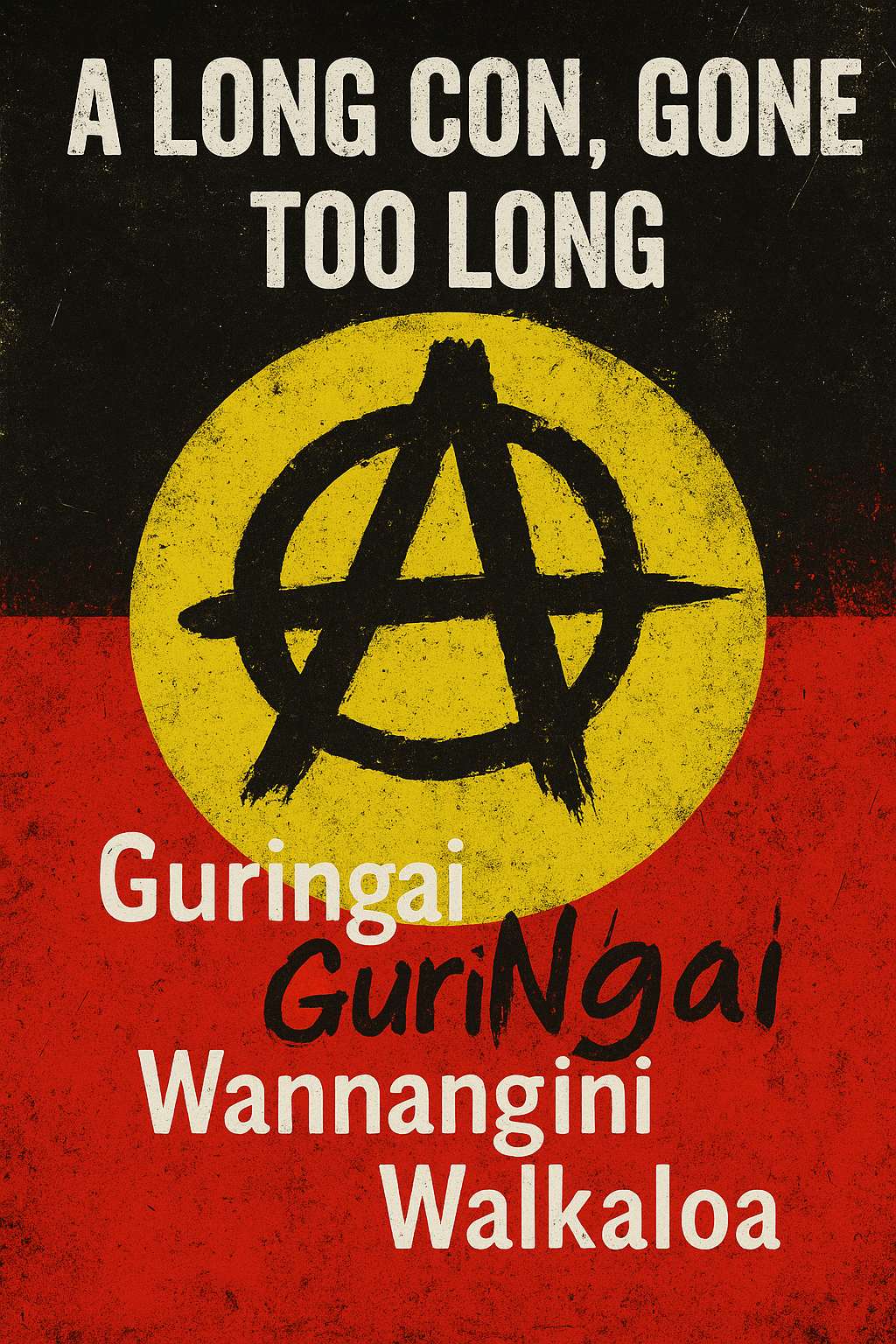
The “GuriNgai” controversy concerns a disproven, modern, psuedo-Aboriginal identity that has been adopted by non-Aboriginal people and organisations across Northern Sydney, Hornsby Shire, and the Central Coast of New South Wales.
At its centre is a serious question: how did a group with zero legitimate cultural and historical foundations come to be widely accepted by councils, schools, cultural organisations, environmental groups, and other public institutions as somehow representing Aboriginal People and Culture?
The modern use of the term “GuriNgai” can be traced to the work of non-Aboriginal missionary John Fraser. In 1892, Fraser took the genuine Aboriginal name of the Guringai/Gringai/Guringay people, whose Country is north of the Hunter River, and adapted it to a speculative Kuring-gai/Guringai tribe in Northern Sydney and Central Coast of New South Wales, Australia.
This non-Aboriginal fiction was adopted by non-Aboriginal individuals in the early 2000’s and has grown to become a blight on both the Aboriginal and non-Aboriginal communities. In 2003, Warren Whitfield established the Guringai Tribal Link Aboriginal Corporation while the terms “GuriNgai,” “Wannangini,” “Walkaloa,” and “Wanabee” are have been interchangable terms with zero genuine Aboriginal meaning, that have been used by substantially overlapping individuals, families, organisations, and associates within the same non-Aboriginal network to claim cultural authority across different areas and institutional settings.
This website is a record of the activities of these individuals, the direct and indirect harm their pretending has caused, and a record of the many attempts by Aboriginal People and organisations to raise awareness of this trully bizarre situation.
Restoring integrity requires truth telling, institutional accountability, and respect for Aboriginal communities with genuine historical, genealogical, cultural, and community-recognised connections to Country.
Chapter 13. 2023 – Post publication of A Long Con Gone On Too Long.
Addendum. ANTHROPOLOGICAL CONNECTION REPORT: Family history and contemporary connection evidence.
Addendum. A new perspective on Laurence Paul Allen’s thesis.
Addendum. Goolabeen – Saving Kariong ‘Sacred Lands’
Contact the author using the contact form below. If you would like, it’s entirely up to you.


