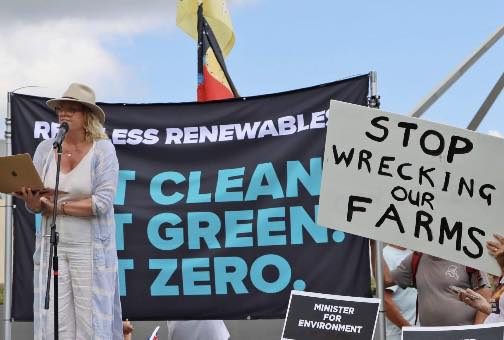
The global climate emergency demands urgent and systemic change across governance, land use, and energy generation. In Australia, Local Aboriginal Land Councils (LALCs) have emerged as key actors in facilitating climate resilience and energy transition through their unique statutory authority, cultural stewardship, and land-based knowledge systems.
As outlined in the Australian Public Policy Institute’s Powershift paper, the NSW Aboriginal Land Rights Act 1983 provides LALCs with a mandate that includes land acquisition, development, and environmental planning, positioning them as potentially transformative players in Australia’s renewable energy future (APPI, 2025, pp. 7–8).
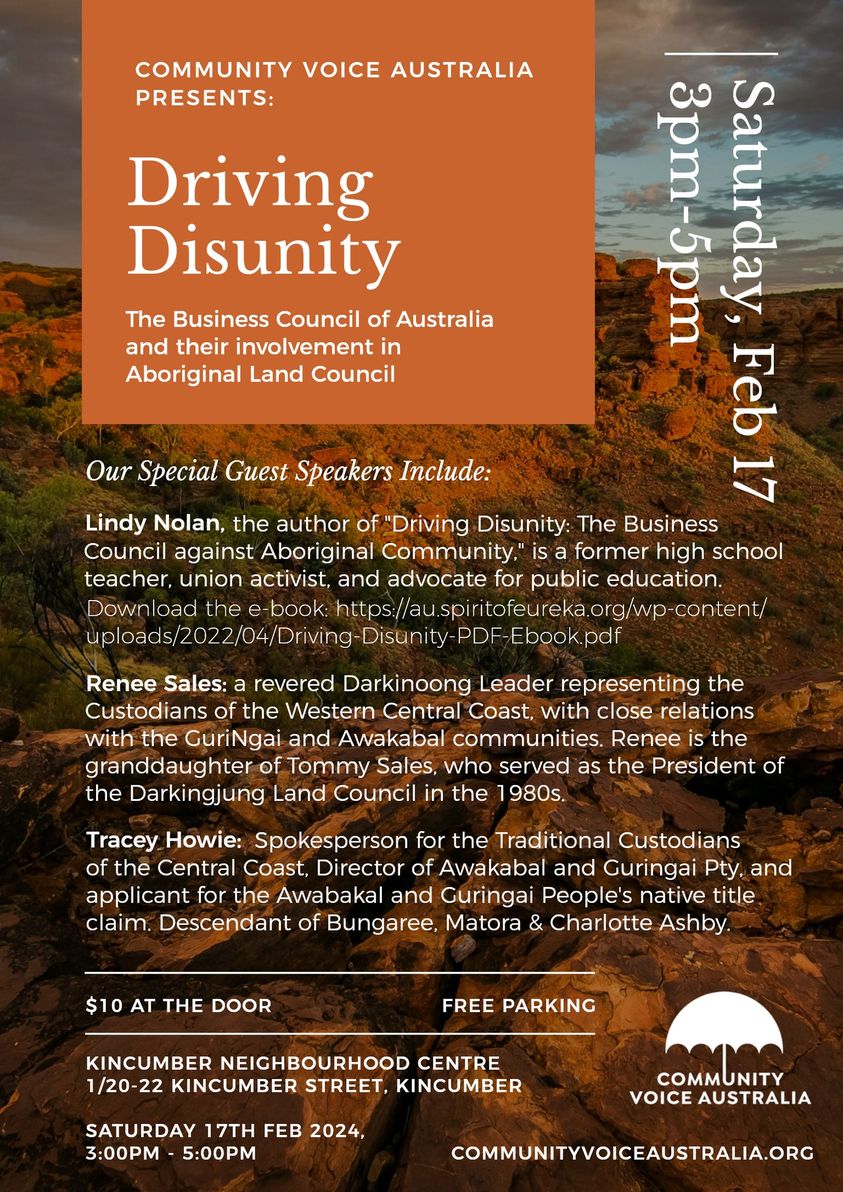
Yet, as this paper argues, the systematic undermining of LALCs by settler pseudo-Indigenous groups, conspiracy-driven environmentalists, and alt-right populists does not simply threaten Aboriginal sovereignty. It actively obstructs climate solutions and worsens ecological degradation. The actions of figures such as Jake Cassar, Lisa Bellamy, and Kate Mason, together with their organisation, Coast Environmental Alliance (CEA), must be understood not as isolated anti-development sentiments but as manifestations of a broader settler-conspiritualist movement that is both anti-Indigenous and anti-climate.
Aboriginal Land Councils as Agents of Climate Justice
The governance and development capacities of LALCs enable them to lead projects that both reduce emissions and empower communities. As noted by researchers at UNSW (2025), the scale and location of LALC-owned land align closely with areas identified as suitable for renewable energy zones (REZs) across NSW. These lands are often geographically proximate to transmission lines, solar access corridors, and wind corridors. More significantly, projects undertaken on Aboriginal land are not merely technical transitions, but culturally grounded acts of repair, justice, and future-making (UNSW, 2025).
The Conversation (2025) similarly highlights that First Nations landholders, including LALCs, are uniquely positioned to benefit from, and lead, the clean energy revolution. Their involvement ensures the energy transition avoids replicating colonial patterns of extraction and exclusion. LALCs can use leasehold agreements, partnerships with clean energy providers, and culturally appropriate governance models to ensure that energy infrastructure is installed with consent, consultation, and co-benefit (The Conversation, 2025). The Powershift paper explicitly warns that failing to include LALCs in energy transition planning will not only reproduce injustice but squander critical opportunities for climate innovation (APPI, 2025, p. 12).
Settler Environmentalism, Cultural Fraud, and the Obstruction of Climate Action
Despite the promise of LALC-led development, their authority has come under sustained attack from settler-activist networks that claim Aboriginal identity, spiritual connection, or ecological custodianship without legal or cultural legitimacy. The GuriNgai group, frequently associated with CEA, has been publicly disavowed by Metropolitan and Darkinjung Local Aboriginal Land Councils, who assert that these individuals are not descendants of Bungaree or any recognised Garigal people (MLALC, 2020; DLALC, 2022). These identity claims have been used to contest Aboriginal-led developments and assert unauthorised control over land and heritage sites.

Coast Environmental Alliance has repeatedly positioned itself against LALC initiatives by claiming that developments on Aboriginal land destroy ‘sacred lands’ or threaten the spiritual ecology of the Central Coast. However, CEA campaigns rarely include actual expertise, Aboriginal voices or cultural authorities. Their leadership consists overwhelmingly of non-Aboriginal individuals with links to conspiracy theories, climate denialism, and anti-renewable rhetoric. As demonstrated in the qualitative content analysis of over 200 CEA Facebook posts (Guringai.org, 2025), the group has shown consistent opposition to renewable infrastructure, Aboriginal housing developments, and biodiversity offsetting, despite purporting to support environmental justice.

Jake Cassar’s public statements and bushcraft activism have included opposition to the Kariong development (led by DLALC), Lizard Rock (Patyegarang, led by Metro LALC),and a potential project at Kincumber (led by DLALC). Cassar’s narratives regularly invoke the sacredness of trees, rocks, or waterways, but are silent on legal Aboriginal authority. His rhetoric merges settler ecological spirituality with sovereign citizen tropes, framing Aboriginal councils as “corporate developers” while ignoring the colonial origins of his own legitimacy crisis (Taplin, 2023).

Kate Mason, meanwhile, leads Community Voice Australia and is involved in My Place Central Coast, both groups that share ideological overlap with COVID-19 denial, sovereign citizen movements, and climate conspiracy narratives. These groups reproduce what Taplin (2023) and Walker (2023) describe as “superconspiracies”: ideologically dense and emotionally charged narratives that merge spiritual warfare, climate denialism, white possession, and hostility to Indigenous rights.
Undermining LALCs = Undermining Climate Transition
The systematic undermining of LALCs by these groups contributes directly to the climate catastrophe in several ways. First, it delays or prevents the development of renewable energy projects on Aboriginal land, particularly in REZs that are critical to NSW’s emissions reduction targets. Second, it delegitimises Aboriginal-led ecological planning and fire management, which have historically maintained biodiversity and carbon sinks. Third, it reframes Aboriginal governance as a threat to the environment, thereby shifting public support away from lawful climate-aligned development and toward reactionary settler populism.
The APPI Powershift report emphasises that “Aboriginal land must not be treated as a battleground for the culture wars of settler politics” (APPI, 2025, p. 15). Yet this is precisely what CEA and its affiliates have done, turning cultural fraud, anti-renewable disinformation, and spiritual populism into weapons of territorial disruption. The result is a landscape of epistemic and ecological violence: truth is displaced by conspiracy, Aboriginal custodianship is replaced by settler performance, and climate adaptation is stalled under the guise of saving trees.
Conclusion: Climate Truth Demands Cultural Truth
The climate crisis requires not only scientific literacy and policy reform but also the decolonisation of land governance and the restoration of Indigenous authority. LALCs embody a model of environmental stewardship that is holistic, lawful, and climate-aligned. Their marginalisation by settler-environmentalist imposters like CEA is not a minor distraction, it is a structural impediment to climate justice.
It is no coincidence when those who reject Aboriginal sovereignty also reject climate science. In their refusal to acknowledge both Indigenous legitimacy and environmental reality, they reveal the settler colonial logic that binds identity fraud, ecological sabotage, and climate denialism into a single reactionary project. The only way forward is to reaffirm and resource LALC leadership in climate planning, and to hold accountable those who exploit Aboriginal identity and environmental discourse for settler agendas.
JD Cooke
References
Australian Public Policy Institute. (2025). Local Aboriginal Land Council Powershift [Policy Insights Paper]. https://appi.org.au/wp-content/uploads/2025/06/APPI-Policy-Insights-Paper-Local-Aboriginal-Land-Council-Powershift.pdf
Darkinjung Local Aboriginal Land Council. (2022). First Nations Accord Submission. https://guringai.org/2025/06/10/dlalc-ccc-first-nations-accord-submission-may-2022/
Guringai.org. (2025). The Saving Kariong Sacred Lands Campaign and the Digital Recolonisation of Aboriginal Authority. https://guringai.org/2025/06/30/the-saving-kariong-sacred-lands-campaign-and-the-digital-recolonisation-of-aboriginal-authority/
Metropolitan Local Aboriginal Land Council. (2020, June 3). Letter to Premier Berejiklian Re Guringai Claimants.
Taplin, J. (2023). The sovereign citizen superconspiracy: Contemporary issues in native title. The Australian Journal of Anthropology, 34(2), 134–153. https://doi.org/10.1111/taja.12465
The Conversation. (2025). Here’s how First Nations landholders can share the benefits of the NSW energy transition. https://theconversation.com/heres-how-first-nations-landholders-can-share-the-benefits-of-the-nsw-energy-transition-259702
UNSW Newsroom. (2025). Transformative Role: Aboriginal Land Councils Can Help NSW Reach Renewable Energy Targets. https://www.unsw.edu.au/newsroom/news/2025/06/transformative-role-aboriginal-land-councils-can-help-nsw-reach-renewable-energy-targets
Walker, J. (2023). Silencing the Voice: The Fossil-fuelled Atlas Network’s Campaign Against Constitutional Recognition of Indigenous Australia. Cosmopolitan Civil Societies: An Interdisciplinary Journal, 15(2), 105–125. https://doi.org/10.5130/ccs.v15.i2.8813


Leave a comment