
The emergence of campaigns such as ‘Saving Kariong Sacred Lands,’ orchestrated by Jake Cassar and Lisa Bellamy of Coast Environmental Alliance (CEA), exemplifies a settler-conspiritualist movement deeply entangled with pseudo-Indigenous claims and white environmental populism. These campaigns operate not as legitimate ecological protests. Rather, they function as ideological offensives against Aboriginal self-determination and land rights. Drawing upon disingenuous faux-environmental narratives, they frame Aboriginal governance as incompatible with imagined localised spiritual ecologies and community values.

This strategy aligns with what scholars have identified as the psychological politics of ‘white possessiveness’ (Moreton-Robinson, 2015) and the symbolic inversion of settler guilt into settler guardianship.
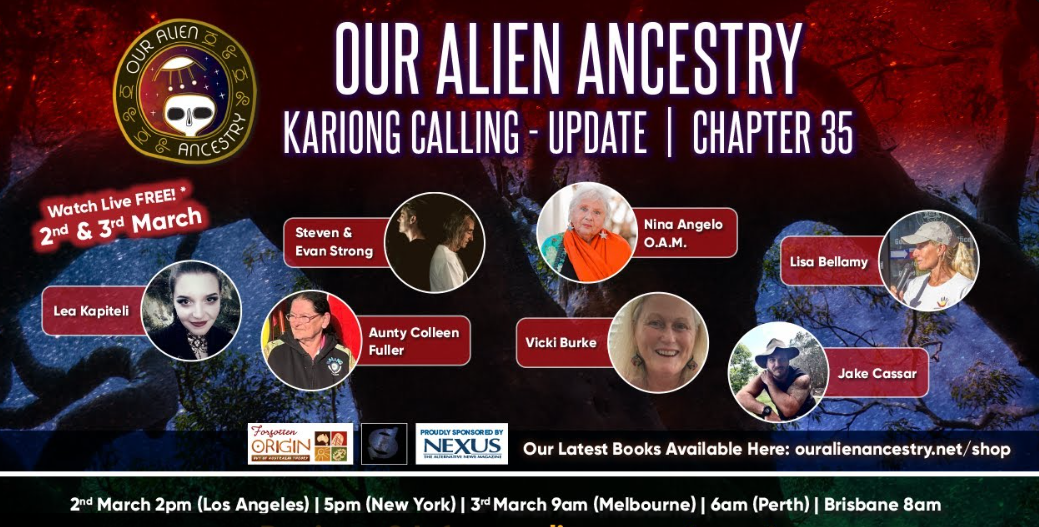
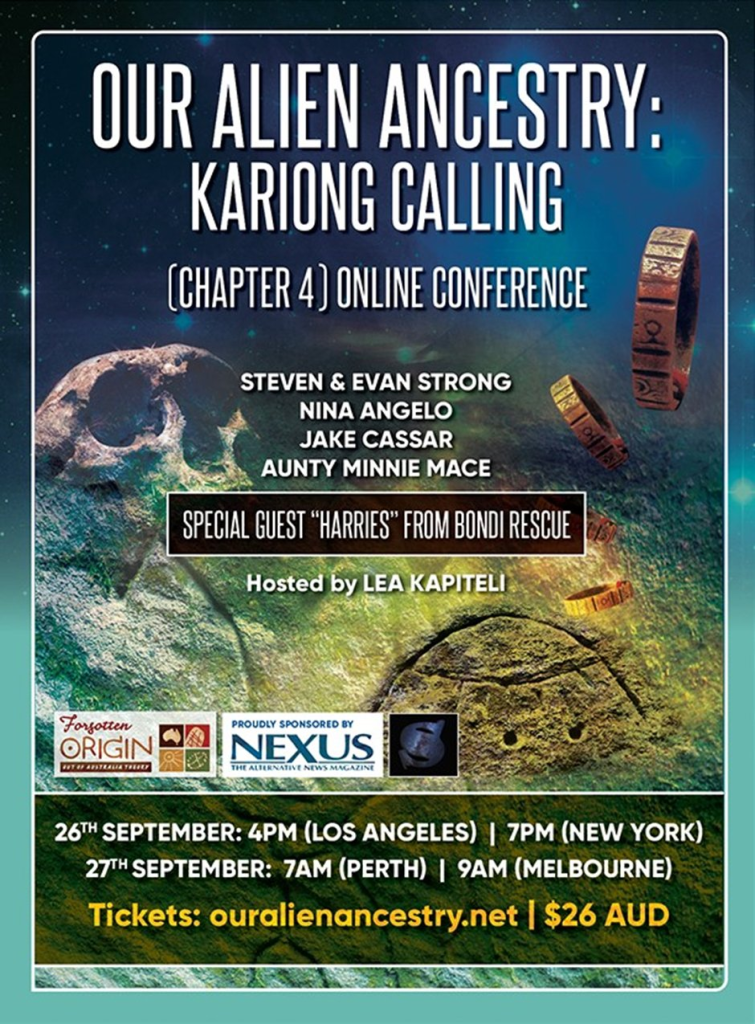
By portraying Aboriginal-led developments as threats to sacred nature, these campaigns mobilise affective attachment to place in ways that naturalise settler entitlement and delegitimise Indigenous law and sovereignty. Often invoking debunked myths such as the Kariong Glyphs, the ‘Grandmother Tree’, and the non-Aboriginal GuriNgai, these movements reframe Aboriginal land ownership as a threat to settler-defined notions of spirituality and ecological purity (Guringai.org, 2025d; Guringai.org, 2025l).
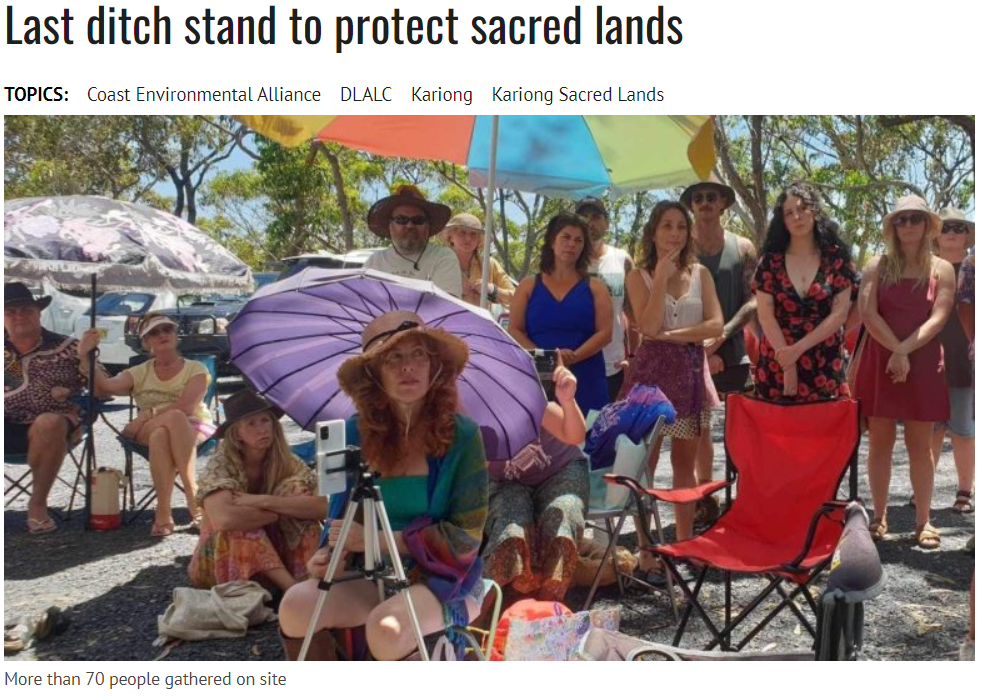
The Grandmother Tree, a large angophora located outside the Kariong development footprint, has been mythologised without evidence or endorsement. The tree has been turned into a spiritual totem for settler environmentalists seeking to delegitimise the lawful authority of the Darkinjung Local Aboriginal Land Council (LALC).

This symbolic appropriation follows a pattern identified by researchers such as Watt and Kowal (2019), where whiteness cloaks itself in indigeneity to seize narrative power over land and identity. This dynamic is exacerbated in Kariong by the direct intervention of settler activist groups relying on digital cult strategies, cultic populism, and charismatic fraud.

These practices align with the hallmarks of digital cultism identified in recent literature: charismatic leadership, conspiratorial truth-claims, ritualised belonging, and the suspension of empirical scrutiny in favour of revealed ‘spiritual’ truths (Crabtree et al., 2020; Halafoff, Rocha & Ryan, 2022) (Guringai.org, 2025e; 2025n).
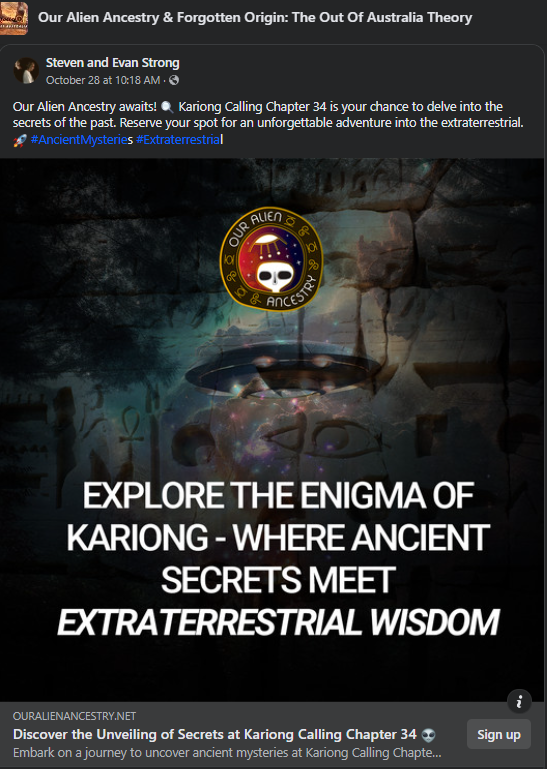
Coast Environmental Alliance, led by Jake Cassar, plays a central role in these campaigns. It is not a neutral environmental advocacy group but a vehicle for settler cultism and digital mobilisation against Aboriginal sovereignty. The group’s media output, primarily on its Facebook platform, demonstrates a clear pattern of epistemic and territorial dispossession.
CEA published over Facebook posts directly targeting Aboriginal land developments, misrepresenting facts, decontextualising cultural heritage, and circulating conspiracy-laden interpretations of Aboriginal law and custom (Guringai.org, 2025a). These campaigns disproportionately focused on projects led by Aboriginal land councils such as Darkinjung and Metropolitan LALC, despite their alignment with conservation and cultural stewardship principles.
CEA’s digital materials frequently elevate false custodians, individuals claiming Aboriginality without substantiated genealogy or community acceptance, and platform their opposition to lawfully approved developments. In one widely shared Facebook post, Jake Cassar referred to a non-Aboriginal woman as a “Traditional Custodian” in opposition to DLALC’s Kariong proposal, despite her lack of verified lineage or community recognition (Guringai.org, 2025).

These figures, often self-appointed ‘elders’ or ‘custodians,’ serve as proxies for white anxieties about land loss and Aboriginal empowerment. Their prominence on CEA channels indicates an orchestrated strategy to confuse public understanding of cultural authority and fracture community support for Aboriginal self-determination.
In parallel, Coast Community News (CCN) has functioned as an echo chamber for CEA narratives, publishing verbatim CEA media releases, sympathetic articles and op-eds that amplify settler concerns while excluding the voices of Darkinjung LALC and Aboriginal Parties. CCN has consistently failed to apply rigorous journalistic standards when reporting on Aboriginal issues, often publishing unverified claims about sacred sites, cultural custodianship, or development impacts without consultation with statutory Aboriginal bodies.

This disinformation apparatus enables fringe groups to appear legitimate, while Aboriginal authorities are positioned as adversarial, opaque, or out-of-touch (Guringai.org, 2025x; 2024aa). This media strategy constitutes a form of epistemic violence, wherein settler actors displace Indigenous knowledge systems and authority by substituting them with counterfeit narratives of cultural belonging (Spivak, 1988; Moreton-Robinson, 2015).
Similarly, the Kariong Glyphs, claimed to be evidence of ancient Egyptian visitation, reflect the enduring power of colonial mythologies that exoticise Aboriginal land while denying its lived cultural significance.

These pseudoarchaeological claims distract from genuine Indigenous heritage by inserting speculative and non-Indigenous narratives into the cultural landscape, thereby derailing proper recognition of Aboriginal law, history, and custodianship. have been repeatedly exposed as colonial-era fabrications, most likely created in the 20th century by amateur enthusiasts or local schoolboys (Guringai.org, 2023ab; Filling a Void, 2015). Despite this, Jake Cassar and associated groups have invoked the glyphs as sacred artefacts under threat, using their alleged sanctity to obstruct Aboriginal-led development and amplify conspiracy-based environmental resistance (ABC News, 2020; Guringai.org, 2025i).
Community testimony collected by Darkinjung LALC and presented in their planning and consultation documentation, including the ‘First Nations Accord’ submission (2022), the Guringaygupa Djuyal Barray Report (Lissarrague & Syron, 2024), and Aboriginal Cultural Authority reports (2021), affirms the rejection of false custodianship by individuals and groups like Cassar, Bellamy, and the non-Aboriginal GuriNgai (Guringai.org, 2025k). These documents highlight the cultural violence inherent in settler mimicry and affirm Darkinjung’s role as the legitimate landholder and cultural authority under the Aboriginal Land Rights Act 1983 (NSW).
Cultural, Legal, and Historical Legitimacy: Darkinjung LALC versus the GuriNgai Group
A comprehensive comparison of the Darkinjung Local Aboriginal Land Council (DLALC) and the non-Aboriginal GuriNgai group reveals fundamental differences in cultural legitimacy, legal authority, and historical continuity. DLALC is a legislatively constituted body under the Aboriginal Land Rights Act 1983 (NSW), which not only affirms its Aboriginal identity but also confers statutory powers to acquire, manage, and develop land for the benefit of its members. This legal recognition grants DLALC authority in land use decisions, enabling it to undertake planning proposals such as the Kariong development with official endorsement, access to statutory planning frameworks, and direct accountability to state and community governance mechanisms.
In contrast, the GuriNgai group operates without such legal status, recognition, or institutional accountability. (NSW), with a legal mandate to acquire and manage land on behalf of Aboriginal people in its area. It is accountable to its members, to the NSW Aboriginal Land Council, and to the public through detailed development and consultation processes, including Aboriginal Cultural Heritage Assessments, Development Delivery Plans, and adherence to statutory planning laws (Darkinjung LALC, 2023).
DLALC’s governance, transparency, and legitimacy are reaffirmed in public records, its statutory role within the NSW Land Rights network, and its public-facing land use planning documents, including the Kariong Planning Proposal hosted by the NSW Department of Planning and the 2022 Development Delivery Plan (NSW DPE, 2024). Since the 1980s, DLALC has delivered housing, environmental stewardship, cultural education, and land justice outcomes for its members, including the proposal to dedicate more than 50 percent of the Kariong site as conservation land, with biodiversity certification and affordable housing contributions (Darkinjung, 2023).
By contrast, the GuriNgai group lacks recognition from both the Aboriginal community, the Aboriginal descendants of the Ancestors they claim, as well as any statutory Aboriginal body. As the Metropolitan Local Aboriginal Land Council stated in its 2020 letter to Premier Berejiklian, ‘There is no historical or contemporary basis for the GuriNgai identity claim in our region, and their public assertions undermine the legitimacy of established Aboriginal governance and cultural authority’ (MLALC, 2020).
It is not a recognised Aboriginal group, nor has it ever been appointed or endorsed by the NSW Aboriginal Land Council, Native Title Tribunal, or any Aboriginal heritage authority. The Metropolitan Local Aboriginal Land Council (MLALC) and other recognised entities have publicly rejected GuriNgai identity claims, including in a formal letter to the Premier of New South Wales in 2020 (MLALC, 2020). Linguistic and anthropological research confirms that the GuriNgai label is a settler construction, not a term grounded in historical usage or community identity (Kwok, 2015; Lissarrague & Syron, 2024).
The historical record reinforces this distinction. For example, community submissions to the NSW Aboriginal Land Council and public statements from both the Metropolitan and Darkinjung LALCs have explicitly stated that individuals associated with the GuriNgai group, such as Tracey Howie, Neil Evers, and Laurie Bimson, do not appear on any known genealogical records connected to the Garigal or Guringay peoples. In one case, genealogical evidence showed that a prominent claimant traced ancestry to 19th-century Scottish settlers rather than Aboriginal ancestors, directly contradicting their self-proclaimed identity.

These contradictions have been publicly documented and widely circulated in community education campaigns, including those hosted on guringai.org, as part of efforts to protect legitimate cultural authority from fabrication and exploitation. DLALC’s connection to Country is grounded in continuous, documented presence, traditional knowledge, and intergenerational cultural transmission. Its activities are legally defined, community governed, and culturally verified. The GuriNgai, by contrast, represent a fabrication: as documented in genealogical analyses such as those compiled by Cooke (2025) and published on guringai.org, the individuals claiming this identity have not demonstrated any verifiable descent from Aboriginal ancestors known to the region.
The group’s claims lack corroboration from any Native Title, Land Council, or recognised genealogical registry, and have been refuted by multiple Aboriginal bodies. In contrast to DLALC’s documented ancestral and cultural continuity, the GuriNgai identity was retrospectively invented and strategically deployed to interfere in land negotiations and gain cultural capital through mimicry and myth. a pseudo-tribal identity constructed through settler desire, genealogical manipulation, and spiritual appropriation. Key figureheads such as Tracey Howie, Neil Evers, and Laurie Bimson have never been shown to descend from any known Garigal or Guringay ancestor, and no community-accepted genealogical record supports their claims (Cooke, 2025; guringai.org, 2025).
These institutional and historical realities highlight a deeper cultural and political tension at the heart of the Kariong dispute: the difference between legitimate Aboriginal governance and its settler-colonial simulation. Researchers such as Watt and Kowal (2019), Moreton-Robinson (2015), and Watego (2021) describe such phenomena as forms of white possession and performative indigeneity—tactics through which non-Indigenous individuals access cultural capital and political legitimacy while bypassing the community-based protocols that define Aboriginal identity.

Moreover, DLALC is accountable through public submissions, published plans, and legal reviews. The Kariong Planning Proposal is documented on the NSW Department of Planning’s website, where key facts are disclosed: limited residential development, strong environmental conservation protections, and extensive Aboriginal consultation (NSW DPE, 2024). In stark contrast, the GuriNgai’s claims circulate in opaque media channels, fringe rallies, and social media platforms such as the Coast Environmental Alliance’s Facebook group, where mythmaking is divorced from any cultural checks or accountability mechanisms (Cooke, 2025; guringai.org, 2025).
This contrast between Darkinjung and the GuriNgai is not merely administrative. It is a conflict between real Aboriginal sovereignty and its settler simulation. While DLALC represents Aboriginal people making decisions on their own lands, this is clearly exemplified by its leadership of the Kariong Planning Proposal, which includes a comprehensive Aboriginal Cultural Heritage Assessment, formal community consultation, and conservation strategies endorsed by the NSW Department of Planning. These processes reflect DLALC’s exercise of self-determination through recognised governance structures, cultural protocols, and legally accountable frameworks that prioritise both Country and community. within legal, cultural, and ethical frameworks, the GuriNgai network—supported by Coast Environmental Alliance, Coast Community News, and political actors like Lisa Bellamy—performs a settler fantasy of Aboriginality, one that strategically erases legitimate authority and undermines land justice for actual Aboriginal people.
The stakes are therefore not symbolic. The widespread circulation of misinformation and settler mimicry has material consequences, including the delay or obstruction of critical housing and conservation projects, the diversion of public support and funding away from legitimate Aboriginal organisations, and the erosion of trust in statutory planning and cultural heritage processes. These outcomes are not incidental but represent a systemic re-routing of both financial and moral capital away from recognised Aboriginal bodies. For example, DLALC’s proposals for culturally informed, environmentally responsible housing developments have been stalled or mischaracterised in public forums, potentially weakening their access to investor confidence, planning approvals, and community support.
Simultaneously, fringe groups like the GuriNgai, despite lacking cultural or legal legitimacy, have succeeded in securing speaking platforms, grants, and partnerships from misinformed institutions unaware of their fabricated status. This constitutes a redistribution of opportunities, attention, and decision-making power away from actual Aboriginal communities and toward settler-led simulations of indigeneity that destabilise land justice outcomes. These impacts reinforce systemic inequalities by allowing unverified claimants to monopolise media narratives and insert themselves into public consultation frameworks designed to serve real Aboriginal communities. They are juridical, epistemological, and territorial.
This is not a question of competing opinions but of settler colonial sabotage masquerading as environmental concern. As Aboriginal nations assert their right to speak for Country under frameworks of law and community governance, the weaponisation of cultural misinformation becomes a direct threat to Indigenous futures. Decolonisation demands more than symbolic gestures—it requires institutions, media, and the public to reject settler fantasies and recognise the enduring authority of those with the right to speak for Country. What is at issue is whether Aboriginal land, law, and authority are respected, or, as illustrated by the ‘Save Kariong Sacred Lands’ campaign promoted by the GuriNgai and Coast Environmental Alliance, whether such authority can be overwritten by fabricated cultural claims and misinformation.
JD Cooke
Reference List
ABC News. (2020, July 9). Tensions mount over proposed housing development by Darkinjung Aboriginal Land Council. https://www.abc.net.au/news/2020-07-09/darkinjung-kariong-housing-development-tensions-mount/12426348
Cooke, J. D. (2025). The appropriation of Indigenous identity by the non-Aboriginal GuriNgai group. https://guringai.org
Crabtree, L. T., Gusterson, H., & Renner, C. (2020). Cults of personality and new media. Routledge.
Darkinjung Local Aboriginal Land Council. (2022). First Nations Accord Submission. Central Coast Council Cultural Committee.
Darkinjung Local Aboriginal Land Council. (2023). Kariong Planning Proposal FAQs. https://www.darkinjung.com.au/wp-content/uploads/2023/10/Darkinjung-FAQs-v2.pdf
Filling a Void. (2015). A critical review of Guringai language and identity. Unpublished manuscript.
Guringai.org. (2023–2025). Articles on GuriNgai identity claims and settler environmentalism. https://guringai.org
Halafoff, A., Rocha, C., & Ryan, J. (2022). (Con)spirituality in Australia: The New Age, far right, and COVID-19. In E. Asprem & A. Dyrendal (Eds.), Handbook of conspiracy theory and contemporary religion (pp. 337–352). Brill.
Kwok, C. (2015). Filling a void: A critical review of Guringai language and identity. Unpublished manuscript.
Lissarrague, A., & Syron, R. (2024). Guringaygupa Djuyal Barray: Language and Country of the Guringay People. https://guringai.org/2024/11/05/guringaygupa-djuyal-barray-language-and-country-of-the-guringay-people-by-amanda-lissarrague-and-robert-syron/
Metropolitan Local Aboriginal Land Council. (2020). Letter to Premier Berejiklian. https://guringai.org
Moreton-Robinson, A. (2015). The white possessive: Property, power and Indigenous sovereignty. University of Minnesota Press.
NSW Department of Planning and Environment. (2024). Kariong Planning Proposal – DLALC. https://www.planning.nsw.gov.au/policy-and-legislation/aboriginal-land-use-planning/darkinjung-local-aboriginal-land-council/kariong-planning-proposal
Spivak, G. C. (1988). Can the subaltern speak? In C. Nelson & L. Grossberg (Eds.), Marxism and the interpretation of culture (pp. 271–313). University of Illinois Press.
Watego, C. (2021). Another day in the colony. University of Queensland Press.
Watt, E., & Kowal, E. (2019). To be or not to be Indigenous? Reflections on the biology of belonging. Genealogy, 3(3), 40. https://doi.org/10.3390/genealogy3030040
Watt, E., & Kowal, E. (2019). To be or not to be Indigenous? Understanding the rise of Australia’s Indigenous population since 1971. In M. Walter, K. Martin, & G. Bodkin-Andrews (Eds.), Indigenous data sovereignty and policy (pp. 123–138). ANU Press.
 A Long Con, Gone on Too Long.
Leave a reply to Tracing the Bungaree–Sophy–Charlotte Ashby Fiction: From Fabrication to Institutional Laundering – Bungaree.org Cancel reply