Past election results expose the difference between a highly visible activist network and the actual Central Coast community it claims to represent
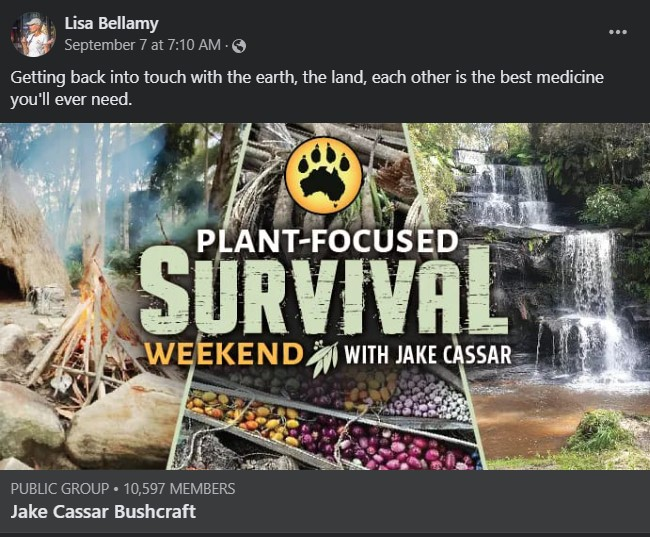
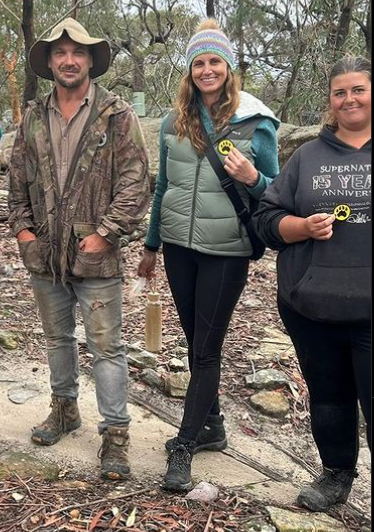
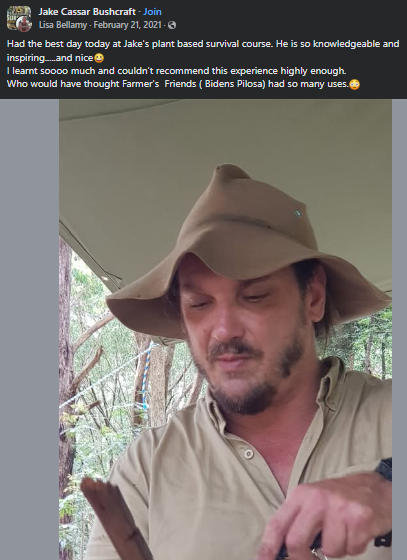
For several years, Lisa Bellamy has appeared near the centre of an unusually persistent Central Coast political ecosystem involving Jake Cassar, Coast Environmental Alliance (CEA), Save Kariong Sacred Lands, Coasties Who Care and people promoted as “Traditional Bloodline Custodians” or “GuriNgai” authorities.
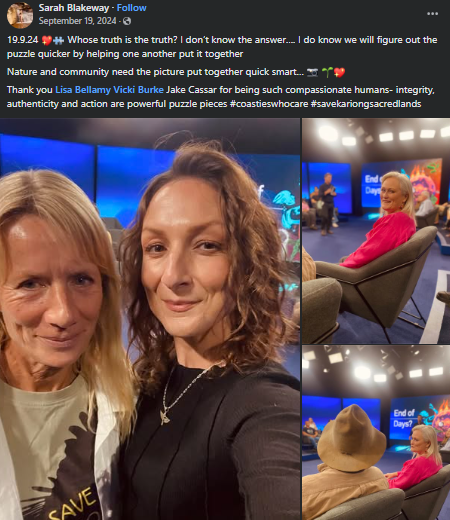
The names of the organisations change. The campaigns change. The elections change. The claimed emergencies change.
The underlying structure has remained remarkably stable.
Environmental alarm is combined with claims of Aboriginal cultural authority. Government and Aboriginal institutions are treated with suspicion. A relatively small network of overlapping campaigners is repeatedly presented as a broad community movement. Kariong is repeatedly described as facing an existential threat. Darkinjung Local Aboriginal Land Council (DLALC) repeatedly becomes the antagonist.

The 23 August 2026 “Save Kariong Sacred Lands” rally brought these elements together again. Yet it also provided an opportunity to ask a question that previous guriNgai.org articles could not answer with the same precision:
How representative is this movement actually?
Election results provide an unusually useful answer as an independently administered measure of how many people have actually chosen Lisa Bellamy when given the opportunity to vote for her.
The answer is considerably more modest than the public profile surrounding her activism might suggest.

Three elections tell a remarkably consistent story
At the 2023 NSW state election Bellamy contested Gosford as an independent.
She received 1,668 first-preference votes from 49,018 formal ballots, or 3.40 per cent, finishing fifth of seven candidates. After preferences from two lower-polling candidates were distributed, Bellamy reached 1,922 votes and was eliminated (NSW Electoral Commission [NSWEC], 2023).
Two years later Bellamy contested the federal electorate of Robertson.
This time she received 3,376 first preferences from 101,463 formal votes.
Her result was 3.33 per cent (Australian Electoral Commission [AEC], 2025).
Different electorate. Different electoral system. Different field of candidates. Larger campaign.
Almost exactly the same percentage.
The comparison is difficult to ignore. Bellamy received 3.40 per cent in Gosford in 2023 and 3.33 per cent in Robertson in 2025. The detailed electoral analysis therefore supports a relatively restrained conclusion: Bellamy has demonstrated a persistent but small broader personal electoral constituency.
The 2024 Central Coast Council election initially appears to contradict this.
It does not.
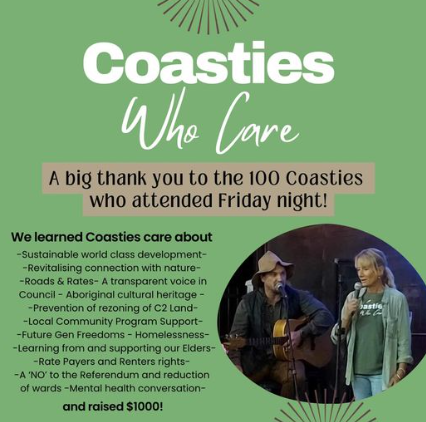
Bellamy headed the Coasties Who Care ticket in Gosford West Ward. Group F received 4,305 first preferences, or 11.11 per cent.
But 3,806 of those votes were above-the-line votes for Group F. Only 413 voters marked Bellamy herself as their direct first preference. Those 413 votes represented approximately 1.07 per cent of formal ballots cast in the ward.
Because Bellamy was listed first, the electoral system credited the 3,806 group votes to her at the beginning of the preference distribution. She therefore began with 4,219 credited votes, although only 413 ballots had been marked directly for Lisa Bellamy (NSWEC, 2024).
There is nothing improper about those group votes. They are legitimate votes.
What is improper is turning them rhetorically into 4,305 people personally choosing Lisa Bellamy.
They did not.
Kariong is the exception, not evidence of a Central Coast mandate
There is, however, one place where Bellamy’s support has repeatedly been stronger.
Kariong.
In 2023 Bellamy received 8.42 per cent at Kariong Hall and 6.43 per cent at Kariong Public School. Across those two booths her result was approximately 7.14 per cent, more than twice her electorate-wide vote.
The pattern became even stronger during the 2024 council election. Coasties Who Care received approximately 18.49 per cent across the two principal Kariong booths, substantially above its 11.11 per cent ward-wide result.
That is politically important.
The election results do not show a large Central Coast movement centred upon Bellamy.
They show something more specific: a geographically concentrated Kariong constituency surrounded by a much smaller broader electoral base.
That distinction helps explain an apparent contradiction in Bellamy’s public profile.
A person receiving around 3.3 per cent in broader elections can nevertheless appear extraordinarily prominent if much of their activism occurs in the place where their support is concentrated, particularly when the same arguments are amplified through rallies, Facebook groups, environmental organisations, candidate groups and repeated media coverage.
Visibility is not the same thing as representativeness.
A loud campaign is not necessarily a large campaign.
And repeated claims to speak for “the community” are not themselves evidence that the community has appointed anyone to speak for it.

From Goolabeen to another “last stand”
This concentration around Kariong did not emerge in a cultural vacuum.
guriNgai.org has documented the peculiar mythology surrounding Kariong since 2023, particularly through the stories associated with Beverley “Beve” Spiers, also known as Goolabeen.
Spiers publicly claimed “Darkinoong” identity and cultural authority over a territory extending between the Hawkesbury and Hunter regions. She became associated with spiritualised interpretations of Kariong, alternative accounts of cultural authority and the wider pseudoarchaeological environment surrounding the so-called Gosford or Kariong glyphs (guriNgai.org, 2023a).
Later guriNgai.org analysis examined how aspects of this mythology survived Spiers’ death and migrated into a wider network of environmental activism, alternative spirituality, contested Indigenous identity and conspiratorial thinking around Kariong (guriNgai.org, 2025a).
The point is not that every person attending a Kariong rally believes in ancient Egyptians, interstellar portals, ley lines, extraterrestrials or any of the more spectacular claims historically circulated around the area.
The important continuity is more subtle.
Kariong has repeatedly been turned into something larger than a planning dispute. It becomes sacred terrain in a struggle between moral defenders and corrupting institutions. Cultural authenticity becomes something that can supposedly be recognised through spirituality, ceremony, environmental commitment or personal affinity with Country, rather than through Aboriginal community, genealogy, law and accountable governance.
This creates fertile conditions for alternative claimants to authority.

The recurring substitution of Aboriginal authority
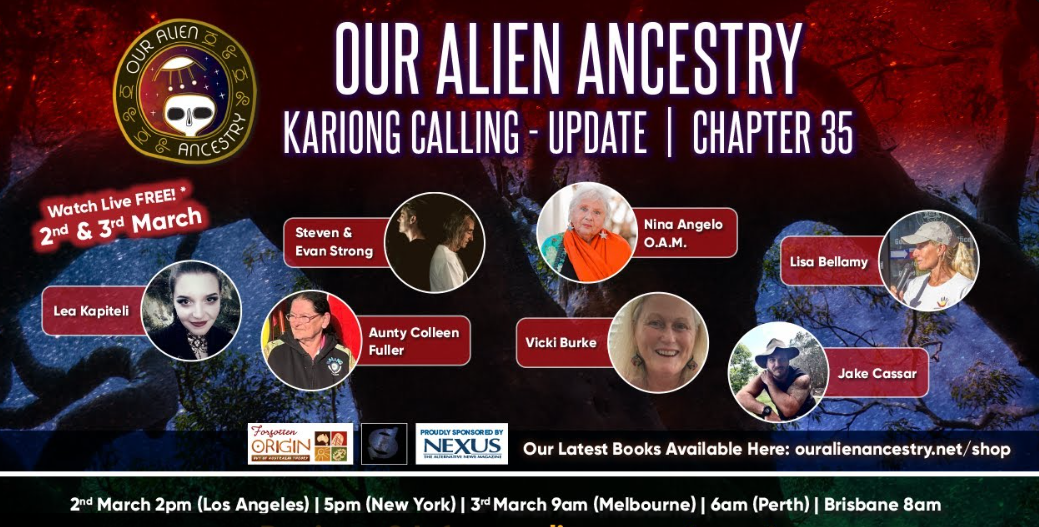
The 23 August 2026 rally again advertised participation by “Traditional Bloodline Descendants of the Central Coast” and included Aboriginal ceremony as part of the event’s public framing. Yet the promotional material did not explain which Aboriginal community conferred that status, how descent had been verified, or why those particular people possessed authority in a political dispute involving land owned by Darkinjung LALC.
This is not a trivial problem of terminology.
The historical legitimacy of the modern “GuriNgai” identity claimed for Northern Sydney and the Central Coast has been challenged by Aboriginal organisations and historical and linguistic research.
The Aboriginal Heritage Office concluded that John Fraser created “Kuringgai” in 1892 as a vast hypothetical super-tribe and that continued use of Guringai or its variants as an authentic traditional identity for Northern Sydney is not warranted by the historical evidence (Aboriginal Heritage Office, 2015).
Lissarrague and Syron’s later work distinguishes the genuine historical Guringay people north of the Hunter River from the subsequent application of “Kuringgai” and “Guringai” towards Sydney (Lissarrague & Syron, 2024).
Earlier guriNgai.org investigations traced how the modern GuriNgai, Guringai, Wannangine and Walkaloa claims became embedded in councils, heritage processes, cultural performances and environmental campaigning despite those historical problems (guriNgai.org, 2025b).
The relevance to Bellamy is her repeated political elevation of contested debunked non- Aboriginal authorities while challenging the legitimacy, motives or cultural standing of recognised Aboriginal People, communities and organisations.
That pattern was already visible in guriNgai.org’s 2023 analysis of Bellamy’s relationship with the Indigenous Aboriginal Party and her support for GuriNgai claimants.
It remained visible during Coasties Who Care in 2024.
It continued through the Robertson campaign in 2025, when the electoral vehicle changed but many of the same relationships and Kariong narratives remained.
It remained evident in the wider network documented through 2025 and 2026 around Cassar, CEA and the circulation of contested custodial authority.
And it was present again when Bellamy and Cassar mobilised supporters against Darkinjung in August 2026.
The continuity matters more than any individual incident.
The factual problem underneath the political theatre
The latest Kariong campaign also reveals something else.
The central planning dispute is far less dramatic than its campaign branding suggests.
Darkinjung is not presently proposing to develop the legally recognised Kariong Sacred Lands Aboriginal Place.
NSW Planning states explicitly that the Woy Woy Road proposal site adjoins the protected area but is not part of it. The proposal concerns rezoning 5.7 hectares of Darkinjung-owned land for possible low-density residential use. Approximately 7.1 hectares would remain environmental conservation land.
Rezoning would not itself authorise the construction of 50 houses, land clearing or subdivision. It would enable Darkinjung to submit a later development application, which would then undergo further assessment and public consultation (NSW Department of Planning, Housing and Infrastructure [DPHI], 2024).
That single geographic distinction punctures much of the rhetorical force of the campaign title.
The public is repeatedly being asked to “Save Kariong Sacred Lands” from a proposal that NSW Planning says is not developing Kariong Sacred Lands.
Bellamy’s 23 August speech extended that distortion by presenting future possibilities as though they were effectively settled outcomes and by blurring the proposed residential footprint, adjoining bushland, national park and protected Aboriginal Place into one threatened landscape.
The detailed fact check published on 24 August examined those claims individually. There is no purpose in repeating every finding here.
The larger point is that the environmental case does not require misinformation.
Cultural heritage assessment has occurred. Twelve Registered Aboriginal Parties were consulted. Bushfire risk has been considered. Biodiversity investigations have been undertaken. Identified wetlands are not simply being converted into suburban housing. More than half the property is proposed to remain conservation land. None of this establishes that the planning proposal should be approved, but it establishes that the real planning question is far more complicated than “save sacred land from fifty houses”.
A credible environmental objection should become stronger when the facts are clarified.
If an argument becomes weaker when the map is corrected, the planning process is explained and existing environmental assessments are acknowledged, the problem is not the correction.

Conspirituality is useful as an explanation
The term conspirituality describes the convergence of spiritualised “hidden truth” narratives with conspiratorial distrust of institutions. It helps explain environments in which personal intuition, sacred meaning and insider knowledge can become more authoritative than external verification (Ward & Voas, 2011; guriNgai.org, 2025c).
The framework is useful because it explains a method of constructing authority.
Official planning information becomes suspicious because it comes from government.
A statutory Aboriginal organisation becomes culturally suspect because it participates in development.
Contested claimants appear more “authentic” because they perform ceremony and speak the language of sacred protection.
Environmental disagreement becomes a moral battle.
Repeated failure to achieve a political objective does not weaken the movement because each setback can be interpreted as further evidence that powerful institutions are refusing to listen.
Earlier guriNgai.org work described this process as authority laundering, where contested claims accumulate apparent legitimacy through repetition, institutional proximity, media coverage, organisational branding and public ceremony.
The 2026 rally demonstrated the mechanism almost perfectly.
CEA branding.
Central Coast Koalas branding.
“Traditional Bloodline Descendants”.
Smoking ceremony.
Threatened wildlife.
Sacred land.
A “last stand”.
Each component adds moral weight to the others.
The result can look like multiple independent forms of authority converging upon the same conclusion, even when many of those voices arise from the same overlapping social network.
A remarkable number of final battles
This helps explain another enduring feature of the Kariong campaign: permanent emergency.
In January 2024 a Kariong gathering was reported as a “last ditch stand”.
Another large meeting followed in August 2024.
In 2025 litigation was threatened if the rezoning proceeded.
In August 2026 supporters were again told they faced the possible “LAST STAND” for Kariong Sacred Lands.
The language of “last chance”, “urgent action”, “all hands on deck” and “last stand” repeatedly transforms a slow planning process into an existential crisis.
This rhetoric is particularly effective in a geographically concentrated activist community.
Urgency discourages reflection.
A final battle does not invite people to carefully compare planning maps.
Sacred duty does not encourage uncertainty.
A movement defending Country from imminent destruction does not readily accommodate the possibility that the land being discussed is not actually the gazetted Aboriginal Place.
And a campaign premised upon heroic resistance has little incentive to acknowledge that its principal political spokesperson has repeatedly attracted around three per cent of the vote in broader elections.
Environmentalism does not extinguish Aboriginal land rights
None of this means Darkinjung should receive automatic development approval.
Aboriginal organisations are not beyond criticism.
Environmental law still applies.
Planning law still applies.
Cultural heritage law still applies.
People are entitled to oppose rezoning and development on environmental, planning or social grounds.
But Darkinjung is not simply another speculative property company.
It is a Local Aboriginal Land Council constituted under the Aboriginal Land Rights Act 1983 (NSW). The NSW Government expressly describes Aboriginal land as an economic resource intended to support Aboriginal self-determination and address the continuing consequences of dispossession.
This matters because the political structure of the campaign increasingly produces an extraordinary inversion.
Land was returned through Aboriginal land-rights legislation.
The Aboriginal organisation that owns that land considers how it might use part of it for economic and community benefit.
A largely non-Aboriginal activist network opposes that decision.
The network elevates alternative and contested “bloodline” authorities to provide Aboriginal legitimacy for its position.
The statutory Aboriginal landowner is then depicted as the threat to Country.
Earlier guriNgai.org work connected this pattern with campaigns affecting housing and Aboriginal-owned land elsewhere on the Central Coast. Those articles raised legitimate questions about the consequences of sustained opposition to housing supply during a severe housing shortage, although the precise contribution of any individual campaign to regional homelessness cannot be quantified from the available evidence alone.
The more fundamental issue is whether Aboriginal land rights mean Aboriginal organisations genuinely possess the capacity to make decisions about their land, subject to the same laws and public scrutiny as others, or whether ownership is accepted only when Aboriginal land remains permanently undeveloped and available for the environmental, spiritual and recreational priorities of surrounding settlers.

The election results change how this campaign should be understood
This is where Bellamy’s electoral history becomes more than electoral trivia.
The results provide a democratic reality check on years of political theatre.
While a minority opinion does not become illegitimate merely because it is held by a minority, neither should political intensity be confused with democratic mandate.
Bellamy received 3.40 per cent in Gosford in 2023.
She received 3.33 per cent in Robertson in 2025.
Her apparently much larger 2024 result was principally a group-ticket vote, with 3,806 of Group F’s 4,305 first preferences cast above the line and only 413 ballots marked directly for Bellamy.
Her support localised to the point of absurdity, demonstrably stronger around Kariong, precisely where the campaign has generated its greatest visibility.
That tells us something important.
The “Save Kariong Sacred Lands” campaign is a persistent, highly organised and geographically concentrated political network that has become remarkably successful at generating visibility, reproducing its preferred cultural authorities and presenting its campaigns as community consensus.
From visibility to manufactured authority
The common thread running from Goolabeen through the modern Kariong campaigns is therefore not any single conspiracy theory, candidate, Facebook group or protest.
It is the manufacture of authority.
Cultural authority can be manufactured through repeated ceremonial performance.
Community authority can be manufactured through overlapping organisations appearing to be independent.
Political authority can be manufactured by describing activist visibility as community consensus.
Epistemic authority can be manufactured by replacing documented planning information with insider narratives about what is “really” happening.
Media authority can be manufactured when campaign claims are repeatedly published without testing the underlying geography, genealogy or electoral representativeness.
And urgency can be manufactured by declaring yet another administrative stage to be the final opportunity to save something from destruction.
The election results interrupt that process because they cannot easily be spiritualised.
They count people.
And what they show is not a mass Central Coast political movement, but a candidate with a relatively small broader electoral constituency, a considerably stronger localised Kariong following and an activist network whose public visibility substantially exceeds its demonstrated electoral reach.
It puts Lisa Bellamy’s claims to represent the community into perspective.
References
Aboriginal Heritage Office. (2015). Filling a void: A review of the historical context for the use of the word “Guringai”.
Australian Electoral Commission. (2025). Robertson, NSW: 2025 federal election results.
guriNgai.org. (2023a, September 8). Goolabeen: Saving Kariong ‘Sacred Lands’.
guriNgai.org. (2023b, September 18). Lisa Bellamy, White Supremacy cloaked as Allyship.
guriNgai.org. (2023c, November 11). Lisa Bellamy won’t be silenced, not even on the 11th hour on the 11th day of the 11th month.
guriNgai.org. (2024, August 20). Coasties Who Care, just Cookers Who Scare.
guriNgai.org. (2025a, June 24). Echoes of Goolabeen: Settler conspirituality, pretendianism, and the recolonisation of Kariong Sacred Lands.
guriNgai.org. (2025b, August 9). The non-Aboriginal Guringai/GuriNgai/Wannangine/Walkaloa of the Northern Beaches, Hornsby Shire, and Central Coast of NSW.
guriNgai.org. (2025c, September 13). Conspiracy, conspirituality, and sovereign citizens: Understanding and countering harmful ideologies in Australia.
guriNgai.org. (2025d, March 31). Lisa Bellamy to run as an Independent for Robertson.
guriNgai.org. (2025e, July 5). A critical analysis of pseudolaw, cultism, and Aboriginal identity fraud in Australian conspirituality.
guriNgai.org. (2025f, August 10). False custodians, real homelessness: Bellamy, Cassar and CEA’s role in the Central Coast housing crisis.
guriNgai.org. (2025g, December 14). Jake Cassar, the non-Aboriginal GuriNgai network, and the circulation of falsified authority.
guriNgai.org. (2026a, January 11). High-demand-group dynamics and the cultural laundering of extremism in contemporary Australia: The Jake Cassar, Coast Environmental Alliance, Campfire Collective, and “GuriNgai” nexus.
guriNgai.org. (2026b, August 14). Same campaign, same false custodians: Cassar and Bellamy mobilise again against Darkinjung.
guriNgai.org. (2026c, August 24). Lisa Bellamy’s ‘Save’ Kariong speech: A rally built on false claims.
Lissarrague, A., & Syron, R. (2024). Guringaygupa djuyal, barray: Language and Country of the Guringay people.
NSW Department of Planning, Housing and Infrastructure. (2024). Kariong planning proposal.
NSW Electoral Commission. (2023). State electoral district of Gosford: First preference votes.
NSW Electoral Commission. (2024). Central Coast Gosford West Ward: Councillor election results.


Leave a Reply