
ABORIGINAL PEOPLE, FAMILIES AND ALLIES ARE ADVISED THAT THE “SAVE KARIONG SACRED LANDS” GATHERING BEING HELD TOMORROW, SUNDAY 23 AUGUST 2026, SHOULD BE APPROACHED AS A CULTURALLY UNSAFE EVENT.

This is a public-interest cultural-safety warning about an established campaign in which surface level environmental advocacy has repeatedly become entangled with contested claims of Aboriginal identity and cultural authority, attacks on Aboriginal-controlled organisations, and misleading representations of Aboriginal-owned land as though Aboriginal people themselves must be prevented from exercising rights over it.

The event being promoted for 23 August 2026 continues that pattern.
Recent local reporting describes it as a “last-ditch” rally opposing the rezoning of Aboriginal-owned land at 300 Woy Woy Road, Kariong (Coast Community News, 2026).

The language is familiar.
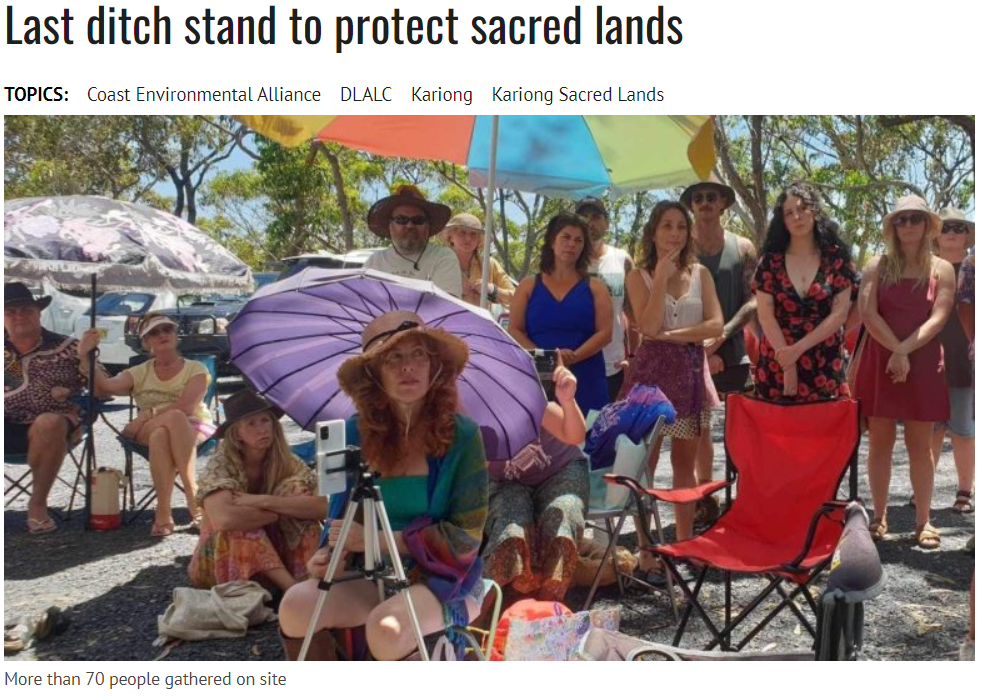
In January 2024, Coast Community News described another CEA event concerning exactly the same proposal as a “last ditch stand”, reporting Jake Cassar as saying that supporters had effectively reached their final opportunity to stop the rezoning before submissions closed (Coast Community News, 2024).
More than two and a half years later, another “last-ditch” event is being promoted.
That history matters.

THE FIRST THING PEOPLE SHOULD KNOW: THE “KARIONG SACRED LANDS” ARE NOT BEING REZONED FOR HOUSING
The most important factual problem with the campaign remains unchanged.
The NSW Department of Planning, Housing and Infrastructure states explicitly:
“The proposal is not developing Kariong Sacred Lands.”
The Department says the land proposed for rezoning adjoins, but is not part of, the Kariong Sacred Lands Aboriginal Place within Brisbane Water National Park (NSW Department of Planning, Housing and Infrastructure [DPHI], 2024).
That distinction is fundamental.
The name “Save Kariong Sacred Lands” encourages an uninformed member of the public to believe that the recognised Kariong Sacred Lands themselves are about to be subdivided for housing.
According to the NSW Government, they are not.
The proposal concerns Darkinjung Local Aboriginal Land Council-owned land at 300 Woy Woy Road adjoining those lands.
Environmental arguments about that adjoining property can legitimately be made. People can oppose rezoning, question biodiversity assessments, argue for more conservation land or scrutinise planning decisions.
What they should not do is erase the geographical distinction between the development site and the gazetted Aboriginal Place.
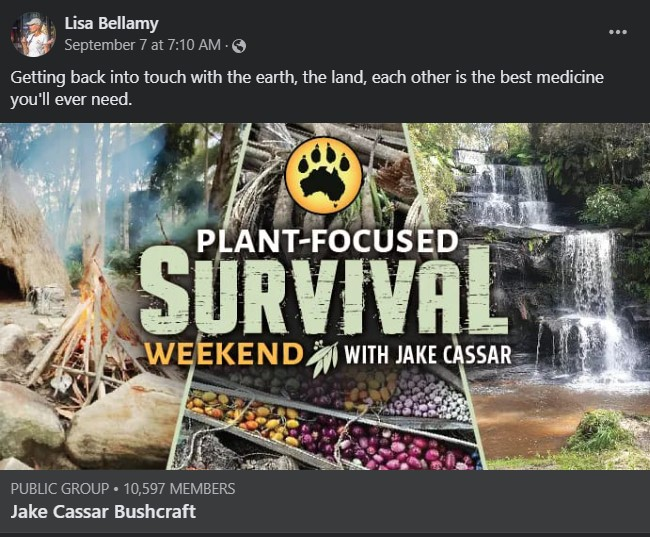
THERE IS ALSO NO APPROVED HOUSING DEVELOPMENT READY TO BEGIN
The current public rhetoric repeatedly gives the impression that a final battle is occurring immediately before bulldozers arrive.
That is not the present statutory position.
The proposal before the NSW planning system is a planning proposal to rezone land.
The Department states that it does not approve land clearing, does not approve construction, and does not itself approve 50 houses (DPHI, 2024).
If the rezoning is ultimately approved, Darkinjung LALC could then lodge a development application for subdivision capable of accommodating up to 50 dwellings. Any development application would undergo further assessment and consultation under NSW planning law. Individual housing construction would also require development consent (DPHI, 2024).
As of 22 August 2026, the public NSW planning material continues to describe the proposal as being in the post-exhibition assessment process.
There is therefore a substantial difference between:
“The Government is considering whether this Aboriginal-owned land should be rezoned”
and:
“This is the last stand before Kariong Sacred Lands are destroyed.”
The first broadly reflects the statutory situation.
The second is campaign rhetoric.

MOST OF THE SITE IS NOT PROPOSED FOR RESIDENTIAL ZONING
The official proposal is also considerably more qualified than much of the campaign imagery suggests.
The Department states that approximately 5.7 hectares are proposed for R2 Low Density Residential zoning.
Approximately 7.1 hectares of the remaining land would be retained for environmental conservation, providing a buffer between the proposed residential area and Brisbane Water National Park (DPHI, 2024).
That does not mean the environmental consequences of rezoning should escape scrutiny.
It does mean that portraying the proposal as the wholesale destruction of the property omits an important part of the proposal.
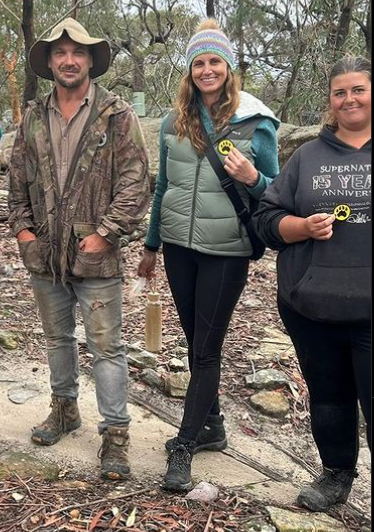
ABORIGINAL CULTURAL HERITAGE HAS NOT SIMPLY BEEN IGNORED
Another recurring implication of the campaign is that Darkinjung LALC and the planning authorities are prepared simply to destroy Aboriginal cultural heritage.
The current NSW Government record says otherwise.
An Aboriginal cultural heritage assessment was undertaken.
The Department says 12 Registered Aboriginal Parties were consulted.
The proposed residential zoning was designed to avoid known Aboriginal cultural heritage items except for one rock engraving, which is proposed to be preserved within a local park.
Protective recommendations include fencing during construction and a 20-metre buffer around relevant sites.
The cultural heritage work was independently reviewed by Heritage NSW, which supported proposed conservation areas encompassing most recorded sites (DPHI, 2024).
People remain entitled to criticise those assessments or argue that stronger protections are necessary.
But criticism is different from pretending no Aboriginal heritage process occurred.

WHY THIS BECOMES A CULTURAL-SAFETY ISSUE
The problem with the Save Kariong Sacred Lands campaign is not merely disagreement about planning.
The cultural problem begins when a largely settler-led environmental campaign starts deciding which Aboriginal people should possess authority over Aboriginal land.

The land at the centre of this dispute is owned by the Darkinjung Local Aboriginal Land Council.
Darkinjung LALC is not simply a property-development company that happens to have the word “Aboriginal” in its title.
It is a statutory Aboriginal body constituted within the NSW Aboriginal Land Rights system.
The Department explains that the land was granted under the Aboriginal Land Rights Act 1983 (NSW) as part of addressing historical dispossession and ongoing Aboriginal disadvantage. The NSW Aboriginal land-use planning framework expressly seeks to enable Aboriginal communities to use their land to create an economic base and strengthen self-determination (DPHI, 2024).
The Department directly addresses suggestions that Aboriginal-owned land should simply be transferred into the national park estate:
Land rights are not about Aboriginal people recovering land merely so it can be returned to the public estate. Economic resources are an essential component of self-determination (DPHI, 2024).
This is the contradiction at the centre of the campaign.
People claiming to defend Aboriginal Country are campaigning to prevent an Aboriginal-controlled organisation from exercising land rights over Aboriginal-owned land.

CONTESTED “TRADITIONAL BLOODLINE CUSTODIANS”
The cultural-safety concern becomes more serious when environmental activism is legitimised through people presented to the public as “Traditional Custodians,” “Traditional Bloodline Custodians,” “Guringai,” “Wannangini,” “Walkaloa” or other purported cultural authorities whose claims have themselves been the subject of sustained public dispute.
This is not a new feature of the Kariong campaign.
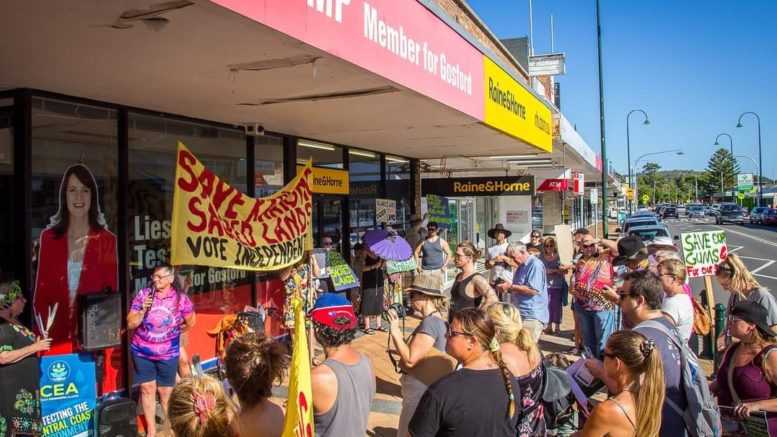
Coast Community News reported similar claims in 2020, 2021 and 2024, repeatedly presenting campaign participants as Guringai or “Traditional Bloodline Custodians” while those participants opposed Darkinjung LALC’s use of its own land (Coast Community News, 2020, 2021, 2024).
The same 2024 reporting quoted claims that the principal Central Coast groups included invented or highly contested entities described as “Guringai”, “Walkaloa”, “Wannabe”, “Wanangine” and “Gurigal”, while positioning these identities against Darkinjung LALC (Coast Community News, 2024).
guriNgai.org has documented those identity and authority claims extensively.
For cultural-safety purposes, the immediate issue is straightforward.
The public should not be expected to accept the words “Traditional Custodian” or “Traditional Bloodline Custodian” as independent proof of Aboriginal community recognition, genealogy or cultural authority.
Those are claims requiring evidence.
They are particularly consequential when the claimed authority is then used politically against an Aboriginal organisation.
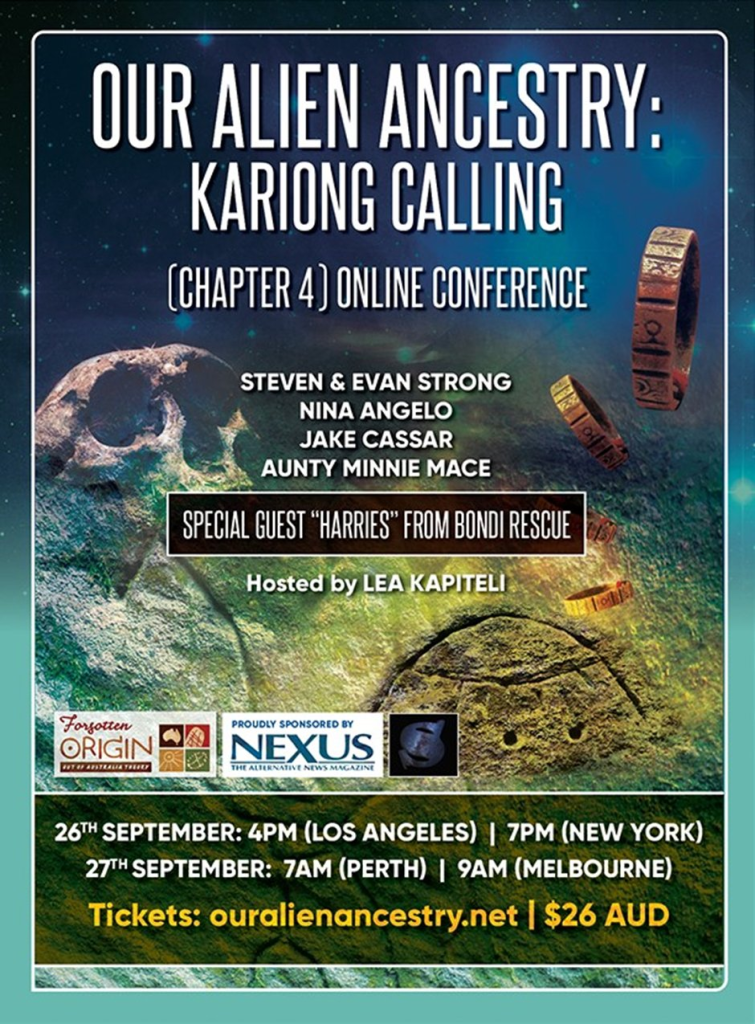
EVEN THE CAMPAIGN ITSELF HAS ACKNOWLEDGED THAT ITS DIFFERENT GROUPS ARE CONNECTED
This is also not simply a spontaneous gathering of unrelated conservationists.
During a 2024 interview concerning another “Walk for Kariong Sacred Lands” event, organiser Emma French described participants as members of Coast Environmental Alliance and said plainly:
“It’s all linked, we’re all linked together.”
French identified the campaign with CEA and ultimately referred questions concerning its direction back to Jake Cassar, saying, “Talk to Jake Cassar, he does everything, and I just do the graphic design” (Cooke, 2024).
This matters when apparently separate campaign pages, events, personalities and “save” groups reproduce substantially the same framing.
A proliferation of Facebook pages does not necessarily demonstrate a proliferation of independent community organisations.
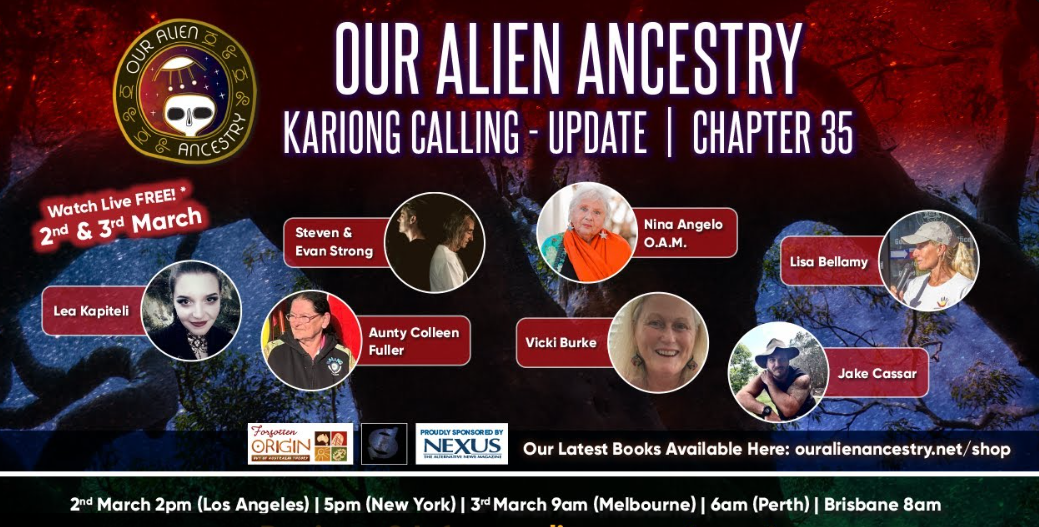
THE “LAST STAND” HAS HAPPENED BEFORE
Tomorrow’s event is being promoted through another cycle of emergency language.
But on 21 January 2024, supporters gathered for what local media already called a “last ditch stand”.
Cassar told the newspaper that the opportunity to oppose the rezoning was closing and warned that Darkinjung succeeding would have “permanent and far-reaching implications” (Coast Community News, 2024).
The proposal remained alive through 2024.
It remained alive through 2025.
It remains under consideration in August 2026.
The 23 August rally is now another “last-ditch” event.
This repeated crisis framing should encourage supporters and journalists to ask a basic question:
Is this genuinely the final opportunity to prevent imminent destruction, or is “last chance”, “last stand” and “last-ditch” language being repeatedly used as a mobilisation technique?
The evidence presently supports the latter interpretation much more strongly.
THE GOVERNMENT’S OWN INFORMATION DIRECTLY CONTRADICTS SEVERAL OF THE MOST ALARMING IMPRESSIONS
The Department says the Kariong Sacred Lands Aboriginal Place is not being developed.
The Department says the planning proposal does not approve clearing or building work.
The Department says a subsequent development application would require further assessment and public consultation.
The Department says approximately 7.1 hectares are proposed for environmental conservation.
The Department says Aboriginal cultural heritage assessment occurred and 12 Registered Aboriginal Parties were consulted.
The Department says the proposed residential zoning generally avoids known Aboriginal heritage items.
The Department says Heritage NSW independently reviewed the cultural heritage work.
The Department says the planning framework exists partly to strengthen the economic self-determination of Aboriginal communities (DPHI, 2024).
Those facts do not compel anyone to support the rezoning.
They do compel an honest campaign to accurately describe what it is opposing.

ENVIRONMENTALISM DOES NOT CONFER ABORIGINAL AUTHORITY
There is nothing culturally unsafe about campaigning to protect trees.
There is nothing culturally unsafe about opposing residential development.
There is nothing culturally unsafe about arguing that an ecological assessment is inadequate.
There is nothing culturally unsafe about demanding better conservation.
The cultural danger arises when environmental concern is transformed into permission for non-Aboriginal activists to adjudicate Aboriginal legitimacy, select preferred Aboriginal voices, elevate contested custodianship claims, and portray a statutory Aboriginal organisation as the enemy of Aboriginal Country.
That is not ordinary conservation.
It reproduces an old colonial relationship in a modern form.
Aboriginal people obtain land through a statutory land-rights system intended partly to repair dispossession.
Aboriginal people then attempt to determine how that land should be used.
Settler campaigners object.
The campaigners locate or platform Aboriginal-identifying people whose views align with their own.
Those preferred individuals are elevated as the “real” custodians.
The Aboriginal organisation holding the land is delegitimised.
The settlers then claim they are defending Aboriginal Country from Aboriginal people.
That inversion should concern anyone who takes Aboriginal self-determination seriously.

CULTURAL PERFORMANCE DOES NOT CURE CULTURAL UNSAFETY
The use of Aboriginal terminology, cultural imagery, claims of custodianship, ceremonies, stories, spirituality or statements about protecting sacred land does not automatically make an event culturally legitimate.
Cultural safety depends upon accountability, relationships, recognition and respect for Aboriginal agency.
A cultural performance cannot substitute for those things.
Nor can the language of “allyship” justify speaking over Aboriginal-controlled institutions whenever their decisions conflict with what settlers want Aboriginal people to do.
The fundamental question is not whether somebody can perform Aboriginal culture convincingly enough for a non-Aboriginal audience.
The question is:
Who gave them authority, who recognises that authority, and to whom are they accountable?

CURRENT INSTITUTIONAL CONTEXT ALSO MATTERS
The Central Coast Council’s current public material acknowledges Darkinjung Country and pays respect to Darkinjung Elders, reflecting the continuing public institutional recognition of Darkinjung within the region.
At the same time, the NSW Government identifies Darkinjung LALC as the Aboriginal landholder and explains the Kariong proposal specifically within the statutory framework created to advance Aboriginal land rights and economic self-determination (DPHI, 2024).
That does not mean every Aboriginal person on the Central Coast must agree with Darkinjung LALC.
Aboriginal communities are not politically homogeneous.
It does mean that settlers cannot simply make an Aboriginal organisation disappear by preferring a different Aboriginal-identifying spokesperson.
A WARNING TO MOB
Aboriginal people considering attending tomorrow’s gathering should understand that they may be entering a space in which the legitimacy of Aboriginal land rights and Aboriginal-controlled governance is openly or implicitly contested.
They may hear Darkinjung LALC discussed primarily as a “developer”.
They may encounter people presented as local Traditional Custodians without being told that those claims are contested.
They may hear the adjoining development site described simply as “Kariong Sacred Lands”.
They may encounter catastrophic or final-chance language that does not accurately convey the multiple further statutory stages that would precede any residential construction.
They may also encounter sincere people concerned about biodiversity who have been given only one version of a complicated Aboriginal land-rights and planning dispute.
That last point matters.
Not everyone attending this event should be treated as knowingly participating in cultural harm.
Many may simply believe they are going to save bushland.
This warning exists precisely because those people deserve to know what sits behind the branding.

TO ENVIRONMENTALISTS ATTENDING IN GOOD FAITH
If your concern is genuinely conservation, ask questions.
Ask why the event is called “Save Kariong Sacred Lands” when the NSW Government says the Kariong Sacred Lands Aboriginal Place is not the land proposed for residential rezoning.
Ask why a rezoning proposal is being spoken about as though bulldozers are about to begin work.
Ask why environmental opposition to Aboriginal-owned land repeatedly requires claims about who the “real” Aboriginal custodians are.
Ask why some campaigners spend so much energy challenging Darkinjung LALC rather than simply presenting evidence about biodiversity.
Ask what evidence supports every person being presented to you as a Traditional Custodian.
Ask whether Aboriginal land rights include the right for Aboriginal people to use their land economically, or only the right to preserve it according to settler expectations.
Ask whether you would accept non-Aboriginal activists appointing alternative cultural authorities over another Aboriginal community.
Ask who benefits when an Aboriginal Land Council is stripped of legitimacy while settler activists acquire the moral authority to speak for Country.
Those are not attacks on conservation.
They are questions required by cultural safety.

THIS EVENT SHOULD NOT BE MISTAKEN FOR ABORIGINAL CONSENSUS
Tomorrow’s gathering does not represent Aboriginal people.
It does not represent an Aboriginal consensus about Kariong.
It does not transform contested cultural claims into established authority.
It does not alter the ownership of the land.
It does not change what the NSW Government says about the geographical boundary of the Kariong Sacred Lands Aboriginal Place.
And it does not turn a planning proposal into an approved housing development.
What it does represent is the latest public mobilisation in a campaign that has been running for years.
A campaign that was holding “last ditch” events in January 2024 is holding another “last-ditch” event in August 2026.
The public deserves to know that history.
Protecting Country matters.
Truth matters.
Aboriginal cultural authority matters.
Aboriginal land rights matter.
Aboriginal self-determination matters.
Environmentalism should never require settlers to decide which Aboriginal people are legitimate.
And Aboriginal people should not have to surrender the substance of land rights in order to satisfy somebody else’s idea of what Aboriginal custodianship is supposed to look like.
References
Coast Community News. (2020, December 11). Local indigenous groups rally against DLALC development in Kariong.
Coast Community News. (2021, May 7). New Indigenous Party opposed to DLALC bushland development.
Coast Community News. (2024, January 23). Last ditch stand to protect sacred lands.
Coast Community News. (2024). Meeting to oppose Kariong development.
Coast Community News. (2026, August 19). Last-ditch effort to save Kariong land from rezoning.
Cooke, J. D. (2024, June 2). Coast Environmental Alliance vs the local Aboriginal Land Council: An interview with ‘Walk for Kariong’ organiser Emma French. guriNgai.org.
NSW Department of Planning, Housing and Infrastructure. (2024). Kariong planning proposal: Woy Woy Road, Kariong. NSW Government.

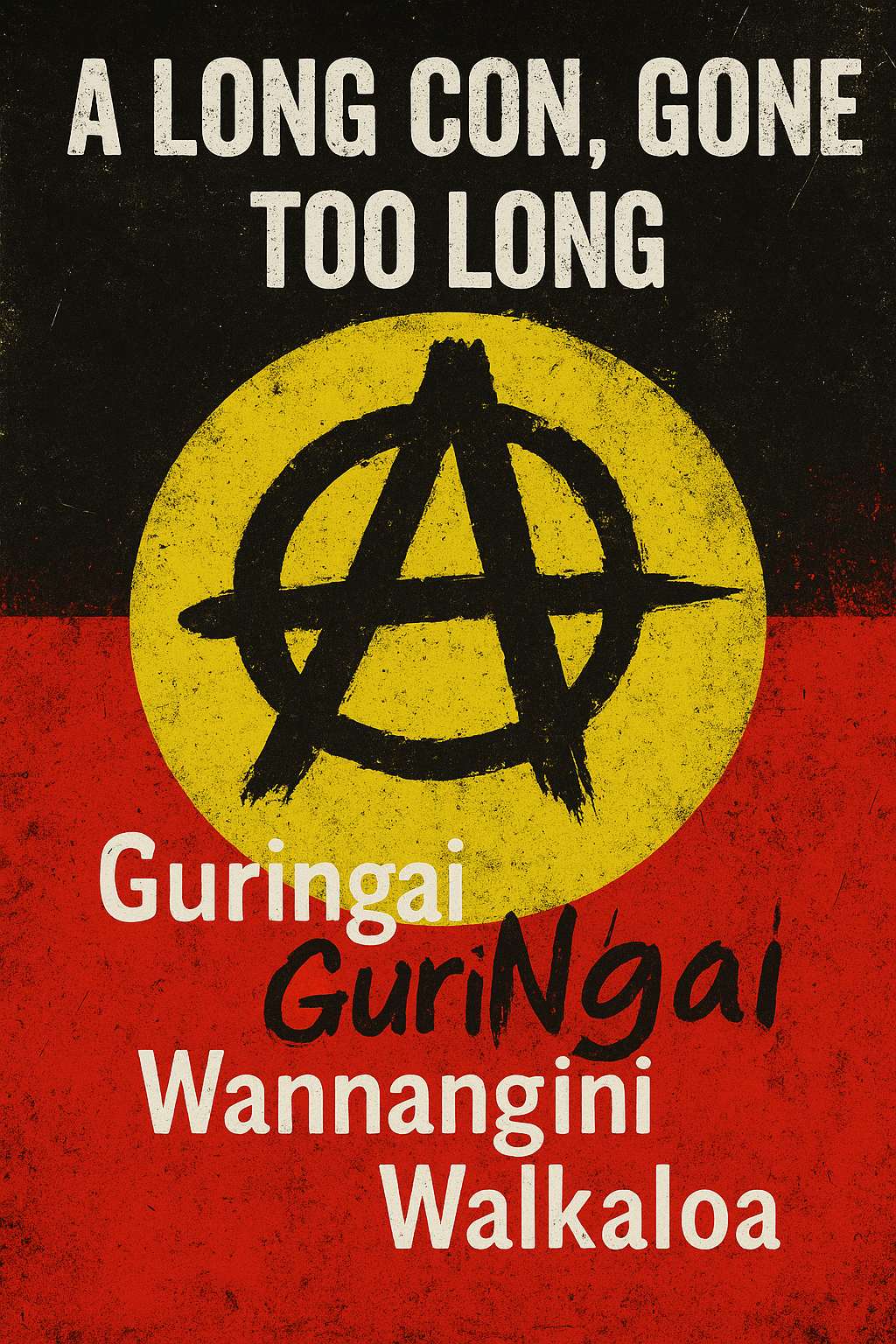
 A Long Con, Gone on Too Long.
Leave a comment