
- Introduction: Defining Conspirituality in the Australian Context
Conspirituality, as articulated by Ward and Voas (2011), refers to a hybrid belief system that fuses conspiracy theories with New Age spirituality. This fusion is not benign: it produces politically potent, destabilising narratives that erode trust in science, democratic institutions, and Indigenous Cultural sovereignty. This convergence is not arbitrary: both worldviews rely on a shared epistemology that valorises personal intuition over empirical evidence, emphasises hidden knowledge, and fosters mistrust in dominant institutions. In the Australian context, these beliefs take on distinct cultural inflections rooted in settler colonial history, frontier mythology, and an enduring scepticism towards authority.
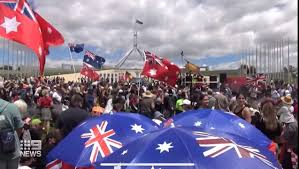
Unlike in the United States or Europe, where conspirituality often aligns with evangelical or libertarian discourses (e.g., QAnon’s evangelical base in the U.S. or homeopathic anti-lockdown protests in Germany), in Australia it is as likely to draw on pseudo-Aboriginal figures and motifs, holistic health movements, and anti-government sentiment shaped by Australia’s colonial legacy. Terms such as ‘sacred fire,’ ‘nature connection,’ and ‘custodianship’ are frequently appropriated by non-Indigenous actors in digital and protest spaces, giving conspirituality a uniquely Australian semiotic form. Here, conspirituality is entangled with narratives of rugged individualism, ecological purity, and spiritualised nationalism. This makes the Australian variant uniquely prone to seek appropriation of Indigenous symbols and the misrepresentation of sovereignty as a personal, rather than collective, right.
Since the onset of the COVID-19 pandemic, conspiritual beliefs in Australia have proliferated across digital platforms and public discourse. Wellness influencers, survivalist preppers, anti-vaccine protestors, and sovereign citizen groups began to coalesce under a shared language of bodily autonomy, spiritual awakening, and resistance to state power. Events such as the 2021 Muckudda Camp and the burning of Old Parliament House revealed how these narratives could mobilise both Indigenous and non-Indigenous actors into a performative theatre of dissent: a convergence that mimics the language of sovereignty while eroding its cultural and legal authority, (Carlson & Day, 2023), distorting genuine calls for justice into spectacles of conspiratorial sovereignty (Carlson & Day, 2023).
This paper begins by historicising the emergence of conspirituality as a global phenomenon before examining how it has been localised within Australia’s unique political and cultural environment. It proceeds through eight interlinked sections that explore the structural, affective, economic, and epistemological dimensions of conspirituality, drawing on theoretical frameworks from the sociology of religion, cultural studies, Indigenous studies, and media analysis. The paper not only critiques the conspiritual phenomenon but also proposes culturally responsive countermeasures to support epistemic resilience and Indigenous authority., ultimately proposing strategies for cultural resilience, Indigenous self-determination, and epistemic recovery in the face of digital disinformation and cultic manipulation.
- Origins and Evolution: From Fringe to Mainstream in Australia
The origins of conspirituality can be traced to late 20th-century alternative media ecosystems, where conspiracy theories and New Age spirituality gradually converged. David Icke’s narratives of reptilian elites, the holistic but pseudoscientific wellness content of Nexus Magazine, an Australian publication influential in global alternative media circuits, and millenarian predictions of planetary awakening laid the groundwork for this fusion. Ward and Voas (2011) describe conspirituality as a gendered convergence: traditionally masculine-coded conspiracy discourse meets feminine-coded New Age spirituality, resulting in a belief system that is emotionally compelling, spiritually framed, and politically destabilising.

This hybrid worldview remained fringe until the digital revolution. The rise of social media and influencer culture allowed conspiritual beliefs to migrate from the margins to mainstream platforms such as Instagram, YouTube, Telegram, TikTok, and encrypted messaging services such as Telegram. These platforms, driven by emotionally resonant algorithmic loops, amplified conspiratorial wellness content rapidly. Globally, the Conspirituality Podcast, launched in 2020 by Derek Beres, Matthew Remski, and Julian Walker, provided a counter-narrative, documenting how wellness influencers peddled vaccine misinformation, QAnon-adjacent narratives, and anti-government sentiment under the guise of spiritual awakening (Beres et al., 2023).
In Australia, the COVID-19 pandemic served as a catalyst, propelling conspirituality into public view. As lockdowns intensified and government mandates were introduced, influencers such as Pete Evans, Belle Gibson, and Taylor Winterstein blended holistic health advice with libertarian resistance narratives. Winterstein’s ‘Empowered Mama’ seminars, for instance, framed maternal intuition as resistance to state medical overreach, blending spiritual motherhood with anti-establishment ideology. Social and economic anxieties were reframed through spiritualised language about natural immunity, bodily sovereignty, and ascension, often laced with anti-establishment conspiracy rhetoric.

Research by Taplin (2023), Halafoff et al. (2023), and Ballinger and Hardy (2022) shows how Australian conspiritual narratives adapted global motifs to local conditions. Settler-colonial spiritual syncretism played a key role: conspiritual actors increasingly appropriated Indigenous terms such as “lore,” “Country,” and “custodianship,” recasting these within frameworks of individual resistance and personal awakening, while obscuring the collective legal and cultural foundations of genuine Aboriginal Culture. The sovereign citizen movement, typified by groups such as New Westralia and the Original Sovereign Tribal Nation Federation, merged legal denialism with spiritual performance, turning fringe ideology into performative protest.

This shift from fringe to mainstream was facilitated by algorithmic amplification and social trust in influencers. Wellness platforms, survivalist forums, and anti-vaccine channels functioned as ideological pipelines, not only spreading content but forging emotionally resonant communities. What emerged was not simply a belief system, but a distributed, self-sustaining movement built around charismatic leadership, spiritual consumerism, and political disaffection. These pipelines form what Baca (2024) terms ‘epistemic communities of the unreal’: emotionally bonded, closed knowledge systems that reward allegiance over evidence and foster cultic echo chambers (Lalich & Tobias, 2006).
3. The Wellness Industry: A Primary Vector and Economic Engine for Conspirituality
The global wellness industry, a sprawling sector estimated to be worth over $4.5 trillion, functions as a significant economic force that commodifies health, spirituality, and self-empowerment (Wiseman, 2021). In Australia, the wellness landscape continues to evolve, with key trends for 2025 including sleep optimisation, sustainable and plant-based living, budget-conscious wellness strategies, advanced nutrition focusing on gut health, and a strong emphasis on cognitive health, community connection, emotional resilience, and work-life balance (Private Medical, 2025). The industry is also embracing technological advancements, with a growing adoption of wearable devices, AI-driven fitness support, at-home medical devices, and telehealth services, all aimed at making health management more accessible and personalized (Private Medical, 2025). Broader trends in 2025 also highlight a shift towards inclusive wellness, ethical AI integration, mental wellness for empowerment, regenerative wellness that seeks to uplift Indigenous voices and ancestral knowledge, and a focus on financial wellbeing (Global Wellness Institute, 2025).

Despite its generally positive connotations, the wellness industry has proven to be a primary vector for the dissemination of conspirituality. During the COVID-19 pandemic, wellness influencers readily promoted narratives centered on “natural immunity,” fostered distrust in established medical institutions, and championed the concept of “sovereignty of the body” (Caulfield, 2021). These themes, inherently aligned with conspiratorial ideologies, were easily appropriated and integrated into broader anti-establishment narratives (Caulfield, 2021).

The “Conspirituality podcast” has extensively documented how influencers have “curdled New Age spirituality and wellness with the politics of paranoia,” actively peddling vaccine misinformation, child trafficking narratives, and other speculative theories (Beres et al., 2023; Conspirituality Podcast, n.d.). This phenomenon is often characterized as “disaster spirituality,” where spiritual beliefs are distorted and transformed into “memes of a quickly-globalizing paranoia” (Conspirituality Podcast, n.d.). The wellness industry, in essence, acts as a “Trojan horse” for conspirituality. Its emphasis on personal empowerment, holistic health, and a degree of skepticism towards conventional medicine creates an accessible entry point for individuals who might otherwise not engage with overt conspiracy theories. The seemingly benign nature of wellness practices makes the transition to more radical beliefs appear natural and morally justified, blurring the lines between self-care and anti-establishment ideology.

The appeal of conspirituality within the wellness sphere is further illuminated by the “compensatory control theory,” which posits that individuals experiencing a loss of control due as a result of political or natural crises are more susceptible to embracing conspiracy beliefs (Stojanov et al., 2022). This theory helps to explain why periods of intense societal upheaval, such as anti-lockdown protests, the backlash against the Voice referendum, and ongoing land disputes in Australia, have provided fertile ground for conspiritual mobilization. Additionally, a “gendered affective economy” has been identified, wherein white, middle-class women are particularly targeted by aesthetically curated digital content that intertwines themes of motherhood, health anxiety, and spiritual warfare (Baca, 2024; Gill & Orgad, 2022). Influencers like Taylor Winterstein, through her “Empowered Mama” seminars, exemplify this dynamic by merging health advice with calls for resistance against perceived institutional overreach, effectively recruiting concepts of motherhood and body autonomy into spiritualized libertarian messaging.
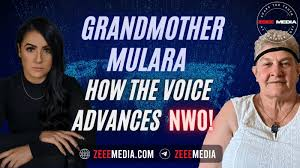
Conspirituality also functions as a distinct economic enterprise, leveraging its platforms to generate substantial revenue. Influencers monetize their digital presence through various means, including online courses, retreats, merchandise sales, and alternative therapies. This “grift economy” thrives on affective manipulation, offering followers a sense of agency and empowerment through consumption. Prominent examples include Pete Evans’ Evolve Sanctuary and Taylor Winterstein’s Empowered programs. These ventures illustrate how personal health advocacy can rapidly escalate into a comprehensive worldview where global cabals are perceived as threatening individual freedom, and the act of purchasing products or attending events becomes a form of both resistance and healing. Conspiritual entrepreneurs effectively deploy what has been termed “crisis capitalism,” actively monetizing fear and uncertainty by presenting spiritually infused solutions to complex societal problems (Baker, 2022; Ferretti, 2023). This reveals a cynical economic model where the very anxieties and vulnerabilities of individuals, often exacerbated by crises, are systematically exploited for profit. This creates a self-sustaining financial ecosystem around these beliefs, making it more challenging to dismantle as it becomes deeply intertwined with individuals’ consumption habits and, in some cases, livelihoods. The perpetuation of fear, therefore, ensures continued revenue for these enterprises.
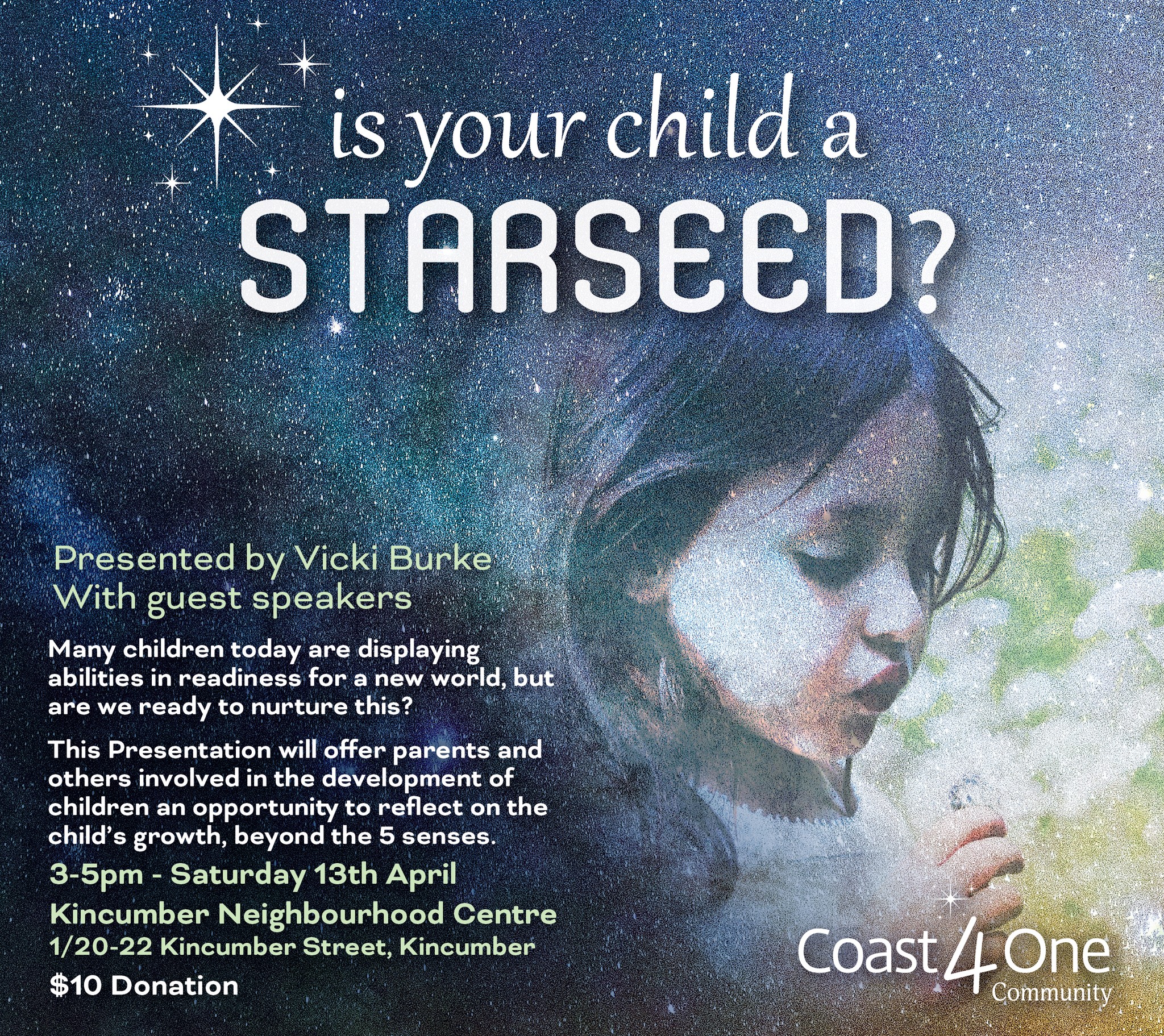
The commodification of these positions has significant implications for public health, climate policy, and democratic governance. Conspiritual figures have opposed renewable energy projects, promoted vaccine refusal, and disrupted Aboriginal land consultations, rendering public discourse transactional and enabling pseudoscience to flourish under the guise of personal freedom.
Table 1: Key Wellness Trends (2024-2025) and their Potential Conspiritual Intersections
| Wellness Trend | Core Wellness Principle | Potential Conspiritual Co-option/Narrative | Example (if applicable) |
| Sleep Optimisation | Self-care, physical health, stress reduction | “Big Pharma/System wants you sick and tired; natural sleep is resistance to their control.” | Influencers promoting “detox” protocols for better sleep, linking insomnia to “energetic blockages” caused by external forces. |
| Sustainable & Plant-Based Living | Environmentalism, ethical consumption, health | “Microplastics are a globalist plot to poison humanity; only ‘natural’ living can save you.” | Calls to boycott mainstream food systems due to perceived contamination, promoting self-sufficiency as a form of resistance. |
| AI & Wearable Tech | Personal health data, convenience, personalized health | “AI is mind control/surveillance; wearable tech tracks your compliance for the New World Order.” | Warnings against smart devices, promoting “digital detox” as a way to maintain mental and spiritual autonomy. |
| Regenerative Wellness (Indigenous Voices) | Cultural respect, ancestral knowledge, holistic healing | “True sovereignty is rejecting modern medicine and returning to ‘ancient’ (often appropriated) healing.” | Non-Indigenous figures claiming “Indigenous wisdom” to justify anti-vaccine stances or pseudo-legal sovereign citizen claims. |
| Mental Wellness & Emotional Resilience | Psychological health, coping mechanisms, community | “Spiritual warfare against negative entities/elites; emotional resilience is achieved by rejecting ‘3D’ reality.” | Seminars blending mental health advice with calls to resist institutional overreach, framing anxiety as a sign of “awakening.” |
| Frugal & Budget-Conscious Wellness | Financial health, accessibility, resourcefulness | “Cost-of-living crisis is part of the ‘Great Reset’ to control you; self-sufficiency is the path to freedom.” | Promoting DIY health solutions and community bartering as a rejection of the “system” and its economic manipulations. |
- Epistemic Dispossession and the Weaponisation of Indigenous Sovereignty
The conspiritual movement in Australia must be understood as a new iteration of settler colonialism: it thrives on epistemic dispossession, exploits legal uncertainty, and reconfigures the language of Aboriginal sovereignty into a tool of settler mimicry and institutional sabotage. While the 1992 Mabo decision repudiated terra nullius, the native title system that followed has delivered only partial justice. Many First Nations communities continue to face legal and procedural barriers that limit self-determination and recognition. This unresolved terrain provides fertile ground for conspiritual actors to hijack the language of sovereignty.

Taplin (2023) demonstrates how sovereign citizen logics, rooted in pseudo-legal fantasy and institutional mistrust, are increasingly introduced into native title spaces, often by non-Indigenous individuals posing as cultural insiders or “lore-keepers.” This misappropriation undermines legitimate Aboriginal claims by introducing confusion, pseudo-law, and spiritual performance that mimic but displace authentic governance systems. At meetings, pseudo-Indigenous figures have cited universal law, claimed exemption from state jurisdiction, and questioned the legitimacy of recognised Elders and Land Councils. These performances borrow from the aesthetics of Aboriginal sovereignty, including fire ceremonies and oral authority, but invert their political function to serve anti-state agendas.
The Original Sovereign Tribal Nation Federation exemplify this appropriation. As Carlson and Day (2023) and Taplin (2023) show, events such as the 2021 Muckudda Camp and the burning of Old Parliament House combined sacred fire rituals with sovereign citizen narratives, generating a media spectacle that confused public understanding of the Tent Embassy’s purpose and diverted attention from genuine Indigenous justice struggles. These incidents mark the weaponisation of Indigenous motifs to launder conspiratorial and anti-democratic ideologies through the language of culture.
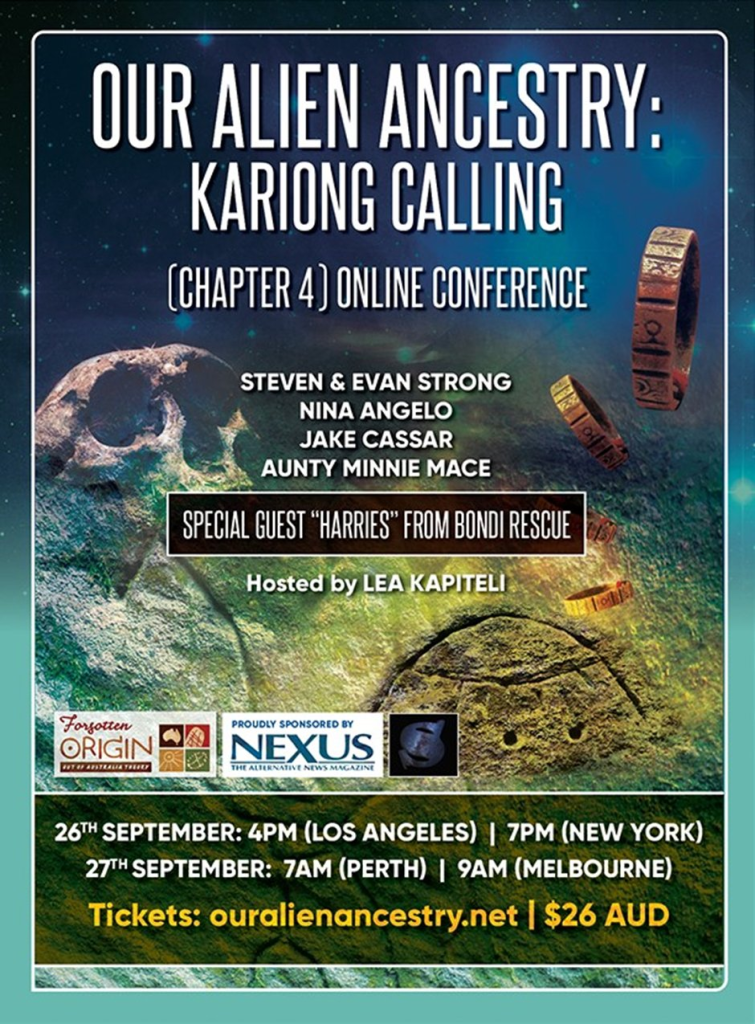
This mimicry is what Moreton-Robinson (2015) terms the “white possessive”, a settler impulse to claim access to land, culture, and identity not through recognition of Aboriginal law but through its simulation. In the conspiritual context, sovereignty becomes an aesthetic, performative act rather than a grounded legal or cultural claim. This violence occurs on two fronts: the erasure of authentic Indigenous epistemologies and the implantation of false sovereignties rooted in settler pseudolaw and spiritual distortion.
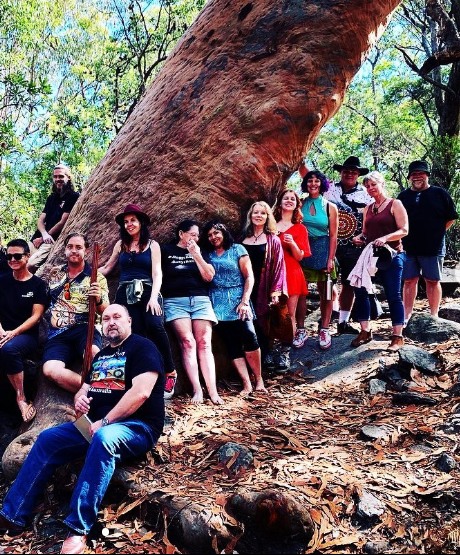
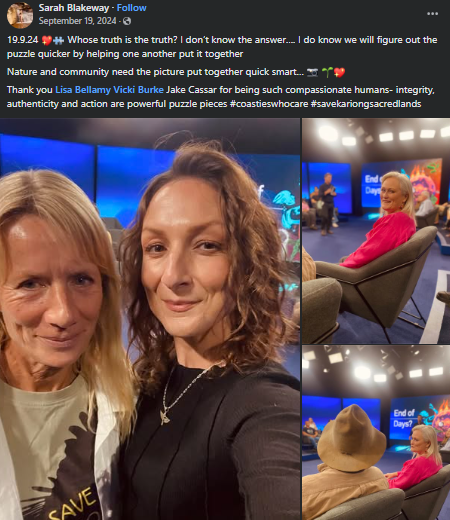
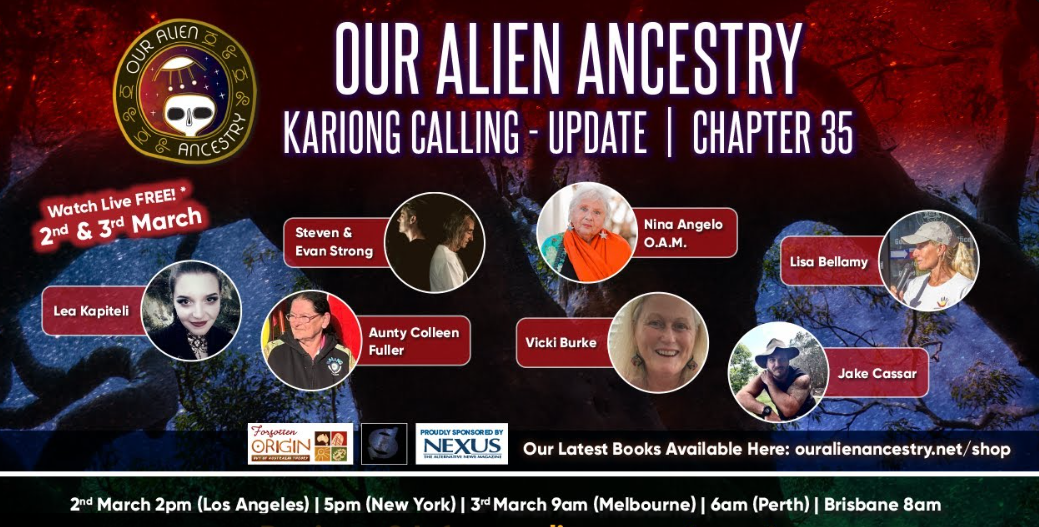
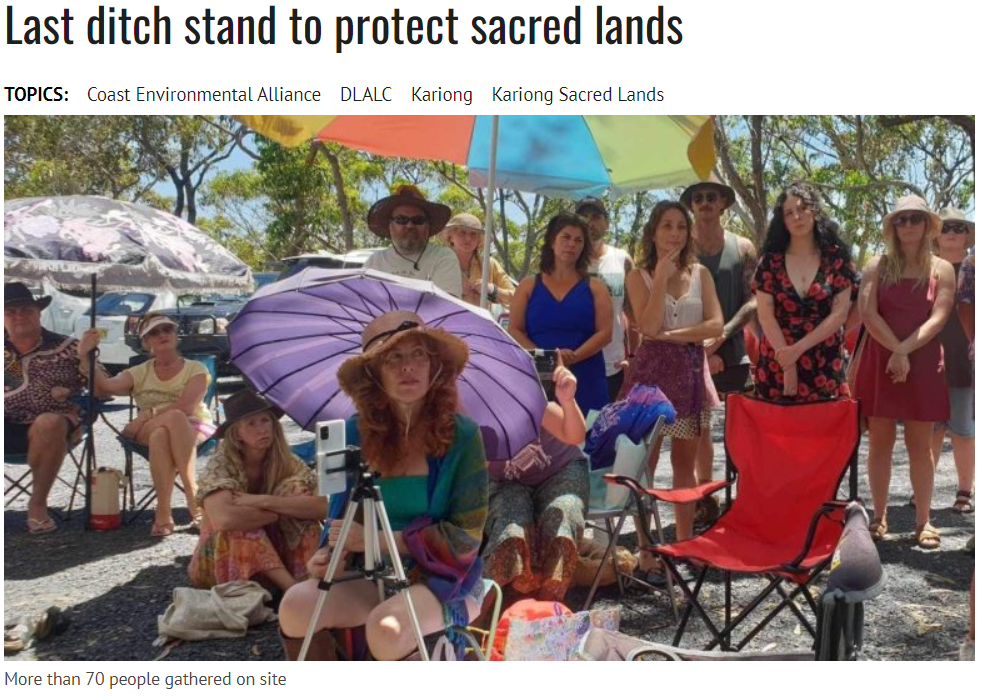
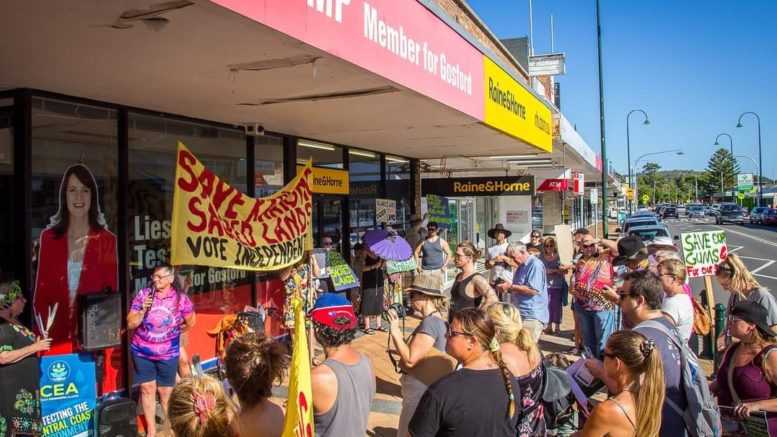
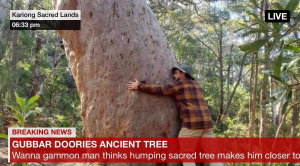
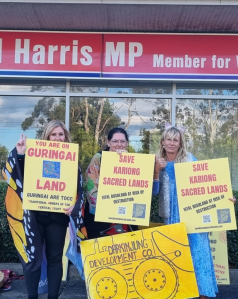
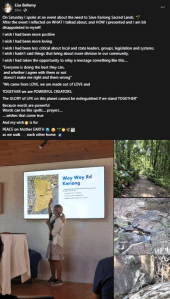
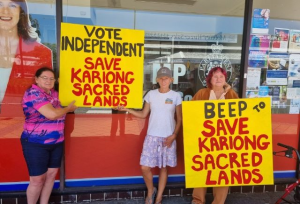
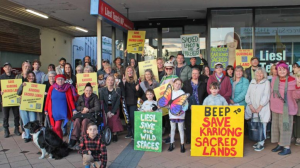
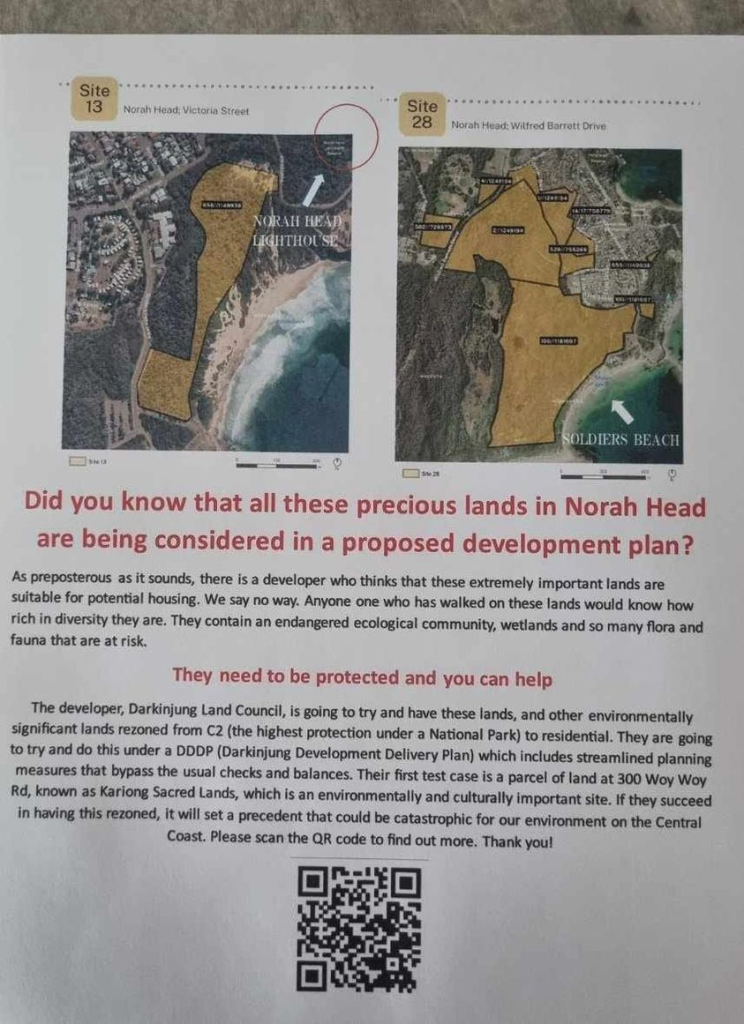
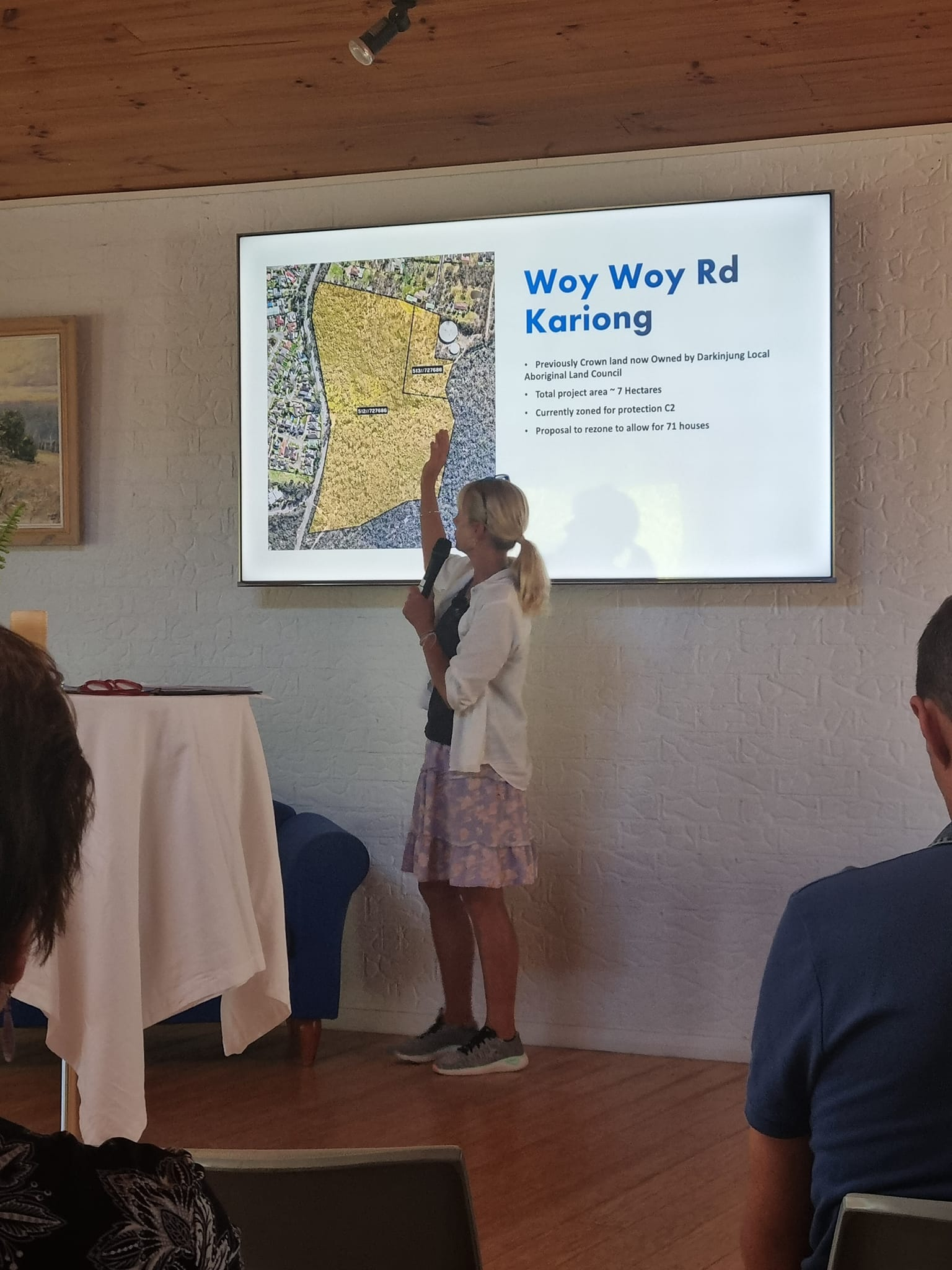
Further examples include opposition to the Kariong Sacred Lands development, where settler environmental groups like Coast Environmental Alliance have appropriated Aboriginal terms while explicitly rejecting the authority of Darkinjung Local Aboriginal Land Council. These groups deploy what Simon (2022) terms “disingenuous natures”: environmental narratives that adopt Indigenous language while promoting settler control over land and policy.

The following examples illustrate how conspiritual actors strategically co-opt Indigenous cultural elements to obscure or oppose legitimate Aboriginal governance: without situating it within the longer arc of settler colonialism, systemic dispossession, and the state’s ambivalence toward Indigenous sovereignty. While the 1992 Mabo decision repudiated terra nullius, the native title system that followed has delivered only partial justice. Many First Nations communities continue to face legal and procedural barriers that limit self-determination and recognition. This unresolved terrain provides fertile ground for conspiritual actors to hijack the language of sovereignty. At meetings, pseudo-Indigenous figures have cited universal law, claimed exemption from state jurisdiction, and questioned the legitimacy of recognised Elders and Land Councils. These performances borrow from the aesthetics of Aboriginal sovereignty, including fire ceremonies and oral authority, but invert their political function to serve settler agendas.
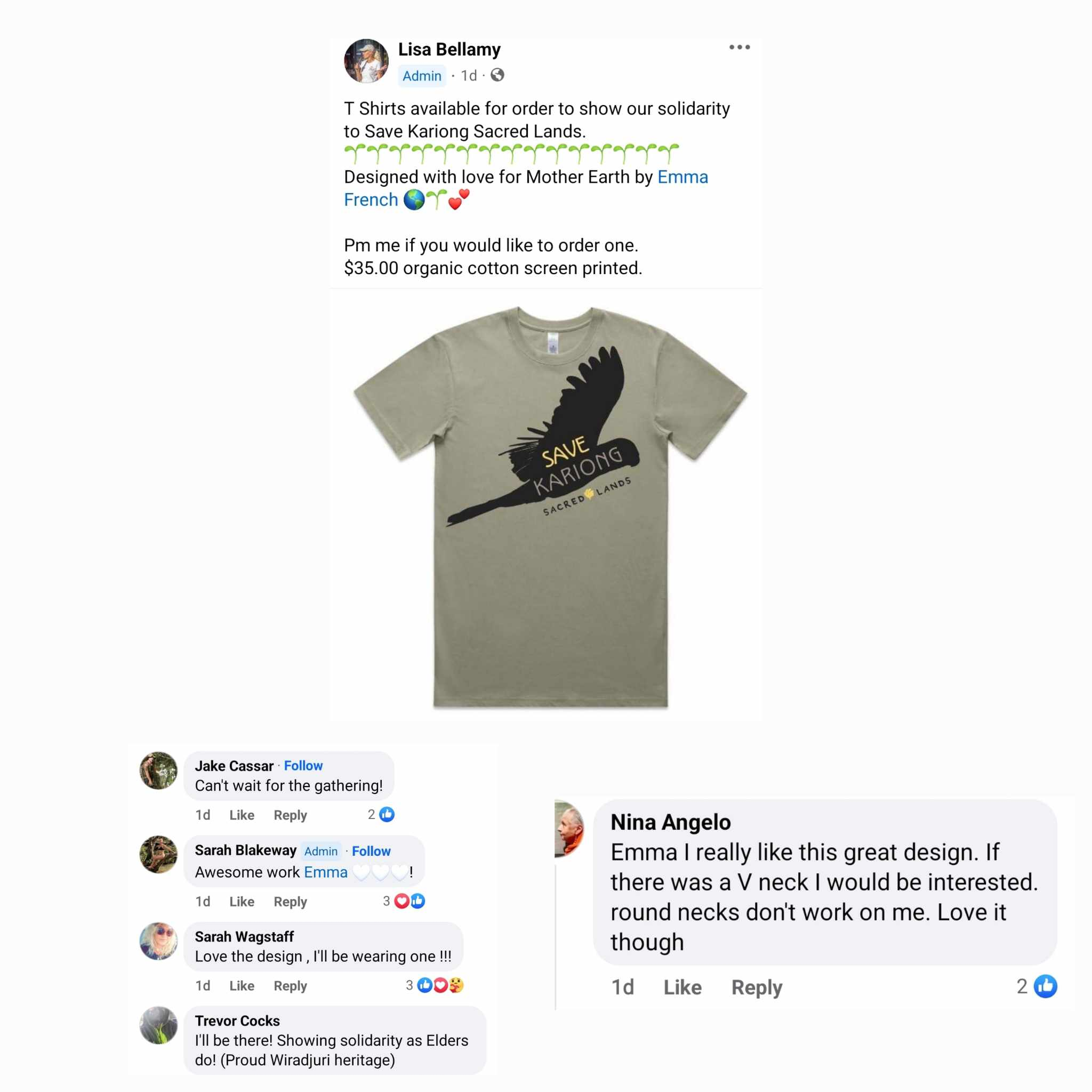
Further examples include opposition to the Kariong Sacred Lands development, where faux environmental groups like Coast Environmental Alliance have appropriated Aboriginal terms while explicitly rejecting the rights of Darkinjung Local Aboriginal Land Council. These groups use ecological language to claim custodianship over Country, advancing settler agendas under the guise of cultural preservation. Simon (2022) identifies this tactic as part of a broader phenomenon of “disingenuous natures,” in which environmental knowledge is manipulated to legitimise settler-colonial knowledge systems while erasing Indigenous ecological authority.
Taplin (2023) argues that these activities collectively produce a “conspiritual epistemology”, an ontological system that replaces Indigenous knowledge with settler mythos. This epistemic substitution is not merely discursive; it has material consequences. It shapes public opinion, influences policy resistance, and weakens institutional authority. Without intervention, conspiritual actors risk capturing the consultative space meant for Aboriginal communities, further marginalising authentic voices and misguiding policymakers. The challenge is not only to expose false claims but to strengthen the conditions for Indigenous epistemic and political sovereignty.
Table 2: Examples of Indigenous Sovereignty Co-option and their Impact
| Conspiritual Group/Figure | Co-opted Indigenous Motif/Concept | Specific Action/Event | Impact on Genuine Indigenous Sovereignty/Initiatives |
| Original Sovereign Tribal Nation Federation (OSTNF), David Cole, Non-Indigenous sovereign citizens | Lore-based governance, community councils, “sovereign” status, “lore” | Introducing pseudo-legal sovereign citizen claims into native title meetings. | Confusion and disengagement among Indigenous claimants, undermining legitimate land claims. |
| Non-Indigenous conspiracists with fringe Indigenous groups | Sacred fire ceremonies, Aboriginal Tent Embassy symbolism, “sovereignty” | 2021 Muckudda Camp, burning of Old Parliament House. | Distorted the aims of the Aboriginal Tent Embassy, confused public understanding of Indigenous sovereignty, redirected attention from systemic justice. |
| Anti-Voice referendum campaigners (aligned with conspiritual movements) | Indigenous “voice,” self-determination, truth-telling | Disinformation campaigns during the 2023 Voice referendum. | Destabilized public trust in Aboriginal leadership and truth-telling initiatives, spread epistemic confusion. |
| Settler environmental groups opposing Kariong Sacred Lands development | Aboriginal motifs, ecological custodianship over “Country” | Rejecting the authority of Darkinjung Local Aboriginal Land Council. | Marginalized genuine Indigenous voices, advanced a settler environmental agenda under the guise of cultural preservation. |
- Cultic Echo Chambers and the Dynamics of Online Radicalisation
As conspiritual movements gained traction across Australia, they began to exhibit increasingly cultic characteristics. These include charismatic leadership, isolation from mainstream worldviews, black-and-white thinking, and high emotional investment from followers. Drawing on cult studies and psychological models such as Lalich and Tobias’s (2006) theory of bounded choice and Hassan’s (2016) BITE model (Behaviour, Information, Thought, and Emotional control), we can understand how these movements function as closed belief systems that exert comprehensive psychological influence.
Baca (2024) describes these as ‘epistemic communities of the unreal’: affective networks in which reality is determined not by evidence but by shared emotional conviction and performative spiritual knowledge. Within such spaces, spiritual language, conspiratorial thinking, and moral urgency combine to create immersive environments where members experience a sense of belonging and higher purpose. These echo chambers are emotionally self-reinforcing, rewarding allegiance over accuracy, and punishing dissent as betrayal. As Ahmed (2004) argues, emotions operate as “affective economies” that circulate between bodies, shaping collective attachments. Conspiritual movements use fear, hope, and righteousness as affective glue, generating high arousal states that deepen commitment.

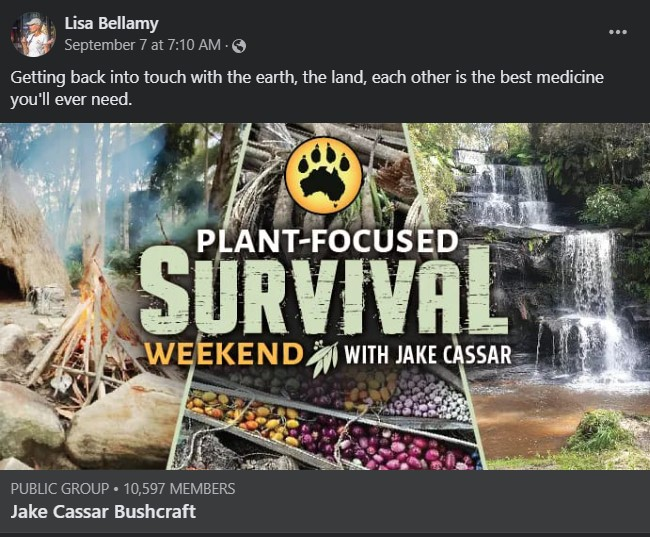
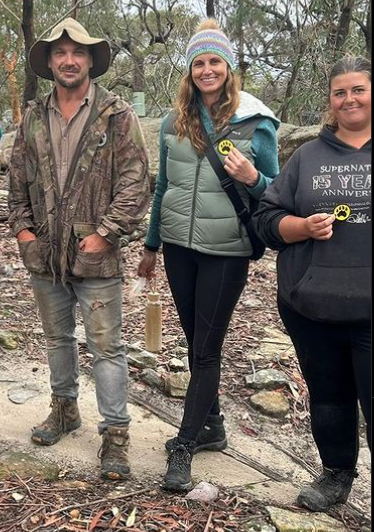
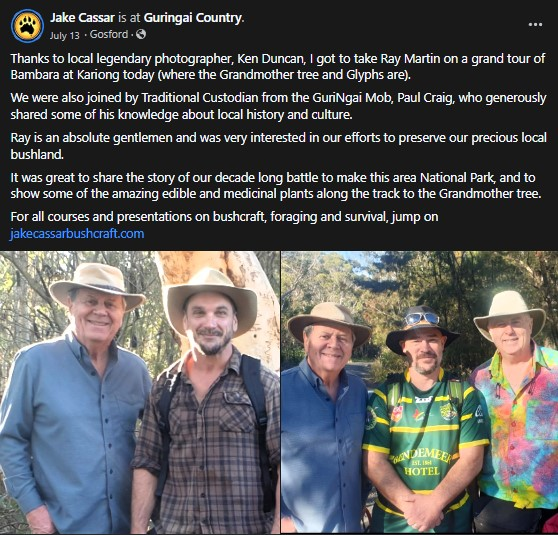
Gender also plays a crucial role. While conspiracy culture has often skewed male, the conspiritual domain appeals strongly to women, particularly through wellness, parenting, and spiritual self-help spaces. Gill and Orgad (2018) identify how the language of self-optimisation and intuitive motherhood within neoliberal wellness cultures can naturalise distrust in institutional expertise. In Australia, these dynamics are visible in groups such as My Place, led by Darren Bergwerf, and Coast Environmental Alliance, fronted by Jake Cassar, which blend environmental and spiritual language with anti-government ideology. Cassar, in particular, presents himself as a bushcraft mystic and spiritual warrior, positioning wilderness skills as sacred authority.
Members of these groups are often exposed to a steady stream of Telegram broadcasts, YouTube sermons, and offline gatherings that offer alternative cosmologies: government as a malevolent force, truth as divinely revealed, and leaders as spiritually elevated guides. This informational saturation generates bounded choice: a situation in which followers are convinced they are freely choosing, while all available options remain within the logic of the group (Lalich & Tobias, 2006).
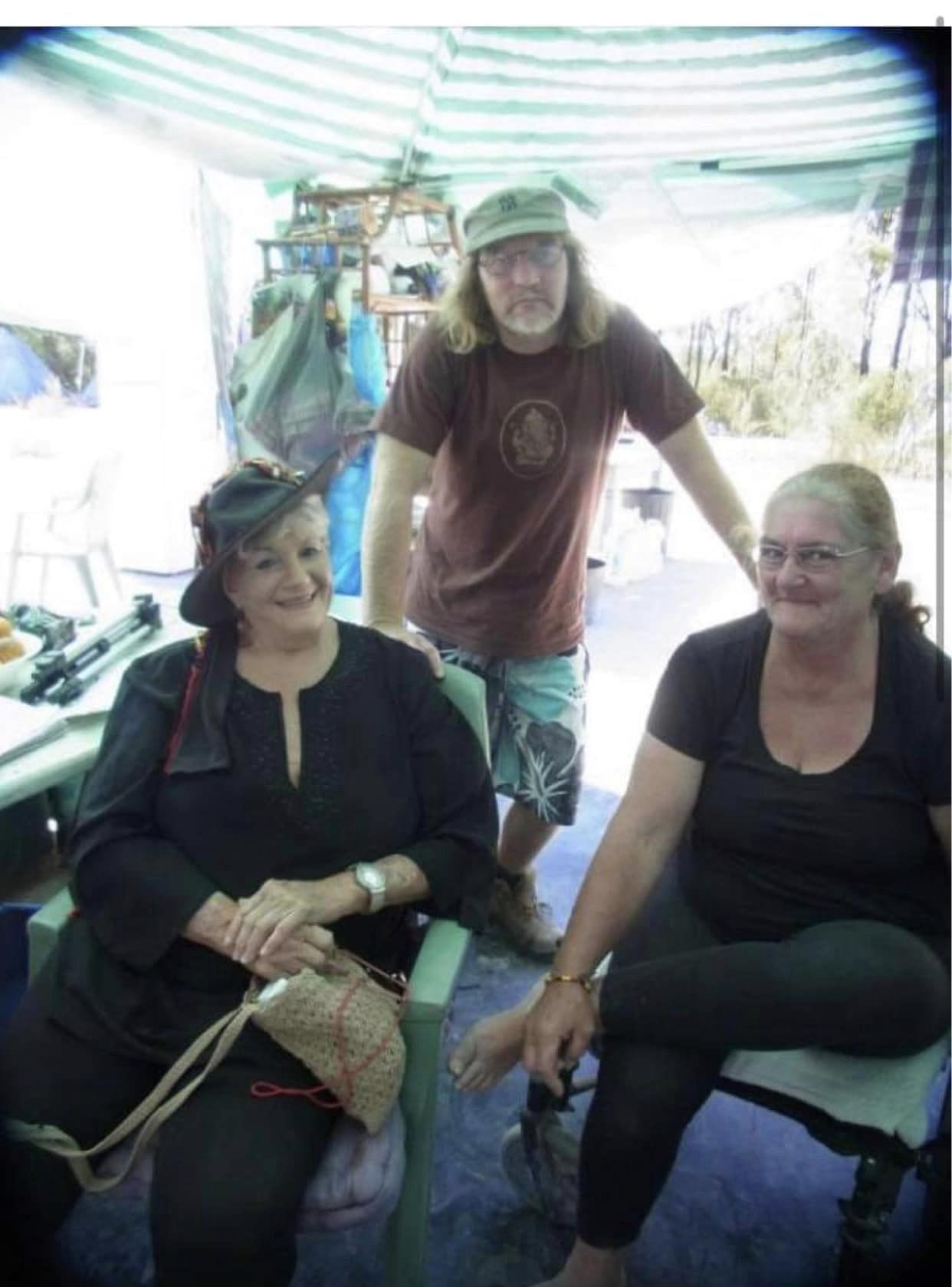
Algorithmic amplification on platforms like TikTok, Telegram, Instagram, and YouTube plays a decisive role in reinforcing these dynamics. These platforms are designed to maximise engagement, prioritising content that triggers emotional responses, especially fear, moral outrage, and spiritual exaltation. As Ballinger and Hardy (2022) and Kalpokas (2018) argue, this produces an epistemic feedback loop in which users are drawn ever deeper into ideologically bounded spaces.

This process has particularly affected regional and remote communities in Australia. As Park (2024) notes, these areas are often under-resourced in media literacy and disproportionately reliant on social media for news. This has made them prime targets for spiritually-inflected misinformation. The rise of influencer-driven news consumption, especially among young people, exacerbates this trend. With nearly 60 percent of Gen Z Australians now turning to platforms like TikTok and Instagram as their primary news source (Park, 2024), charismatic content creators are becoming key gatekeepers of knowledge.

The cultic nature of conspiritual communities reached national attention during events like the Muckudda Camp and the burning of Old Parliament House. In these cases, pseudo-Indigenous, conspiratorial, and sovereign citizen ideologies merged into a unified performance of spiritual resistance. Carlson and Day (2023) and Singh (2024) have described how these movements use Indigenous symbolism and rhetoric not to support Aboriginal causes, but to undermine Aboriginal governance and confuse public understanding of sovereignty.

In this environment, leaving a conspiritual community becomes a psychologically difficult task. The combination of identity investment, social belonging, and moral righteousness mirrors dynamics described by ex-cult members and deprogramming specialists. The more entrenched one becomes in the movement, the more reality outside of it appears corrupt or spiritually dead. This bounded belief system transforms spiritual curiosity into dogma, activism into fundamentalism, and wellness into war.
These cultic echo chambers do not just pose risks to individuals. They disrupt democratic discourse, weaken institutional trust, and displace legitimate Indigenous leadership with pseudo-legal imposters. Addressing these harms requires a collective effort to rebuild media literacy, disrupt algorithmic radicalisation, and centre grounded, relational models of cultural authority that prioritise Indigenous self-determination and communal resilience over charismatic control. They disrupt democratic discourse, weaken institutional trust, and displace legitimate Indigenous leadership with pseudo-legal imposters. Addressing these harms requires a collective effort to rebuild media literacy, disrupt algorithmic radicalisation, and centre grounded, relational models of cultural authority that prioritise Indigenous self-determination and communal resilience over charismatic control.

Legal and institutional responses must address these challenges proactively. This includes clear recognition of Prescribed Bodies Corporate (PBCs), protection of cultural knowledge, and amplification of community-led governance models. National frameworks such as the proposed Human Rights Act must go further in embedding First Nations decision-making across environmental and heritage legislation. A culturally grounded counter-strategy must prioritise truth-telling, resource Indigenous legal advocacy, and reaffirm the collective and relational foundations of sovereignty that conspiritual actors misappropriate for individualistic ends.
Table 3: Characteristics of Conspiritual Cultic Dynamics (Applying Hassan’s BITE Model)
| BITE Model Category (Hassan, 2016) | Conspiritual Manifestation | Examples from Query/Snippets | Impact on Members |
| Behavior Control | Regulating diet, health choices, social interactions, participation in protests. | Anti-vaccine sentiment, promotion of “natural immunity,” participation in anti-lockdown protests (e.g., Muckudda Camp). | Adherence to specific lifestyle norms, engagement in anti-establishment actions, potential health risks from rejecting mainstream medicine. |
| Information Control | Limiting access to external news, scientific information, or dissenting opinions; promoting internal narratives as sole truth. | Rejection of mainstream media, dismissal of scientific consensus (e.g., medical distrust), reliance on influencer-generated content. | Isolation from diverse perspectives, inability to critically evaluate information, reinforcement of shared delusions. |
| Thought Control | Promoting black-and-white thinking, us-vs-them narratives, thought-stopping techniques, belief in hidden plans. | Belief in a “secret group” controlling society, “paradigm shift” worldview, spiritual warfare narratives, rejection of “3D” reality. | Erosion of critical thinking, adoption of rigid ideological frameworks, inability to engage with nuance or complexity. |
| Emotional Control | Inducing fear, guilt, shame, or euphoria; fostering emotional allegiance and dependence on the group/leader. | Monetizing fear and uncertainty (“crisis capitalism”), aestheticized content blending motherhood/health anxiety/spiritual warfare, rewarding emotional allegiance. | Heightened emotional states, difficulty leaving the group, strong bonds based on shared emotional experiences rather than empirical truth. |
- Commodification and the Marketplace of Conspirituality
Conspirituality does not remain confined to digital discourse or ideological rhetoric—it is also a lucrative economic formation. The conspiritual marketplace comprises a dense mesh of wellness brands, survivalist gear, spiritual retreats, online courses, and influencer merchandise, all of which commodify crisis, mistrust, and spiritual yearning into profitable ventures. These economic activities are not incidental but structural: the conspiritual economy actively incentivises and sustains the very ideologies it spreads.

Banet-Weiser (2012) describes this fusion of authenticity and commodification as “brand culture,” where identity, belief, and consumption are inseparable. In conspiritual contexts, personal sovereignty is marketed through products and services that promise spiritual awakening, bodily purification, or resistance to a corrupt state. As Gill and Orgad (2018) observe, neoliberal wellness culture reframes structural crises as individual challenges to be solved through consumption. In Australia, this dynamic has flourished through figures who combine settler spiritualism, survivalist training, and wellness entrepreneurship to create highly profitable belief markets.
Jake Cassar exemplifies this convergence. His “bushcraft” brand blends wilderness survival with esoteric teachings and anti-government rhetoric. His guided tours and bush rituals are marketed not only as skill development but as spiritual reconnection to land. Drawing on appropriated Aboriginal language and motifs, Cassar sells a personalised form of sovereignty framed as mystical awakening, commodifying Country as experience, without the obligations of kinship or custodianship.
Taylor Winterstein’s “Empowered Mama” platform, meanwhile, positions holistic motherhood as anti-state resistance. Her seminars, social media content, and merchandise frame maternal intuition as sacred knowledge, capitalising on anti-vaccine narratives and natural birth advocacy. Branded aesthetics, earth tones, geometric motifs, spiritual slogans, conceal a core ideology rooted in mistrust, moral purity, and individualist rebellion. Her success depends not only on spiritual conviction but on converting belief into marketable identity.
In the My Place movement, monetisation occurs through merchandise, paid memberships, and exclusive content. Darren Bergwerf and others blend spiritual rebellion with entrepreneurial libertarianism. Their events, often framed as truth-telling ceremonies, serve dual functions: ideological reinforcement and financial extraction. As Baca (2024) argues, these commercial offerings construct an economy of “ontological sovereignty”: a market in which spiritual coherence is purchased in fragments, bushcraft classes, supplements, symbols, rituals, rather than cultivated through culture or law.
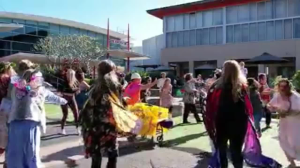
Festivals such as “Conscious Life Festival” and “Wellness Wander” operate as economic nodes in this ecosystem. There, conspirituality is commodified through vendors selling detox kits, vibrational medicine, and sovereignty-themed merchandise. Influencers perform spiritual capital by resisting mainstream narratives, turning truth-seeking into a lifestyle brand. The affective economy of such spaces incentivises dissent and rewards performative purity, while suppressing complexity, reciprocity, or structural critique.
This marketplace is inherently extractive. It monetises Indigenous aesthetics without acknowledgement or benefit to communities. The “connection to Country” becomes a visual trope, an image to be sold, replicated, and worn, rather than a lived, relational ethic. In doing so, enacting Moreton-Robinson’s (2015) white possessive logic of settler entitlement that displaces Aboriginal voices while consuming our imagery.
The material harms are clear. Influencers earn revenue from polarisation and disinformation. Audiences are financially invested in the beliefs they purchase. Platforms are reluctant to moderate profitable content. Trust is transferred from experts to sellers, from collective health to personal branding. Commodification thus functions not as an epiphenomenon but as the infrastructure of conspiritual power.
In preparation for Section 7, it is important to note that artificial intelligence technologies now amplify this economy further. AI-generated “ancient wisdom” memes, automated text production, and deepfakes simulate cultural depth while eroding epistemic integrity. Kolopenuk (2023) calls this the colonial logic of algorithmic sovereignty: the datafication and replication of Indigenous motifs for settler profit and ideological reinforcement. These tools multiply conspiritual narratives without human oversight, extending the reach and profitability of pseudospiritual economies.
Resisting these harms requires economic, legal, and cultural strategies. Regulatory frameworks must address influencer ethics and disinformation economies. Digital platforms must be held accountable for conspiritual profiteering. Most crucially, support must be redirected toward Aboriginal-led wellness platforms, cultural education, and truth-telling practices that centre reciprocal knowledge, not extractive belief. Conspirituality’s power lies not only in what it says but in what it sells. To challenge it, we must disrupt its markets as well as its myths. In this light, resisting conspiritual harm must include economic strategies: platform regulation, ethical influencer policies, and the reinvestment of digital space into Indigenous-led wellness and education ecosystems. They disrupt democratic discourse, weaken institutional trust, and displace legitimate Indigenous leadership with pseudo-legal imposters. Addressing these harms requires a collective effort to rebuild media literacy, disrupt algorithmic radicalisation, and centre grounded, relational models of cultural authority that prioritise Indigenous self-determination and communal resilience over charismatic control.
Legal and institutional responses must address these challenges proactively. This includes clear recognition of Prescribed Bodies Corporate (PBCs), protection of cultural knowledge, and amplification of community-led governance models. National frameworks such as the proposed Human Rights Act must go further in embedding First Nations decision-making across environmental and heritage legislation. A culturally grounded counter-strategy must prioritise truth-telling, resource Indigenous legal advocacy, and reaffirm the collective and relational foundations of sovereignty that conspiritual actors misappropriate for individualistic ends.
Artificial intelligence (AI) is not merely a tool of content generation within conspiritual movements; it is rapidly becoming a core architecture for epistemic mimicry, cultural simulation, and disinformation automation. The conspiritual economy now leverages AI to simulate Indigenous spiritual authority, reproduce settler fantasies, and automate the circulation of false beliefs. This section builds upon the epistemic dispossession explored earlier, showing how AI accelerates and entrenches those dynamics through machine-driven replication.
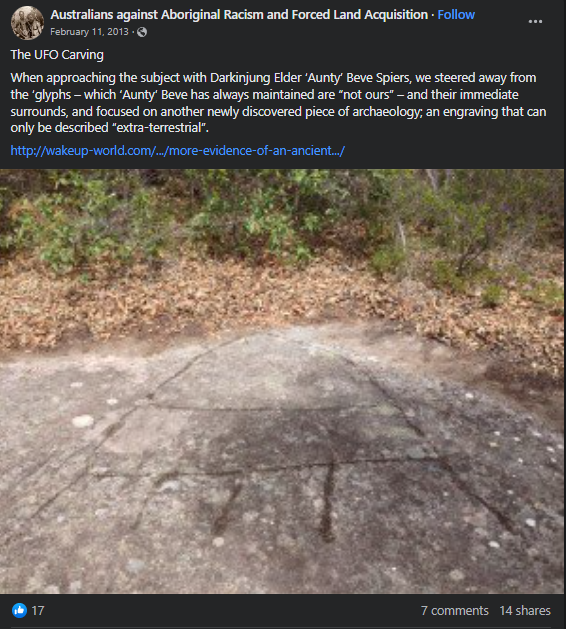
AI-generated memes, pseudo-legal documents, and synthetic spiritual texts have proliferated across platforms such as Telegram, TikTok, and YouTube. For example, a 2024 viral video purported to show an Aboriginal Elder endorsing a sovereign citizen collective. Investigations by academic researchers and media watchdogs confirmed it was a deepfake, constructed using AI voice cloning and manipulated archival footage (see Gillespie, 2025; Taplin, 2023). Similar tactics have been used to produce AI-generated maps of fabricated sacred sites, blending authentic locations with fictional geographies, thereby undermining cultural authority and confusing land rights debates.
Kolopenuk (2023) identifies this dynamic as algorithmic colonialism: the use of machine learning to extract, replicate, and repackage Indigenous cultural data without consent. This process perpetuates settler-colonial logics in digital environments, transforming relational knowledge into commodified artefacts for settler consumption. In this context, AI-generated content functions as an epistemic weapon, an instrument of cultural substitution and simulated authority.
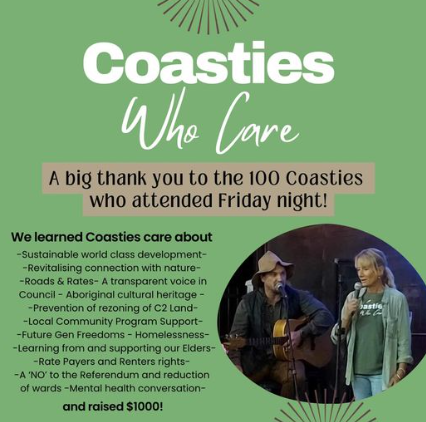
The trend also intersects with the sovereign citizen movement’s use of AI to generate pseudo-legal materials. Groups such as the Original Sovereign Tribal Nation Federation and My Place affiliates now disseminate AI-generated court documents, legal briefs, and fake government correspondence. These are circulated through encrypted messaging channels and treated as legitimate, eroding public legal literacy while reinforcing conspiratorial worldviews (Hardy, 2023).

Within wellness and spiritual markets, influencers employ generative AI to produce ghostwritten newsletters, automatic “channeled” messages, and downloadable oracles. Some market AI-generated Dreaming narratives as ancient wisdom, disguising algorithmic output as spiritual transmission. As Taplin (2023) observes, this detachment of content from context allows for the mass production of cultural mimicry, stripping Aboriginal cosmologies of their grounded protocols and embedding them within spiritual capitalism.

AI’s contribution to disinformation also extends to the platform level. Recommender systems, driven by engagement-maximising algorithms, prioritise sensational content, especially material that triggers affective or conspiratorial responses (Overwijk & de Zeeuw, 2023). Thus, even when not generated by AI, conspiritual content is given algorithmic priority, further entrenching epistemic instability and cultural confusion.

The stakes are high. Deepfakes of Elders, fake endorsements, and AI-generated histories distort the public record and complicate political processes including Voice consultations and native title negotiations. These simulations not only erase Indigenous sovereignty but replace it with programmable settler mythologies. As Kolopenuk (2023) warns, without resistance, algorithmic systems will reproduce colonial hierarchies in digital form, recoding history to serve settler affect.
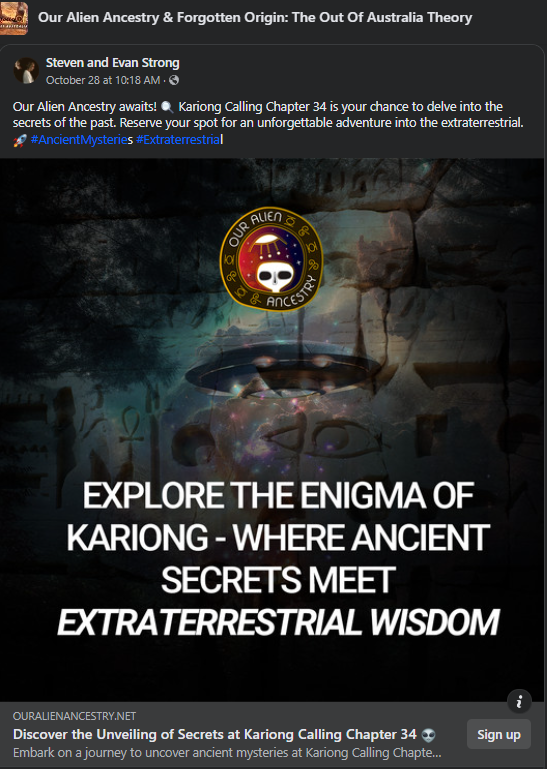
Responding to this requires multi-level intervention. Digital literacy initiatives must teach AI fluency alongside media scepticism. Indigenous-led organisations should be funded to create AI verification tools and educational platforms. Government and academia must develop legal and ethical frameworks for digital sovereignty, ensuring that cultural knowledge cannot be mined, manipulated, or monetised by non-Indigenous actors using AI.
Communities are already resisting. Projects like Blak TikTok, IndigiData, and Indigenous Storywork models reassert cultural authority through relational pedagogy, digital storytelling, and ethical data governance. These efforts point toward a future in which AI is harnessed, not for simulation, but for Indigenous epistemic resurgence.
As AI continues to evolve, conspiritual movements may require fewer charismatic leaders and more automation. The urgent task is to re-centre relationality, truth-telling, and protocol in a landscape increasingly shaped by code. Without such safeguards, AI will not simply simulate Aboriginal culture, it will overwrite it.
- Cultural Resilience, Digital Sovereignty, and Policy Interventions
The rise of conspirituality in Australia demands not only critique but concerted strategies of resistance and renewal. While the preceding sections have traced the origins, structures, and harms of this phenomenon, the final task is to identify pathways forward. At stake is not simply the regulation of disinformation or the containment of spiritual pseudoscience, but the recovery of epistemic integrity, the reassertion of Indigenous sovereignty, and the rebuilding of trust in relational knowledge systems.
First, digital sovereignty must be recognised as a vital dimension of Aboriginal and Torres Strait Islander sovereignty. As Kolopenuk (2023) and Kukutai and Taylor (2016) argue, Indigenous data sovereignty is essential to resisting the extractive logics of digital colonialism. Policy frameworks must empower Indigenous communities to determine how their knowledge, imagery, language, and stories are represented and circulated online. This includes the right to remove unauthorised cultural content, to audit AI training data, and to build Indigenous-controlled platforms and repositories. The United Nations Declaration on the Rights of Indigenous Peoples (UNDRIP), especially Articles 11 and 31, affirms these rights and should guide domestic legislation.
Second, platform accountability must be strengthened. Social media companies and digital publishers should be legally required to implement culturally competent content moderation, especially in cases involving false claims of Aboriginal identity, sacred site misinformation, and AI-generated spiritual disinformation. This could include flagging fake endorsements, regulating deepfakes, and ensuring that Indigenous-led organisations have access to escalation tools within moderation systems. The eSafety Commissioner and ACCC’s Digital Platforms Inquiry offer legal precedents for such interventions.
Third, education remains a foundational tool of resistance. Public literacy campaigns must target both general audiences and at-risk communities, offering clear, accessible explanations of how disinformation operates and how it exploits spiritual and cultural narratives. These campaigns should be Indigenous-led and grounded in ethical storytelling practices. Schools and universities must embed digital and conspiracy literacy across curricula, not as isolated media units, but as structural competencies—interwoven with history, civics, and Indigenous studies.
Fourth, there is an urgent need for therapeutic responses to cultic harm. As shown throughout this article, conspirituality functions as a high-control belief system, with psychological and interpersonal consequences. Exit support services, community counselling, and narrative healing programs are needed to assist those leaving such movements. These services must be trauma-informed, culturally safe, and alert to the specific dynamics of spiritual abuse, epistemic confusion, and identity disorientation. Models such as Langone’s (1993) recovery frameworks or Lalich’s (2004) concept of bounded choice offer helpful entry points.
Fifth, legal protections against Indigenous identity fraud must be expanded. False claims of Aboriginality, especially when used for commercial or political gain, constitute a form of epistemic violence that reinforces settler power while displacing legitimate cultural authority. Mechanisms for verifying Indigenous identity must be co-designed with Aboriginal and Torres Strait Islander communities, respecting cultural protocols while addressing institutional complicity. As Watego (2021) argues, recognition must flow from community-based belonging, not settler validation.
Finally, cultural resurgence is the most powerful antidote to conspirituality. The movements, voices, and projects of Indigenous resistance; whether expressed through land return, language revitalisation, artistic sovereignty, or digital storytelling, reclaim space from the false custodians and spiritual entrepreneurs. Truth-telling initiatives and community platforms like guriNgai.org, and cultural works such as Watego’s Another Day in the Colony are all part of a broader counter-narrative that exposes the fraudulence of settler spiritual mimicry and affirms the continuity of Aboriginal law, land, and life (Day & Carlson, 2023).
The task, then, is collective. Scholars, policymakers, community leaders, and digital designers must work together to confront the affective, ideological, and technological dimensions of conspirituality. We must replace extraction with relationship, simulation with story, and illusion with law. Only then can the cultural ground lost to algorithmic appropriation and spiritual fraud be reclaimed. The path forward is not merely defensive; it is generative. It begins with Indigenous sovereignty, and it leads toward epistemic justice.
References
Australian Human Rights Commission. (2025, May 27). 2025 AIATSIS Summit: Voices of empowerment: Strengthening our future. https://humanrights.gov.au/about/news/speeches/2025-aiatsis-sumngthening-our-future
Australian Institute of International Affairs. (2025, January 15). Freedom of speech vs. freedom from deception: Australia’s disinformation challenge. Australian Outlook. https://www.internationalaffairs.org.au/australianoutlook/freedom-of-speech-vs-freedom-from-deception-australias-disinformation-challenge/
Baca, A. (2024). Epistemic communities of the unreal: Conspirituality, gender, and the affective economy of disinformation [Unpublished manuscript].
Baker, S. (2022). The wellness trap: How the wellness industry sells us false promises. Hachette UK.
Ballinger, C., & Hardy, S. (2022). The digital landscape of conspirituality: A systematic review. Journal of Religion and Health, 61(6), 4610–4628. https://doi.org/10.1007/s10943-022-01628-7
Beres, D., Remski, M., & Walker, J. (2023). Conspirituality: How New Age conspiracy theories became a public health threat. PublicAffairs.
Carlson, B., & Day, L. (2023). The Muckudda Camp: Conspirituality, settler colonialism and the weaponisation of Indigenous sovereignty [Unpublished manuscript].
Caulfield, T. (2021). The wellness trap: Break free from myths, trends, and bad science. Penguin Random House Canada.
Conspirituality Podcast. (n.d.). Conspirituality. Apple Podcasts. https://podcasts.apple.com/az/podcast/conspirituality/id1515827446
Day, M., & Carlson, B. (2023). Conspirituality and the weaponisation of Indigenous identity. In Indigenous sovereignty and the politics of truth (pp. 145–167). Sydney University Press.
Ferretti, F. (2023). The wellness economy: How the pursuit of health became big business. Polity Press.
Gillespie, K. (2025). Prefigurative neoliberalism and the global sovereign citizen movement. Journal of Digital Political Cultures, 11(1), 44–67.
Gill, R., & Orgad, S. (2022). The affective turn in media studies. Routledge.
Global Wellness Institute. (2025, March 21). Inclusive wellness initiative trends for 2025. https://globalwellnessinstitute.org/global-wellness-institute-blog/2025/03/21/inclusive-wellness-initiative-trends-for-2025/
Halafoff, A., Singleton, A., & Fitzpatrick, R. (2023). Spiritual complexity in Australia: Wellbeing and risks. Social Compass, 70(3), 321–337. https://doi.org/10.1177/00377686231166057
Halafoff, A., Weng, E., Roginski, A., & Rocha, C. (2022). Introduction to the special issue: (Con)spirituality, science and COVID-19. Journal for the Academic Study of Religion, 35(2), 133–140. https://doi.org/10.1558/jasr.23937
Hardy, K. (2023). Sovereign citizens in Australia: Pseudolaw, disruption and threat assessment. Australian Journal of Law and Society, 28(2), 89–105.
Hassan, S. (2016). Combating cult mind control: The #1 best-selling guide to protection, rescue, and recovery from destructive cults (3rd ed.). Freedom of Mind Press.
Kalpokas, I. (2018). A digital mind: How we think and learn in the age of algorithms. Routledge.
Kolopenuk, J. (2023). Algorithmic colonialism and Indigenous data sovereignty: Making kin with machines. Canadian Journal of Indigenous Studies, 15(2), 120–143.
Kowalski, C., & Rogoza, R. (2024). “They are trying to harm me, but the world has a hidden plan for me”: Cognitive correlates of conspirituality and its links to well-being indicators. Psychology of Religion and Spirituality. Advance online publication. https://doi.org/10.1037/rel0000576
Kukutai, T., & Taylor, J. (Eds.). (2016). Indigenous data sovereignty: Toward an agenda. ANU Press.
Lalich, J. (2004). Bounded choice: True believers and charismatic cults. University of California Press.
Lalich, J., & Tobias, M. (2006). Bounded choice: True believers and charismatic cults. University of California Press.
Langone, M. D. (1993). Recovery from cults: Help for victims of psychological and spiritual abuse. W. W. Norton.
Moreton-Robinson, A. (2015). The white possessive: Property, power, and Indigenous sovereignty. University of Minnesota Press.
Overwijk, A., & de Zeeuw, D. (2023). The new clarity: Conspiracy theory literacy and the post-truth internet. Critical Inquiry, 50(1), 78–103.
Park, S. (2024, June 17). Digital News Report Australia 2024: AI, social media, misinformation and distrust—What the data tells us about the news landscape in 2024. University of Canberra, News and Media Research Centre. https://www.canberra.edu.au/about-uc/media/newsroom/2024/june/digital-news-report-australia-2024-ai,-social-media,-misinformation-and-distrust-what-the-data-tells-us-about-the-news-landscape-in-2024
Private Medical. (2025). What are the top wellness trends for Australians in 2025? https://www.privatemedical.net/pm-health-hub/what-are-the-top-wellness-trends-for-australians-in-2025
Psychedelic Science. (2023). Comparative conspirituality: A decolonial approach from the Global South [Conference presentation]. PS2023: The Virtual Trip. https://2023.psychedelicscience.org/sessions/comparative-conspirituality-a-decolonial-approach-from-the-global-south/
Sandlin, J. (2023). Wellness culture and the politics of self-care. Routledge.
Simon, J. (2022). Disingenuous natures: The politics of environmental knowledge in settler colonial Australia. Routledge.
Singh, A. (2024). Conspirituality and the far-right in Australia [Unpublished manuscript].
Singleton, A., & Tomlinson, M. (2025). Let the dead speak: Spiritualism in Australia. Manchester University Press.
SWell Network. (n.d.). News and events. Deakin University. https://blogs.deakin.edu.au/swell/news-and-events/
Stojanov, S., Stojanov, J., & Stojanov, V. (2022). Compensatory control and conspiracy theories: A systematic review. Journal of Social and Political Psychology, 10(1), 1–15. https://doi.org/10.5964/jspp.7295
Taplin, P. (2023). Contextualising belief in conspiracy theories: Aboriginal sovereign identity and epistemic dissonance in the age of AI. Dispute Resolution Review, 7(2), 101–129.
Taplin, S. (2023). Conspirituality in Australia: Epistemic dispossession, cultic echo chambers, and the weaponisation of sovereignty in the age of disinformation. Religions, 14(5), 633. https://doi.org/10.3390/rel14050633
United Nations. (2007). United Nations Declaration on the Rights of Indigenous Peoples. https://www.un.org/development/desa/indigenouspeoples/declaration-on-the-rights-of-indigenous-peoples.html
van Prooijen, J.-W., & Jostmann, N. B. (2013). Belief in conspiracy theories: The influence of uncertainty and perceived morality. Journal of Applied Social Psychology, 43(12), 2465–2470. https://doi.org/10.1111/jasp.12130
Walker, J. (2023, October 19). The Atlas Network: How a fossil fuel-funded network amplified anti-Voice, anti-climate and anti-Indigenous narratives in Australia. The Conversation. https://theconversation.com/the-atlas-network-how-a-fossil-fuel-funded-network-amplified-anti-voice-anti-climate-and-anti-indigenous-narratives-in-australia-215594
Ward, C., & Voas, D. (2011). The emergence of conspirituality. Journal of Contemporary Religion, 26(1), 103–121. https://doi.org/10.1080/13537903.2011.539846
Watego, C. (2021). Another day in the colony. University of Queensland Press.
Wiseman, E. (2021, February 27). The wellness industry: A $4.5 trillion global market. The Guardian. https://www.theguardian.com/lifeandstyle/2021/feb/27/the-wellness-industry-a-45-trillion-global-market
 A Long Con, Gone on Too Long.
Leave a reply to False Custodians, Real Homelessness: Bellamy, Cassar and CEA’s Role in the Central Coast Housing Crisis – Bungaree.org Cancel reply