
Campfire Collective Australia Incorporated should not be understood as a benign or merely inexperienced charity. Rather, it exhibits the characteristics of a high-risk organisational form whose structure, rhetoric, and operational context align with authority laundering, donor confusion, and founder-centric capture.
https://www.campfirecollectiveaustralia.com/
The appropriate benchmark is not whether the organisation satisfies the minimum procedural requirements of an incorporated association under New South Wales law, but whether it meets the substantive governance expectations imposed on registered charities by the Australian Charities and Not-for-profits Commission (ACNC).

Governance Standard 1, requires a genuine charitable purpose and public benefit, and Governance Standard 5, which governs the duties, integrity, and conflict management obligations of responsible persons (Australian Charities and Not-for-profits Commission [ACNC], 2022).

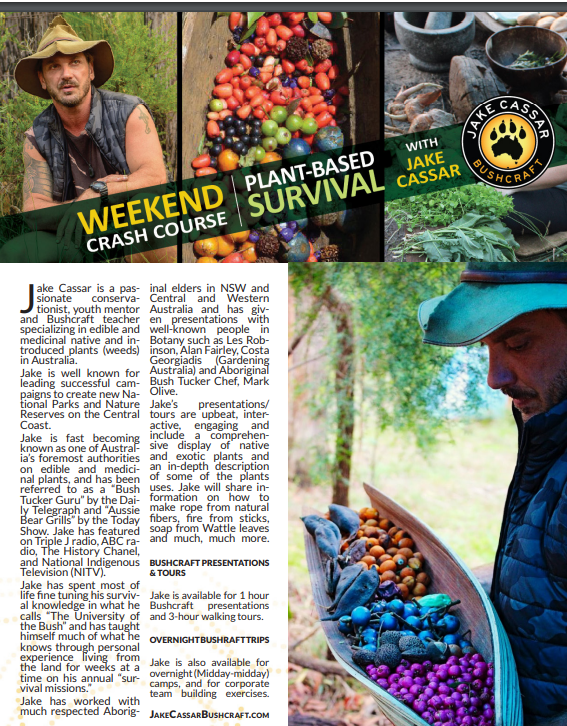
Campfire Collective does not operate in isolation. It is embedded within a wider activist and commercial ecosystem that includes Coast Environmental Alliance (CEA), Save Kariong Sacred Lands mobilisation, the so-called GuriNgai group, and the personal commercial activities conducted under the Jake Cassar Bushcraft brand.

Across this network, there is a documented pattern of contested authority claims, repeated allegations of Aboriginal identity and Cultural appropriation, obstruction of recognised Aboriginal governance bodies, and the circulation of conspiracist and conspiritual narratives that frame environmental or community harm as justification for self-appointed custodial authority (Cooke, 2025a; Cooke, 2025b; Cooke, 2025c; Cooke, 2026a).

Within this context, Campfire Collective’s charity form functions as trust infrastructure for a politically volatile and socially contested mobilisation ecosystem. Its governance and public communications therefore require scrutiny not only for technical compliance, but for their real-world effects.

Entity status, tax positioning, and an early credibility fracture
The Australian Business Register record for ABN 49 846 037 917 identifies Campfire Collective Australia as an “Other Incorporated Entity,” registered as a charity from 29 July 2025.

The entity is endorsed for income tax exemption and GST concession, but is explicitly recorded as “Not entitled to receive tax deductible gifts,” meaning it is not a Deductible Gift Recipient (Australian Business Register, n.d.).
This status is legally unambiguous and forms the baseline for any assessment of fundraising integrity.

Despite this clarity, the organisation’s public communications introduce a significant credibility fracture. In one exchange, a potential donor asks whether a $100 donation would be tax deductible, and Jake Cassar responds that the organisation is a registered charity but does not have tax deductible status.

In a separate public post, the organisation asserts that it has “recently had our tax deductible donation status taken from us,” attributes this to environmental activism, and solicits assistance to “re-establish” that status.

When read together, these statements generate donor confusion by implication. In common public understanding, “registered charity” is widely equated with tax deductibility, and the suggestion that deductibility was removed, rather than never endorsed, invites an inference of temporary or unjust deprivation.

From an ACNC governance perspective, this is not a minor wording issue. Fundraising representations must be accurate, consistent, and not misleading by implication, because donor reliance is central to public trust and public benefit (ACNC, 2022).

The continued circulation of DGR-adjacent language, particularly when paired with constitutional “gift fund” provisions and emotionally charged appeals for support, creates a foreseeable risk of misleading conduct even in the absence of an explicit false claim (Burke, 2019; Cordery & Sim, 2018).

Template constitution compliance and charity-grade governance failure
The Campfire Collective constitution is explicitly framed as an incorporated association constitution under the Associations Incorporation Act 2009 (NSW) and closely mirrors the NSW model constitution. While this signals procedural compliance with incorporation requirements, it is inadequate as a governance framework for a registered charity operating in contested social, cultural, and political domains.

Model constitutions are designed to meet minimum association standards, not to manage complex conflict-of-interest risks, related-party transactions, donor integrity, or culturally sensitive representations at scale (Phillips & Smith, 2021).

Under the ACNC regime, responsible persons must act with reasonable care and diligence, act honestly and fairly in the best interests of the charity, and actively manage actual, potential, and perceived conflicts of interest (ACNC, 2022).

A template-based constitution that permits low quorums, office stacking, broad delegation, and restricted transparency does not merely fail to prevent governance capture. In founder-led organisations, it actively facilitates it, particularly where internal dissent or external scrutiny is likely.

Concentration of control and suppression of scrutiny
The Campfire Collective governance structure permits a quorum of three for a seven-person committee, allows office-bearers to hold multiple roles, and enables expansive delegation to subcommittees without embedded reporting or independence requirements. Each of these features may be lawful under association rules.

Taken together, however, they create a structural pathway for minority control and weak oversight. In an organisation whose leadership is family-linked and founder-centric, these settings materially increase the risk that decisions affecting fundraising, partnerships, public messaging, and cultural representations are made without robust challenge or independent review.

Equally concerning is the constitution’s broad discretion to refuse member access to records on the basis that inspection would be “prejudicial to the interests of the association.”

In a charity operating within a high-conflict environment, such discretion functions less as a legitimate confidentiality safeguard and more as a governance shield against accountability.

Contemporary charity governance scholarship consistently identifies transparency, internal challenge, and documented dissent as indicators of governance health, not threats to organisational stability (Brown, 2020; Phillips & Smith, 2021).

Founder–charity entanglement and private benefit escalation
Campfire Collective is positioned as part of a founder-centred network in which Jake Cassar’s personal authority, activist leadership, and commercial activities mutually reinforce one another (Cooke, 2025a; Cooke, 2026a).

This concern becomes materially significant when examined alongside the parallel fundraising conducted through Jake Cassar Bushcraft, a private business that is not a registered charity.

The Jake Cassar Bushcraft website actively solicits money through “Pay it Forward” or community fundraising mechanisms, inviting the public to fund causes or individuals and promising personal updates on how the contribution helped (Jake Cassar Bushcraft & Survival, 2024).

This creates a structurally confusable donation environment in which charitable and non-charitable fundraising coexist under the same personal brand and moral narrative.

From a governance standpoint, this is a classic private benefit risk. Donors may reasonably believe they are making charitable contributions when they are, in fact, transferring funds to a private enterprise with no charity-law accountability.

ACNC guidance is explicit that related-party transactions and private benefit risks must be actively identified, disclosed, and managed, particularly where founders have parallel commercial interests (ACNC, n.d.).

In this case, the coexistence of a registered charity and a private donation funnel invoking the same community benefit language represents a foreseeable pathway for donor confusion, reputational harm, and regulatory complaint, even in the absence of proven misuse of funds.

Contested custodianship and cultural authority laundering
The most serious non-financial risk arises from Campfire Collective’s repeated invocation of “supporting Traditional Custodians” within a context of contested and allegedly fabricated Aboriginal authority.

The GuriNgai network has been extensively documented as non-Aboriginal, genealogically unverified, and rejected by relevant Aboriginal community and governance bodies. Such claims function to displace legitimate Aboriginal voices, particularly those of Local Aboriginal Land Councils and recognised custodial families (Cooke, 2025b; Cooke, 2025c).

In this environment, a charity that continues to deploy custodianship language without embedded verification, consent, and dispute-resolution protocols is not neutral.

It becomes an instrument of cultural harm by lending institutional legitimacy to contested authority claims. Governance Standard 1 requires that a charity’s activities deliver public benefit.

Cultural misrepresentation and authority laundering constitute foreseeable public detriment, not benefit, particularly where Aboriginal communities actively contest the legitimacy of those being platformed (ACNC, 2022).

The additional contextual detail that Kirsten Apps is the daughter of Colleen Fuller, and that both are not accepted as Aboriginal by the Aboriginal community in which they live, further elevates the related-party and representational risk. Even where such assertions are treated cautiously, the governance obligation remains unchanged.

A charity must not rely on internal belief or factional endorsement when making public representations about Indigenous authority. It must be able to evidence culturally legitimate consent and governance alignment, or refrain from making such claims altogether.

Conspiritual mobilisation and the charity as legitimacy infrastructure
Campfire Collective is situated within a broader pattern of conspiritual mobilisation, combining conspiracist distrust of institutions with spiritualised narratives of moral awakening, persecution, and ecological salvation (Cooke, 2025d; Cooke, 2026a).

In this analytical frame, the charity form itself functions as legitimacy infrastructure. It provides a compliance aesthetic and public-benefit halo that stabilises trust while the surrounding network engages in anti-institutional mobilisation and contested authority claims.

This pattern is particularly evident in the organisation’s framing of its non-DGR status. Rather than issuing a clear, compliance-focused clarification, Campfire Collective frames tax deductibility as something that was “taken,” implicitly aligning regulatory oversight with grievance narratives common to populist and conspiracist movements.

Governance scholarship identifies such framing as corrosive to accountability, because it repositions regulatory scrutiny as oppression and reframes compliance gaps as moral injury (Brown, 2020; Phillips & Smith, 2021).

Multi-channel fundraising and the escalation of regulatory risk
Within this captured governance context, the legality of Jake Cassar seeking funds simultaneously through Campfire Collective Australia Incorporated, Coast Environmental Alliance, and Jake Cassar Bushcraft must be assessed as a composite fundraising ecology. Australian law does not prohibit multi-channel fundraising per se.

However, legality depends on clarity of representation, separation of entities, accuracy of claims, and compliance with charity law, consumer law, and state fundraising regulation. When these safeguards are absent, multi-channel fundraising shifts from lawful plurality into a high-risk configuration for misleading conduct, private benefit, and regulatory breach (ACNC, n.d.; Burke, 2019).

Where the same individual publicly positions himself as charity founder, activist leader, and private business operator, and then solicits funds for overlapping causes across all three channels, the risk of donor conflation is both predictable and legally salient.

Australian Consumer Law prohibits misleading or deceptive conduct assessed by overall impression, not by technical disclaimers or intent (Competition and Consumer Act 2010 (Cth), sch 2, s. 18).

From a charity-law perspective, this structure substantially escalates private benefit risk. Governance Standard 5 places the evidentiary burden on the charity to demonstrate that funds are not co-mingled, donors are not misled, and no charitable resources, brand value, or public trust are diverted to support private commercial activity (ACNC, 2022; Phillips & Smith, 2021).

Consolidated critical finding
Campfire Collective Australia Incorporated exhibits the defining characteristics of a captured charity. Its governance architecture enables concentration of control, its public communications around donations invite misunderstanding, its founder maintains parallel private fundraising channels, and its cultural authority claims intersect with a substantial body of evidence alleging non-Aboriginal identity appropriation and obstruction of legitimate Aboriginal governance.

These are not marginal or technical issues. They go to the core of whether the organisation can meet the ACNC’s expectations of integrity, public benefit, and responsible governance.

On the available material, Campfire Collective appears less as a neutral community benefit organisation and more as a charity-form vehicle that stabilises trust and resources for a founder-centred, contested, and culturally harmful mobilisation ecosystem.

Under a rigorous charity-law and consumer-law lens, this configuration represents elevated regulatory, reputational, and ethical risk and warrants close scrutiny by regulators, funders, platforms, and the broader community.
 A Long Con, Gone on Too Long.
Leave a comment