
Jake Cassar’s The cave constructs an elaborate cosmological system that merges ancient aliens mythology, conspiracist worldbuilding, ecological judgment, and drug-fuelled visionary experiences. The most significant feature of this system is its extensive cultural appropriation. Cassar reworks Aboriginal spiritual motifs, ecological guardianship narratives, cryptid traditions associated with Country, and Indigenous custodial language, then embeds them within an extraterrestrial mythos that claims access to cosmic history. This reconfiguration transforms elements drawn from Aboriginal cultural worlds into components of a supernatural adventure that centres Cassar as an awakened intermediary between Earth and the universe.

The cosmology, although framed as eco fiction, participates in broader settler patterns of cultural extraction that convert Indigenous spirituality into a platform for individual revelation and settler authority. Within this overarching concern, the narrative incorporates millenarian theology, reptilian bloodline conspiracism, New Age critique, eco fascist ideology, and psychedelic revelation, functioning as a local manifestation of global conspiracist and conspiritual genres.

1. Cultural Appropriation in the Construction of Cosmic Law
The foundational relationship between Yar way and Sephrhan reworks theological dualism using concepts that Cassar presents as ancient custodial knowledge. In doing so, the text appropriates elements that resemble Aboriginal cosmology and relocates them within a galactic administrative narrative derived from ancient aliens discourse. The authority traditionally associated with ancestral entities is reassigned to extraterrestrial supervisors. Cassar’s visionary recollections serve to legitimise this cosmology as sacred truth, transforming Indigenous relational ontologies into universal cosmic law.

This practice mirrors a documented pattern in settler esotericism in which spiritual structures associated with Indigenous cultures are stripped of context and reinterpreted as components of a universal system available to non Indigenous seekers (York, 1995; Ivakhiv, 2007).

2. Reptilian Bloodlines, Daah rians, and the Colonisation of Mythic Territory
The Daah rian lineage fuses reptilian bloodline conspiracism with motifs drawn from Aboriginal narratives of powerful spirit beings. Cassar reframes these beings as extraterrestrial elites who shaped human evolution and corrupted global institutions. This repurposing of Indigenous mythic structure to describe alien civilisations displaces Aboriginal epistemologies and fills the resulting space with conspiracist myth. Such substitution exemplifies what many scholars describe as mythic colonisation, where cultural meaning is extracted and overwritten with narratives that centre the settler protagonist. In The cave, Indigenous sovereignty over story, Country, and cosmological authority is replaced with Cassar’s private revelations concerning off world hierarchies.

3. Conspirituality, New Age Traditions, and the Appropriation of Indigenous Epistemologies
Cassar presents New Age spirituality as a deceptive system engineered by alien elites, but his critique relies on the appropriation of Indigenous forms of ecological knowledge that he reinterprets through a conspiracist lens.

Teachings about harmony, balance, or interconnectedness are recast as alien control mechanisms rather than culturally grounded philosophies. In this inversion, Indigenous relational ethics are detached from their cultural foundations and redeployed as evidence of extraterrestrial manipulation. Ward and Voas (2011) describe conspirituality as the blending of New Age and conspiracy thought. Cassar adapts this blend by inserting Indigenous concepts stripped of cultural authority and then reinterpreting them through the logic of alien intervention.

4. Eco Fascist Population Reduction and the Misuse of Indigenous Ecological Knowledge
The ecological dimension of the narrative appropriates Aboriginal understandings of Country, custodianship, and ecological balance, then fuses them with eco fascist motifs. In Indigenous contexts, custodial responsibilities emphasise reciprocal care, interdependence, and cultural continuity. In The cave, these relational principles are reassigned to extraterrestrial judges who frame ecological collapse as grounds for eliminating much of the human population.

This displacement converts Indigenous ecological ethics into authoritarian prescriptions consistent with extremist environmental narratives. The cultural meaning of custodianship is therefore overwritten with a reductionist, punitive system of extraterrestrial judgment.

5. Yowies as Appropriated Custodial Beings in an Ancient Alien Narrative
The Yowie functions as the most visible site of cultural appropriation in the text. Cassar appropriates Aboriginal lore associated with these beings but reframes them as cosmic intermediaries aligned with extraterrestrial administrators.

In doing so, the Yowie is removed from its cultural and Country-specific meaning and transformed into a universalised teacher whose purpose is to validate Cassar’s revelations.
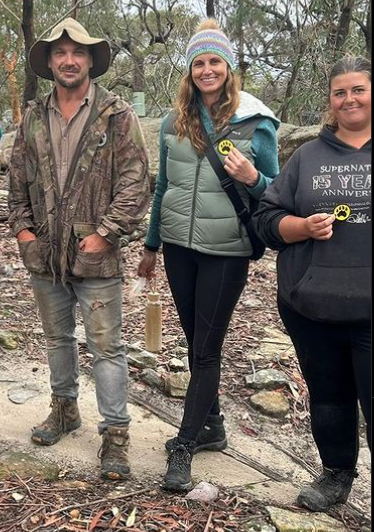
The Yowies provide him with knowledge, warnings, and legitimising authority. Their depiction reflects a familiar settler esoteric pattern in which Indigenous entities are reinterpreted as benevolent guides who confirm the spiritual mission of a non Indigenous protagonist (Ivakhiv, 2007). Cassar’s narrative intensifies this pattern by anchoring the Yowie within ancient aliens cosmology.

6. Chosen One Narratives and the Appropriation of Indigenous Authority
Cassar’s visionary transformation follows the architecture of chosen one narratives, a genre that frequently co-opts Indigenous symbols to establish settler heroism. His drug-fuelled encounters frame him as a cosmically selected custodian, displacing the authority of actual Aboriginal custodians.

Psychedelic visions involving Yowies, ancestral beings, and cosmic judges function as narrative devices that grant Cassar roles traditionally held within Indigenous communities, including interpreter of sacred knowledge, protector of Country, and intermediary between worlds. This pattern reflects what scholars of settler simulation describe as appropriation of Indigenous authority through spiritualised storytelling (deHaven Smith, 2013; Dyrendal et al., 2019).

7. Superconspiracy Architecture and the Erasure of Indigenous Contexts
The superconspiracy structure of The cave absorbs Indigenous histories, landscapes, and metaphysical categories and reinterprets them as fragments of a universal cosmic war. Barkun’s (2013) concept of superconspiracy highlights how disparate traditions are woven into a single explanatory system.
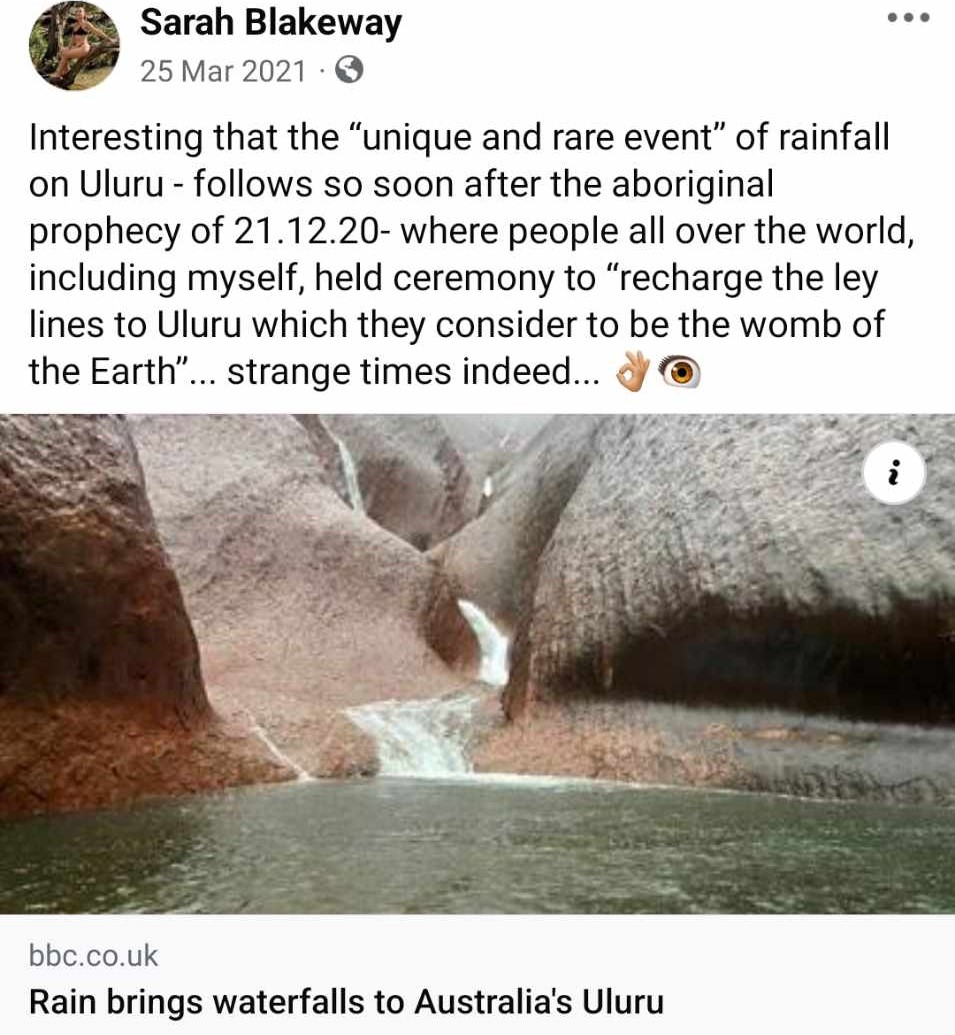
In Cassar’s narrative, this system overwrites Aboriginal historical and cultural specificity by subsuming all narratives into ancient alien governance. Ngurra, Country, and custodianship are reinterpreted not through Indigenous knowledge but through Cassar’s personalised revelations concerning extraterrestrial factionalism.

8. Political Uses of Cosmic Narrative and the Reinscription of Settler Authority
By presenting himself as a recipient of sacred knowledge mediated through appropriated Indigenous beings, Cassar positions himself as both victim and saviour within a cosmic drama.


This externalises responsibility for social and ecological harms onto alien elites while elevating a non Aboriginal figure to spiritual leadership.

The political consequence is a reinforcement of settler authority under the guise of cosmic appointment. The cosmology thus repurposes Indigenous cultural capital to legitimise a conspiracist worldview that centres settler experience and marginalises Aboriginal sovereignty.

Conclusion
The cave operates as a complex conspiracist text whose defining feature is the appropriation and reconfiguration of Indigenous cultural forms into an ancient alien cosmology. Although incorporating psychedelic revelation, millenarian theology, reptilian conspiracism, and eco fascist ideology, its central mechanism is the extraction and transformation of Aboriginal spiritual motifs into a narrative that elevates Cassar as a chosen intermediary.
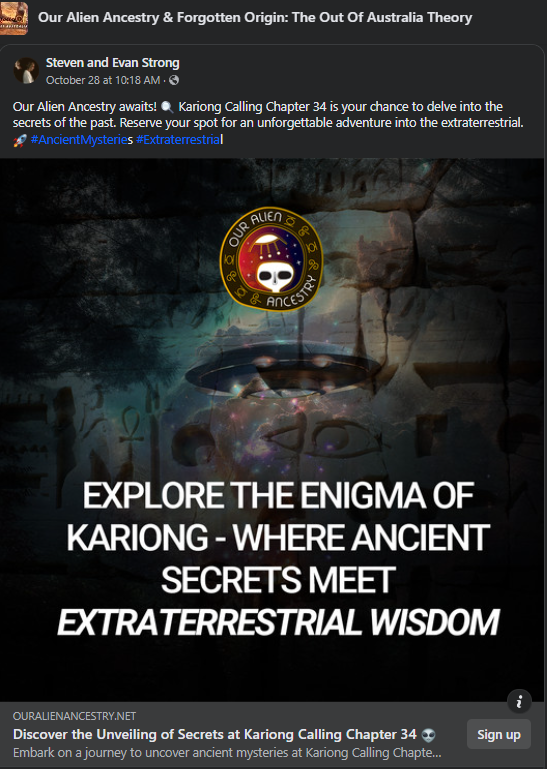
This process exemplifies wider patterns of settler spiritual appropriation and situates The cave as a local expression of global conspirituality grounded in the misuse of Indigenous cultural authority.
“the cave” “jake cassar”
 A Long Con, Gone on Too Long.
Leave a comment