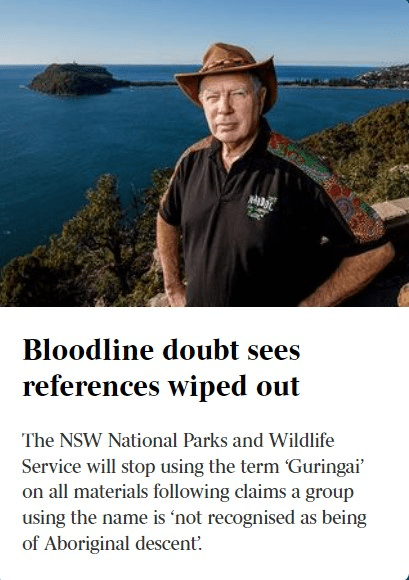
The Draft Conservation Management Plan (CMP) for Gosford Memorial Park and Rotary Park is currently open for public exhibition, and the Central Coast community is being called upon to speak out. This is a critical opportunity to ensure that Aboriginal cultural representation in Council documents reflects truth, evidence, and lawful custodianship.
https://www.yourvoiceourcoast.com/gosford-memorial-park-and-rotary-park
Research available on GuriNgai.org and Bungaree.org demonstrate that the so-called “GuriNgai” identity, claimed by the Guringai Tribal Link Aboriginal Corporation (GTLAC) and its affiliates, is non-Aboriginal in origin and was derived from a nineteenth-century linguistic error by missionary John Fraser. This false identity has since 2002 been used to gain influence in Council advisory committees and heritage projects, including the current CMP, despite explicit findings from Aboriginal People, Aboriginal Land Councils, linguistic experts, anthropologists and statutory bodies confirming that no Aboriginal community called Guringai or GuriNgai ever existed on the Central Coast or in Northern Sydney.
What the Evidence Shows
Findings consolidated in formal submissions to Council and integrity bodies, reveal the following:
- The “GuriNgai” name originates from a misreading of “Gringai,” which properly refers to the Guringay people of Dungog, Gloucester, and Barrington, north of the Hunter River (Wafer & Lissarrague, 2010; Lissarrague & Syron, 2024). No historical, genealogical, or linguistic record places that group on the Central Coast.
- The Darkinjung Local Aboriginal Land Council (DLALC), the Metropolitan Local Aboriginal Land Council (MLALC), and the Registrar of the Aboriginal Land Rights Act 1983 (NSW) have each confirmed that the “GuriNgai” name is not recognised as Aboriginal and that the Central Coast is under DLALC’s statutory boundary and authority.
- Guringai.org and Bungaree.org have provided documented evidence that individuals linked to the GuriNgai network such as Kay Williams and Brad Twynham, have maintained active affiliations with GTLAC while serving on Council’s Heritage and Culture Advisory Committee (HCAC), representing a clear conflict of interest and breach of cultural protocol.
- These individuals’ involvement has allowed a false “GuriNgai” narrative to be embedded within Council heritage planning, including the Gosford Memorial Park CMP, despite the area being located entirely within the Central Coast’s legally recognised Aboriginal governance area under the Aboriginal Land Rights Act 1983 (NSW).
Why This Matters
The inclusion of non-Aboriginal identity claimants in official council documentation causes measurable harm:
- It displaces legitimate Aboriginal people and communities of the Central Coast.
- It misinforms the public and institutional record.
- It breaches the Aboriginal Land Rights Act 1983 (NSW), the National Parks and Wildlife Act 1974 (NSW), and Council’s own First Nations Accord (2022).
- It perpetuates cultural appropriation and identity fraud, eroding public trust and reconciliation efforts.
What You Can Do
Your voice can ensure that the CMP is corrected and that Aboriginal cultural governance remains in the hands of legitimate custodians.
Visit Central Coast Council’s Have Your Say page and make a submission calling for:
- Immediate removal of references to “Guringai” or “GuriNgai” from the CMP and related heritage materials.
- Exclusive consultation with the actual Aboriginal community, including DLALC and Registered Aboriginal Owners in accordance with the Aboriginal Land Rights Act 1983 (NSW).
- Council acknowledgment of the linguistic and genealogical evidence published by GuriNgai.org, Bungaree.org, Guringaygupa djuyal, barray, and the Aboriginal Heritage Office’s Filling a Void (2015).
- Independent review of HCAC membership to ensure that appropriate individuals hold advisory positions on Aboriginal heritage matters.
Together for Truth and Cultural Integrity
The inclusion of a non-Aboriginal group in the CMP undermines the integrity of heritage management and Aboriginal self-determination. The community’s participation is vital to correct the record and ensure that Council heritage planning reflects truth, not fiction.
Have your say. Defend truth. Support the Aboriginal community of the Central Coast.
Example Submission: Draft Gosford Memorial Park and Rotary Park Conservation Management Plan
Subject: Correction of Cultural Misrepresentation in the Draft Gosford Memorial Park and Rotary Park CMP
Dear Central Coast Council,
I am writing to make a submission regarding the Draft Conservation Management Plan (CMP) for Gosford Memorial Park and Rotary Park. I strongly object to the inclusion of references to the non-Aboriginal “GuriNgai” or “Guringai” group within the CMP and call for the immediate correction of this cultural and historical inaccuracy.
1. The GuriNgai identity is not Aboriginal
Research by Guringai.org and Bungaree.org, supported by Aboriginal Land Council records, demonstrates conclusively that the “GuriNgai” identity is non-Aboriginal in origin. It stems from a nineteenth-century academic error by missionary John Fraser, who misinterpreted the name “Gringai” from the Hunter region and wrongly applied it to the Sydney and Central Coast area.
The Aboriginal Heritage Office report Filling a Void (2015) found that “there is no record of the word Kuringgai in early colonial sources” and that its later adoption was based entirely on historical misunderstanding, not cultural continuity or Aboriginal self-identification.
The linguistic work of Lissarrague and Syron (2024) confirms that the genuine Guringay people are located north of the Hunter River, in the Barrington–Gloucester region, and that their language is a dialect of Gathang. There is no historical, linguistic, or genealogical evidence linking the Guringay people to the Central Coast.
2. Statutory Aboriginal authority for the Central Coast
The Darkinjung Local Aboriginal Land Council (DLALC) holds cultural authority for the Central Coast under the Aboriginal Land Rights Act 1983 (NSW). DLALC’s Aboriginal Cultural Authority on the Central Coast of New South Wales (2021) and Submission to the Central Coast Council First Nations Accord (2022) both confirm that there are no recognised Aboriginal owners, communities, or registered claimants known as “Guringai” or “GuriNgai” on the Central Coast.
DLALC has explicitly advised that consultation with unrecognised groups such as the GuriNgai network “causes confusion, conflict, and harm.” Including these groups in official heritage documents directly contradicts Council’s own First Nations Accord (2022), which affirms partnership with DLALC as the legitimate Aboriginal governance body for the region.
3. Conflict of interest in Council advisory structures
Investigations published by Guringai.org and Bungaree.org have identified individuals linked to the GuriNgai network, specifically Kay Williams and Brad Twynham, as members of Council’s Heritage and Culture Advisory Committee (HCAC). Both have documented connections with the Guringai Tribal Link Aboriginal Corporation (GTLAC).
Their participation in Aboriginal heritage deliberations represents a serious conflict of interest and risks institutionalising false identity claims within Council decision-making. It also breaches the ethical principles of Aboriginal cultural governance as recognised in the Aboriginal Cultural Heritage (Culture is Identity) Bill 2022, which emphasises that only individuals with legitimate cultural authority should speak for Country.
4. Cultural and community harm
The continued reference to “Guringai” or “GuriNgai” within the CMP perpetuates misinformation, undermines reconciliation efforts, and disrespects genuine Aboriginal custodians of the Central Coast. It erodes public trust in Council heritage processes and misinforms future planning, education, and tourism initiatives.
5. Requested actions
I respectfully request that Central Coast Council:
- Remove all references to “Guringai” or “GuriNgai” from the Draft Gosford Memorial Park and Rotary Park CMP and associated documents.
- Confirm that all future consultation and representation relating to Aboriginal heritage on the Central Coast will include Darkinjung Local Aboriginal Land Council (DLALC) and Registered Aboriginal Owners recognised under NSW law.
- Publicly acknowledge the linguistic and genealogical evidence published by the Aboriginal Heritage Office (2015), Lissarrague and Syron (2024), and Guringai.org/Bungaree.org.
- Conduct an integrity review of the Heritage and Culture Advisory Committee to ensure that members representing Aboriginal heritage have verified cultural legitimacy.
Conclusion
I thank Council for the opportunity to contribute to this public consultation. Cultural accuracy and integrity are fundamental to reconciliation and to the protection of Aboriginal heritage. The inclusion of non-Aboriginal identity groups such as the “GuriNgai” in official documents undermines this goal and must be urgently corrected.
Truth-telling and good governance require that Aboriginal heritage on the Central Coast be managed by Aboriginal community members, with decisions grounded in verified evidence and lawful and cultural authority.
Sincerely,
[Your Name]
References
Aboriginal Heritage Office. (2015). Filling a void: A review of the historical context for the use of the word “Guringai.” Aboriginal Heritage Office.
Darkinjung Local Aboriginal Land Council. (2022). Submission to the Central Coast Council First Nations Accord.
Lissarrague, A., & Syron, R. (2024). Guringaygupa djuyal, barray: Language and Country of the Guringay people.
Wafer, J., & Lissarrague, A. (2010). The Kuringgai puzzle: Languages and dialects on the NSW mid coast.
 A Long Con, Gone on Too Long.
Leave a comment